AI Call Answering vs. Outsourced Call Center for Small Businesses
Call answering service outsourcing was built for volume and billed by the minute. Here's an honest look at how it stacks up against an AI phone assistant for a five-person business — and when a human team is still the right call.
 Vunoon14 min read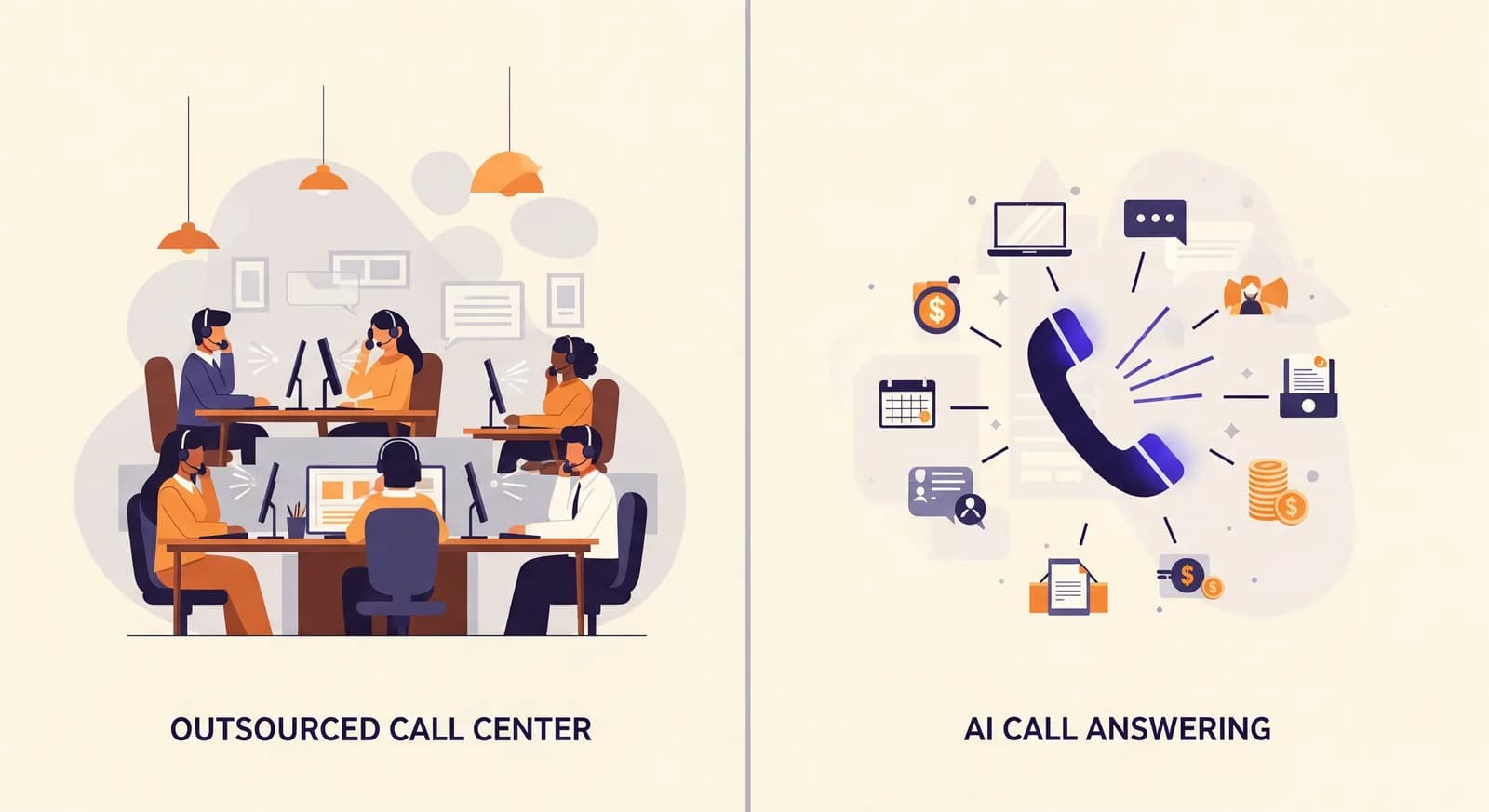
You missed three calls before lunch, and one of them was a new customer who hung up and dialed the next name on the list. So you start looking at call answering service outsourcing — a call center that picks up when you can't. It's a reasonable instinct. But those centers were designed for a very different kind of business than yours, and it's worth understanding that before you sign anything.
This is a comparison, not a sales pitch. There are real situations where an outsourced human team is the better choice, and I'll be specific about them. There are also situations where paying by the minute for scripted agents in a distant room is exactly the wrong shape for a five-person business. The goal here is to help you tell which one you're actually in.
What call center outsourcing was actually built for
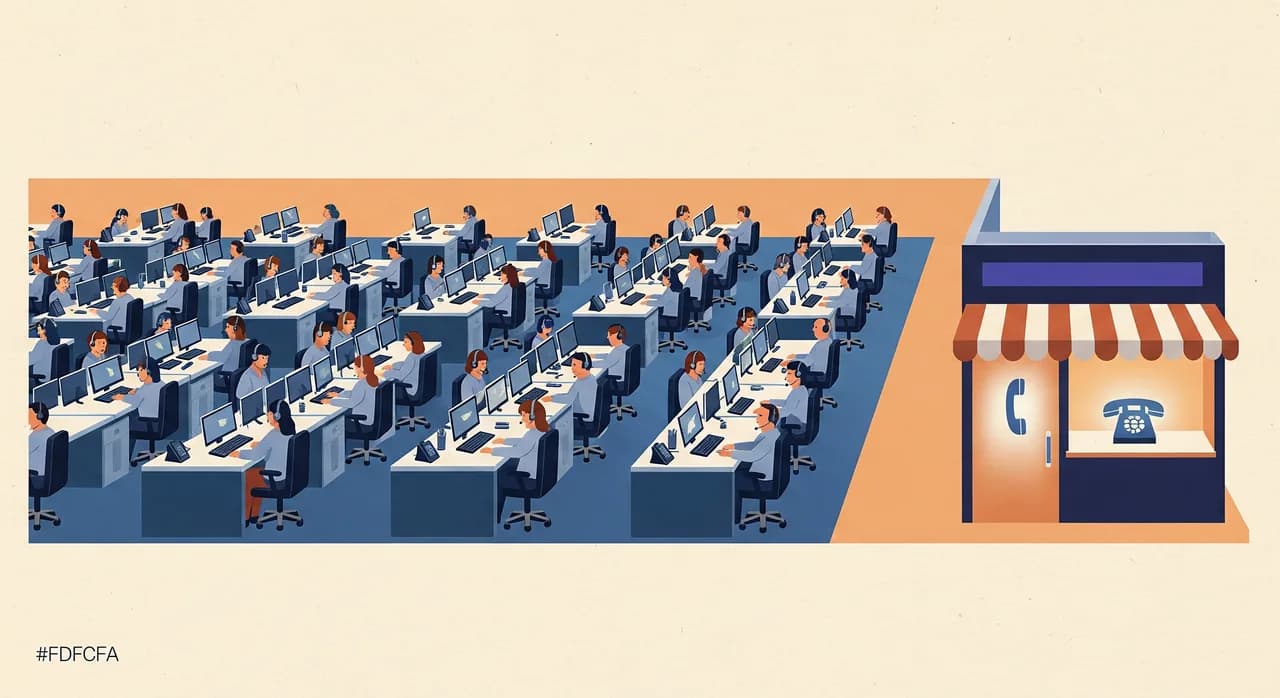
The traditional outsourced call center is an impressive machine, and it solves a genuine problem: an unpredictable flood of calls that no in-house team could staff for. Think product recalls, ticket launches, insurance claims after a storm, a national retailer's holiday rush. When ten thousand people might call in a single afternoon, you need a room full of trained humans who can scale up and down.
To make that economically possible, the industry organized itself around a few pillars. Agents follow tight scripts so that quality stays roughly consistent across hundreds of people. Work is billed by the minute or by the seat, because that's the unit that maps to labor cost. And centers keep a bench of interchangeable staff, because turnover in this line of work is famously high. None of that is a scandal — it's a sensible design for the problem it was built to solve.
The trouble starts when a business with fifteen calls a day tries to buy a service tuned for fifteen thousand. You inherit all the machinery — the scripts, the per-minute meter, the rotating cast of agents — without any of the volume that justified it.
The script problem, and why callers can feel it
Scripts exist so that a stranger picking up the phone can sound like they work for you. The catch is that they only work when the caller stays inside the script. The moment someone asks something specific — "do you take the smaller dog breeds for grooming?", "is the corner table available Saturday for six people?", "can I bring my old radiator in on Thursday afternoon?" — the agent hits the edge of what they were briefed on.
At that edge, one of two things happens. Either the agent takes a message and promises a callback, which is often the exact delay you were trying to avoid, or they improvise and get it slightly wrong, which is worse. A general-purpose agent handling forty different clients cannot hold the real details of your business in their head. They were never meant to.
“A script that a stranger reads from a screen is only as good as the day the brief was written — and your prices changed last Tuesday.”
There's also the freshness problem. You updated your prices, added a new service, closed early for a public holiday. Did that make it into the agent's brief? In most outsourced arrangements, updates travel slowly through an account manager, and the version the agent sees today may be weeks behind the version on your own front desk.
How AI call answering approaches the same job
An AI phone assistant like Vunoon comes at the problem from the other end. Instead of a shared pool of agents loosely briefed on many clients, it answers as one assistant that knows only your business — your services, your opening hours, the prices and policies you typed in, the way you want callers greeted. It answers every call the same way, at 3 a.m. or during a lunch rush, with the current version of your details, because there's no brief to fall out of date.
- It picks up on the first ring, every ring. No hold queue, no "all our agents are busy right now", no calls lost to overflow because two came in at once.
- It answers from your profile. Hours, services, prices you configured, common questions — answered directly, not read from a stale script.
- It takes bookings and messages. The details you care about get captured; you get a summary and a full transcript of every call.
- It works in 25+ languages. A caller can speak their own language without you staffing for it.
- It doesn't pretend to be human. Asked directly, it's honest about what it is, and it hands off gracefully — takes a message or arranges a callback.
The honest limit is worth stating plainly: an AI assistant is not a substitute for genuine human judgment on a complicated, emotional, or high-stakes call. It's very good at the calls that make up most of your day — the ones about hours, availability, prices, and simple bookings — which happen to be exactly the calls you're missing. It is not the thing you want fielding a distressed customer with a truly unusual problem.
The pricing models are shaped differently
This is where the two approaches diverge most sharply, and it's the part that catches small businesses out. Outsourced answering is almost always metered — you pay by the minute, by the call, or by the seat. That model makes sense when call volume is the cost driver. But it also means your bill rises with your busyness, and a chatty caller or a long hold costs you money whether or not the call led anywhere.
Metered pricing also quietly changes behavior. When every minute is billable, there's pressure to keep calls short, and callers can feel it. And the arithmetic gets uncomfortable at the edges: a slow month still has a minimum, a busy month can produce a bill you didn't forecast.
| Outsourced call center | AI phone assistant | |
|---|---|---|
| Billing shape | Per minute / per call / per seat | Flat plan, not metered by the minute |
| Knows your business | From a brief, shared across clients | One profile, only yours, always current |
| Availability | Staffed hours, overflow risk | 24/7, answers every call at once |
| Consistency | Varies by agent and shift | Identical on every call |
| Best when | High volume or complex human calls | Steady day-to-day calls you keep missing |
A flat, non-metered model fits a small business better precisely because your volume is modest and steady. You're not trying to survive a spike; you're trying to stop leaking the ordinary calls that come in while you're serving the person in front of you. We keep Vunoon's own numbers off this page on purpose — you can see current plans on the pricing page — but the shape of the model is the point: predictable, not tied to how talkative your callers are.
Agent churn, and why consistency is hard to buy
Call center work has one of the highest turnover rates of any industry. That's not a knock on the people doing it — it's demanding, repetitive work. But it has a real consequence for you: the person answering as your business this month may be gone next month, and the next hire has to be briefed all over again. Consistency, the whole reason you'd outsource in the first place, is the thing churn erodes.
You feel it as variance. One agent is warm and gets your name right; another is flat and mispronounces the town. One knows you close early on Fridays; another doesn't. For a big brand averaging across millions of calls, that variance rounds out. For a five-person business where every caller might become a regular, a single cold or wrong answer is a bad first impression you don't get back.
“For a small business, there is no 'average caller' to hide behind. Every call is a first impression that either lands or doesn't.”
Setup, control, and how fast you can change your mind
Onboarding with an outsourced center usually means a contract, an account manager, a briefing document, and a wait. Changing how your calls are handled means routing a request back through that chain. It works, but it's not something you do on a Tuesday afternoon because you decided to add a new service.
Setting up an AI assistant is self-serve and quick. The rough sequence looks like this:
- 1Describe your businessA short wizard walks you through your services, hours, prices, and the questions callers ask most. This is the equivalent of the brief — except you write it, and you can change it in seconds.
- 2Test it by talking to itYou literally call your assistant and try to trip it up. Ask the awkward questions your real callers ask. Tweak the wording until it sounds like your business.
- 3Forward your numberPoint your line at the assistant for the hours you want covered — after-hours only, overflow when you're on another call, or around the clock. You keep your own number.
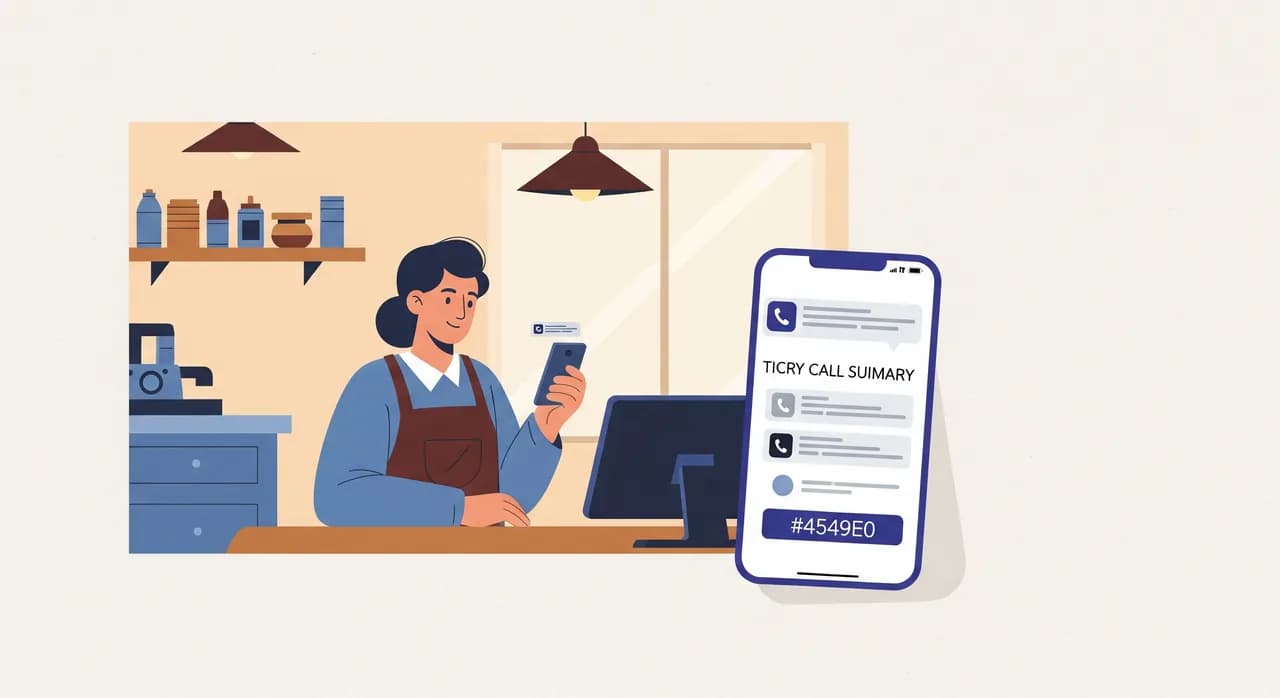
- 4Read the summariesEvery call arrives as a summary plus a full transcript. You see exactly what was said and asked, and you refine the profile based on real calls.
The difference in control is bigger than it sounds. With outsourcing, you're a client waiting on a queue of changes. With a self-serve assistant, you're the operator — you hear what your callers actually hear, and you can fix a clumsy answer the same minute you notice it.
When an outsourced human team is genuinely the better choice
This section matters, because pretending AI wins every scenario would be dishonest. There are clear cases where you should pay for trained humans, and it's worth knowing them before you rule outsourcing out.
- Genuine high volume. If you regularly get hundreds of calls an hour — a campaign, a launch, a seasonal surge that dwarfs your normal day — a center that can throw thirty agents at the spike is doing something an AI overflow line can't replace.
- Emotionally heavy or high-stakes calls. Distress, complaints that need de-escalation, sensitive medical or financial conversations. When the human on the other end is the point, a person should answer.
- Complex sales that need persuasion. Multi-step negotiation, upselling that reads the room, closing a deal on the phone. That's skilled human work, not a booking form.
- Deep regulatory scripting. Some industries require agents to read exact legal disclosures and handle tightly regulated flows where a trained, audited human team is the safest fit.
Notice the pattern: a human team wins when the value is in volume you must absorb or judgment you must exercise. If neither describes your average call, you're paying for capabilities you won't use — and losing the consistency and freshness an AI assistant gives you for free.
It doesn't have to be all or nothing
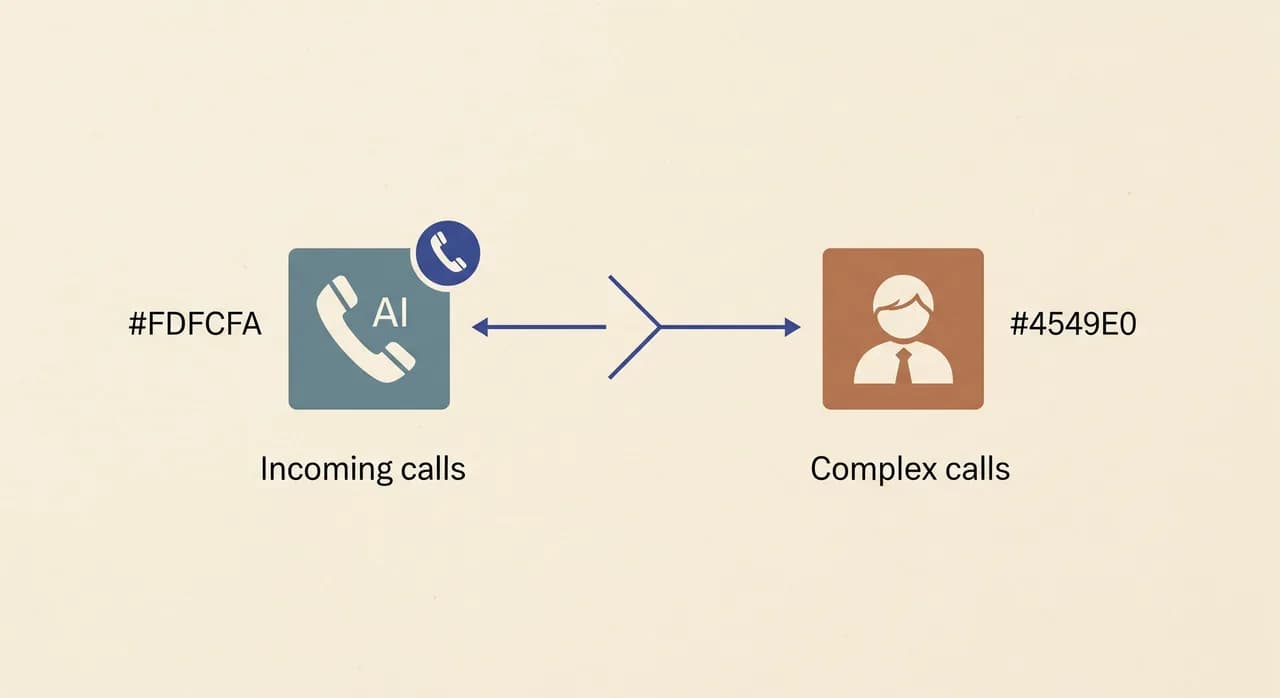
The most sensible setup for a lot of small businesses is a blend, and the blend leans on each side's strength. The AI assistant handles the constant stream of routine calls — hours, availability, prices, bookings, messages — instantly and around the clock. Anything it can't handle, it captures cleanly and hands to you, with a transcript, so you or a real teammate can follow up with full context.
In practice that means the AI is your front door and your after-hours cover, and human judgment is reserved for the calls that actually need it — instead of being burned on "what time do you open?" forty times a day. You stop paying humans (in-house or outsourced) to answer questions a well-built profile can answer perfectly.
A worked scenario: the two-chair dental practice
Imagine a two-chair dental practice. The dentist and hygienist are with patients most of the day; one person runs the front desk and also handles paperwork, payments, and the door. The phone rings while they're doing all of it. A caller asks whether the practice takes a certain insurance, whether there's a Thursday morning slot, and how much a cleaning runs.
Send that to an outsourced center and the agent — briefed weeks ago on dozens of clients — likely takes a message and promises a callback. The caller, who is already in pain and shopping around, may not wait for it. Meter running either way.
An AI assistant configured with the practice's real insurance list, current fee for a cleaning, and live availability answers all three questions on the spot and offers the Thursday slot. The genuinely tricky call — a nervous patient with a complex history who needs reassurance — still goes to the front desk, now free to give it, because they weren't fielding the routine three all morning. That's the division of labor that fits a small practice. It's illustrative, not a promise, but the shape is real.
How to decide for your own business
Skip the feature lists and answer four honest questions about your actual phone.
- What do most of your calls actually ask? If it's hours, availability, prices, and bookings, an AI assistant handles that all day. If it's negotiation and emotional problem-solving, weight toward humans.
- How spiky is your volume? Steady trickle points to a flat AI plan. Wild, unpredictable surges point to a center that can scale bodies.
- How often do your details change, and how fast do you need callers to hear the change? If "today," self-serve control beats waiting on an account manager.
- What does one missed call cost you? For many small businesses a single missed booking outweighs a month of any answering solution — which reframes the whole decision.
Is an AI phone assistant cheaper than outsourcing my calls?
Will callers know they're talking to an AI?
What happens on a call the AI can't handle?
How long does it take to set up compared to hiring a call center?
Should I ever choose a human call center over AI?
See how the two really compare for your business
Line up an AI phone assistant against outsourced answering, side by side, and try Vunoon on your own awkward questions before you decide.
Compare AI answering and outsourcing
Vunoon builds an AI phone assistant that answers your business calls 24/7 — it books appointments, answers common questions and sends you a summary of every conversation.