AI recepčná pre kaderníctvo: rezervácie, kým strihajete
Ruky máte plné vlasov a alobalu. Telefón aj tak zvoní. Tu je praktický návod, ako využiť AI recepčnú v kaderníctve — logika rezervácií, otázky o farbení a úprimné hranice.
 Vunoon13 min čítania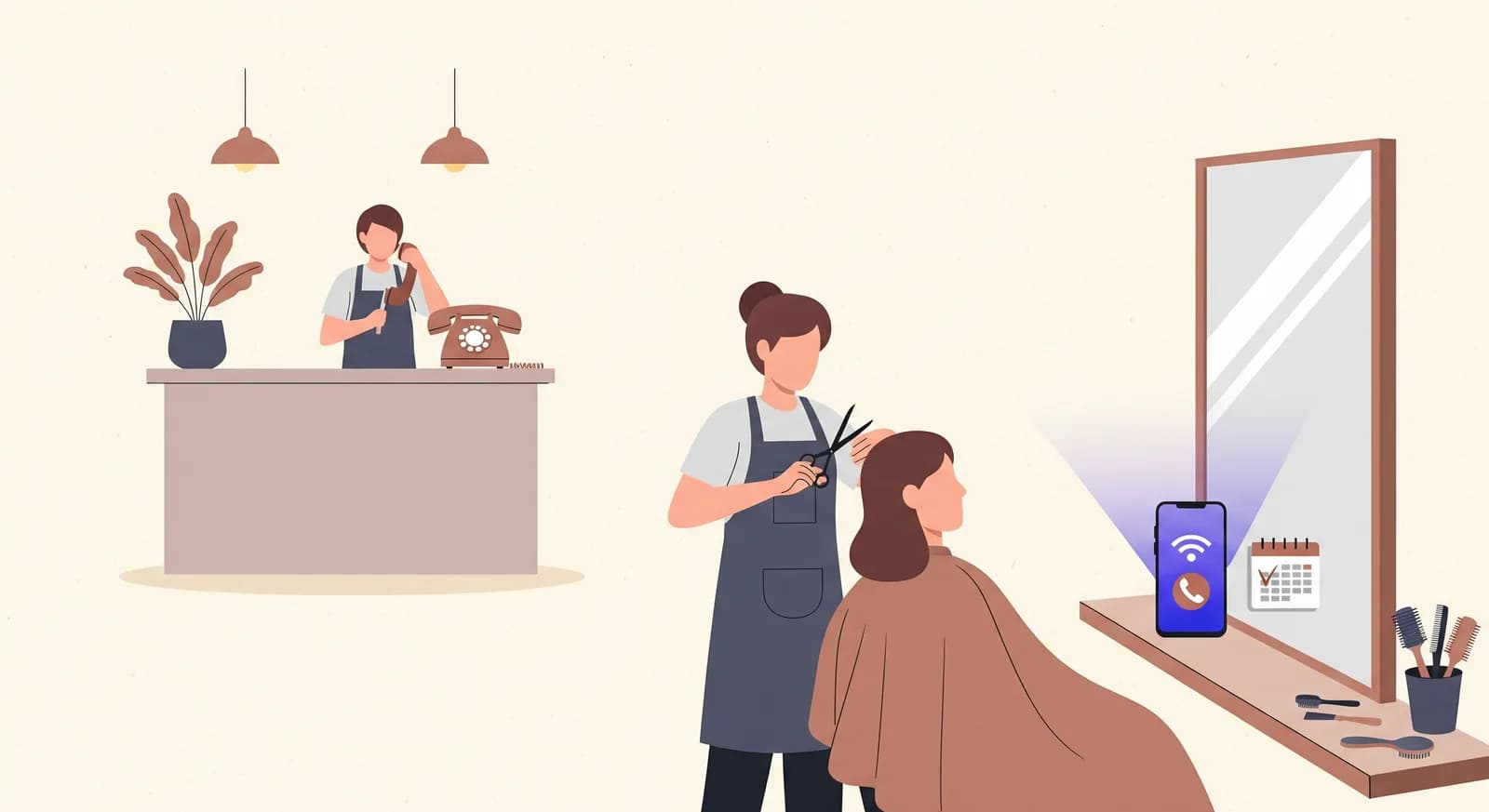
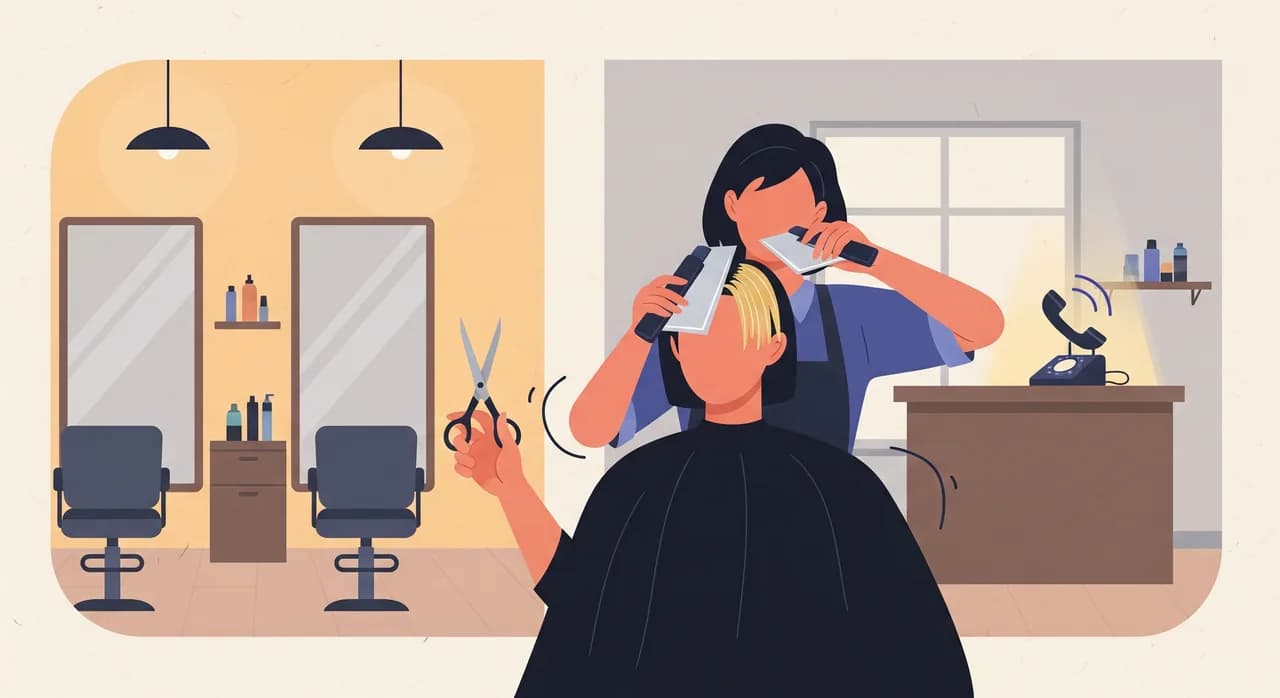
Je sobota, 14:40. Jednou rukou držíte prameň mokrých vlasov, druhou nožnice a klientka práve rozpráva o svadbe svojej sestry. Telefón na recepcii štyrikrát zazvoní a stíchne. Nikdy sa nedozviete, kto to bol — ani či si práve nerezervoval termín inde. Práve tá jedna obyčajná chvíľa — nožnice v ruke a zvoniaci telefón, na ktorý nedosiahnete — je celý argument pre AI recepčnú v kaderníctve.
Toto je návod, nie reklamný leták. Ak vediete salón — či máte dve kreslá alebo desať — už dávno viete, že telefón je váš najlepší zdroj klientov a zároveň najspoľahlivejšie vyrušenie. AI recepčná pre vaše kaderníctvo zdvihne hovory, ktoré fyzicky zdvihnúť nemôžete, zarezervuje tie, ktoré zarezervovať vie, a všetko ostatné vám odovzdá v prehľadnom zhrnutí. Nižšie nájdete, ako to naozaj rozbehnúť: logiku rezervácií, ktorá sedí na chod salóna, otázky o farbení a konzultáciách, na ktorých sa generické chatboty lámu, a časti, kde stále potrebuje vás.
Problém nožníc v ruke
Zmeškaný hovor pozná v nejakej podobe každé odvetvie. Salóny majú tú najostrejšiu. Nie ste „chvíľu preč od stola“ — doslova sa nemôžete dotknúť telefónu bez toho, aby ste niekomu pokazili strih alebo naniesli melír tam, kam nepatrí. Zubár môže vyjsť medzi pacientmi. Inštalatér zavolá späť z dodávky. Kaderníčka uprostred melíru je viazaná na najbližších štyridsať minút, či sa to telefónu páči, alebo nie.
A volajúci na druhej strane je pripravený nakúpiť. Nikto nevolá do kaderníctva len tak zo zvedavosti. Chce termín, cenu alebo odpoveď na to, či robíte balayage na kučeravé vlasy. Keď taký hovor skončí v odkazovej schránke — alebo horšie, vyzvoní naprázdno — urobí to najprirodzenejšie: skúsi ďalší salón v zozname. Neprišli ste o klienta kvôli marketingu konkurencie. Prišli ste oň kvôli zaneprázdneným rukám.
“O rezerváciu ste neprišli kvôli marketingu konkurencie. Prišli ste o ňu kvôli zaneprázdneným rukám.”
Urobte si hrubý súčet vlastného týždňa. Spočítajte hovory, ktoré ostanú nezdvihnuté v špičke — dopoludňajší nápor, okno po pracovnej dobe, celú sobotu. Ak by si čo i len tri z nich denne rezervovali termín a priemerná návšteva je strih plus trochu farby, matematika začne byť nepríjemná veľmi rýchlo. Desať zmeškaných hovorov týždenne, každý z nich potenciálna rezervácia — to nie je zaokrúhľovacia chyba. To je prázdne kreslo v utorok.
Čo AI recepčná pre salón naozaj robí
Keď odlúpnete marketing, je to jednoduché. AI zdvihne telefón vášho salóna, keď vy nemôžete. Privíta volajúceho v duchu vášho salóna, odpovie na to, čo pozná z profilu, ktorý ste nastavili — služby, kaderníkov, otváracie hodiny, cenové rozpätia — a buď zarezervuje termín, alebo prevezme odkaz a pošle vám ho. Každý hovor končí písomným zhrnutím a prepisom vo vašej schránke či telefóne, takže sa nič nevyparí.
S Vunoon si všetko nastavíte sami a trvá to minúty, nie zdĺhavý onboarding s dodávateľom. Zaregistrujete sa, v krátkom sprievodcovi opíšete svoj salón a potom si s asistentkou sami zavoláte, aby ste počuli, ako zvláda rezerváciu, skôr než jej zveríte skutočného volajúceho. Keď ste spokojní, presmerujete na ňu číslo salóna — natrvalo, alebo len na hodiny a nápory, ktoré si vyberiete. Funguje vo viac než 25 jazykoch, čo je v salóne dôležitejšie, než väčšina majiteľov čaká: vaša klientela hovorí málokedy len jedným jazykom.
- Odpovedá 24/7 — vrátane náporu po pracovnej dobe, sobôt a nedeľného večerného paniku „potrebujem to opraviť do pondelka“.
- Rezervuje termíny podľa logiky služby, kaderníka a trvania, ktorú si sami nastavíte.
- Odpovedá na nudné otázky — parkovanie, otváracie hodiny, beriete aj bez objednania, strihajete pánov — bez toho, aby vás odtrhla od klientky.
- Prevezme odkaz, keď pomôcť nevie, takže voláte späť pripravení namiesto naháňačky.
- Pošle vám zhrnutie a prepis každého jedného hovoru.
Logika rezervácií, ktorá sedí na skutočný chod salóna
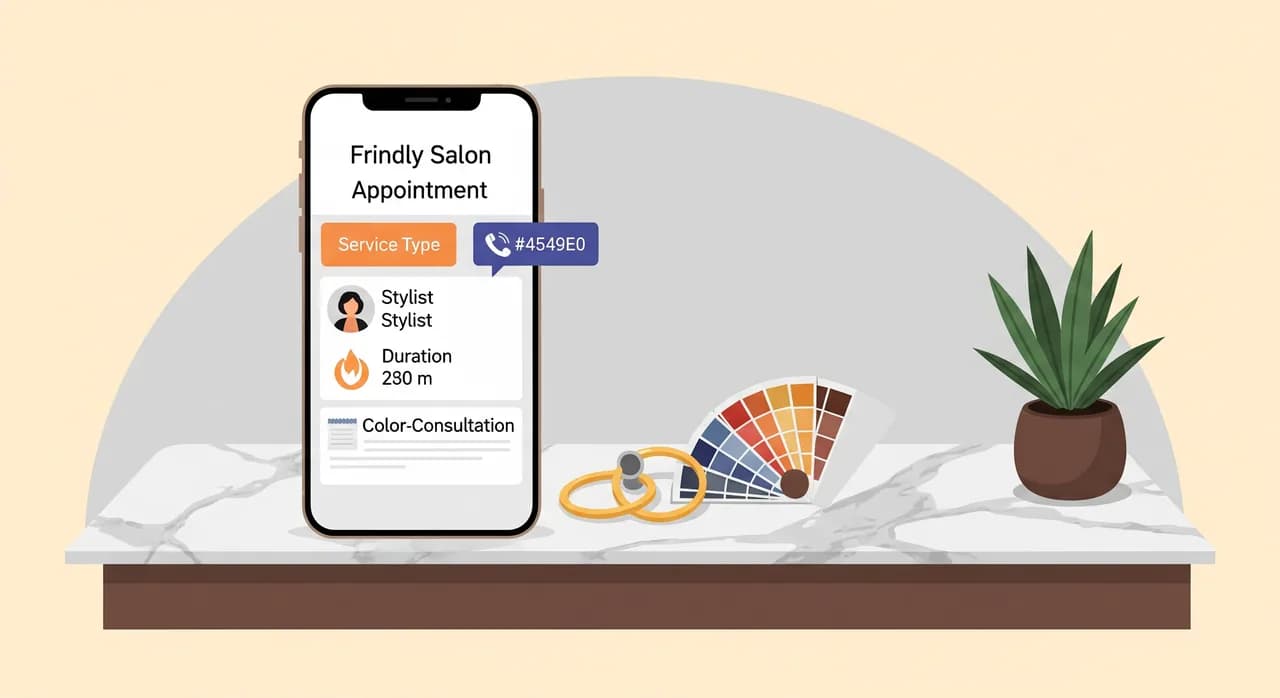
Presne tu sa generické rezervačné boty rozpadajú a tu musí salón premýšľať poriadne. Rezervácia v reštaurácii je jednoduchá: počet ľudí a čas. Termín v salóne sú tri premenné zamotané do seba — služba, kaderník a trvanie — a tá tretia závisí od prvých dvoch.
Služba plus trvanie
Strih nasucho trvá pätnásť minút. Strih s fúkanou skôr štyridsaťpäť. Melír na celú hlavu s tónovaním a fúkanou zhltne aj tri hodiny a zablokuje misku aj umývacie kreslo. Ak vám asistentka zarezervuje „farbenie“ do polhodinového okna, čas ste neušetrili — vyrobili ste si kolíziu na celé popoludnie.
Keď teda nastavujete profil, dajte každej službe realistické trvanie a buďte úprimní pri tých, ktoré kolíšu. Dlhé, husté alebo už farbené vlasy trvajú dlhšie — a je úplne v poriadku, ak to asistentka povie nahlas a označí termín ako „vyžaduje potvrdenie“, namiesto toho, aby sľúbila okno, ktoré nemôže existovať. Rezervácia, ktorá sedí do vášho dňa, má väčšiu hodnotu než rezervácia, ktorá vyzerá úhľadne na obrazovke a vybuchne na prevádzke.
Preferencia kaderníka a volajúci, ktorému je to „jedno“
Salóny stoja a padajú na vernosti konkrétnemu kaderníkovi. „Má Marta voľno vo štvrtok?“ je iná otázka než „stihne mi niekto tento týždeň odrasty?“ — a vaša asistentka musí zvládnuť obe. Nastavte, kto čo robí — nie každý farbí, niekto strihá len pánov, ďalší je váš špecialista na predlžovanie — a nechajte asistentku smerovať hovory podľa toho. Keď volajúci nemá preferenciu, mala by ponúknuť najskorší voľný termín u vhodných kaderníkov. Keď žiada konkrétneho človeka, mala by sa toho držať a ponúknuť skutočnú dostupnosť práve toho kaderníka — nie to nejako okecať.
- 1Zistí službuAsistentka sa opýta, čo volajúci chce — strih, farbenie, oboje, ošetrenie — a priradí to k službe so skutočným trvaním.
- 2Priradí kaderníkaOverí, kto danú službu robí a či volajúci žiadal niekoho konkrétneho, alebo mu vyhovuje ktokoľvek.
- 3Ponúkne poctivé termínyPonúka časy, ktoré naozaj sedia s trvaním aj s dňom daného kaderníka — nie len najbližšie okrúhle číslo na hodinách.
- 4Potvrdí a zhrnieRezerváciu nahlas zopakuje, potvrdí ju a pošle vám detaily, takže sa nič nestratí po ceste.
Otázky o farbení a konzultáciách: kde nakresliť hranicu
Pri farbení sa volajúci rozhovoria — a asistentka tu môže buď zažiariť, alebo vás strápniť. „Viete ma z čiernej na blond dostať na jednu návštevu?“ je skutočná otázka, ktorú ľudia do telefónu kladú, a úprimná odpoveď znie zvyčajne „možno, ale záleží na tom a musíme vaše vlasy vidieť“. Presne túto odpoveď má dať aj vaša asistentka — nie sebavedomý sľub, na ktorý nemá žiadne právo.
Správny vzorec je nechať AI riešiť logistiku otázky o farbení a úsudok vrátiť vám. Vie vysvetliť, že veľká zmena farby si zvyčajne najprv žiada konzultáciu, že pre každého nového klienta na farbenie je povinný test na alergiu a že tieto termíny trvajú dlhšie a stoja viac než jednoduché prefarbenie odrastov. Čo nesmie robiť nikdy, je diagnostikovať niekomu vlasy cez telefón alebo garantovať výsledok. V profile to sformulujte takto: zarezervuj konzultáciu, poznač si ambíciu, vlasy nech posúdi človek.
“Nechajte AI riešiť logistiku otázky o farbení a úsudok vráťte kaderníkovi.”
Toto nie je obmedzenie, ktoré treba skrývať — je to výhoda, o ktorú sa dá oprieť. Volajúca, ktorá počuje „veľmi radi, a keďže ide o veľkú zmenu, začneme krátkou konzultáciou a testom na alergiu“, sa cíti v dobrých rukách. Volajúca, ktorej sľúbia platinovú blond na jedno posedenie a v kresle sa dozvie zlé správy, sa cíti oklamaná. Úlohou AI je chrániť vzťah, nie uzavrieť rezerváciu za každú cenu.
Ako zvládnuť otázky na cenník a nepodliezť si cenu
„Koľko stojí strih a farbenie?“ je najčastejšia salónna otázka na planéte — a pasca pre ľudí aj pre boty. Odpoviete príliš presne a zaženiete sa do kúta; odpoviete príliš vágne a volajúci zloží a nájde si niekoho, kto mu to jednoducho povie. Zlatá stredná cesta je rozpätie s úprimným dovetkom — a AI je v jeho konzistentnom podávaní naozaj dobrá, zakaždým, bez nervozity v rušnú sobotu.
Ceny nastavte v profile ako rozpätia — „strih s fúkanou začína od X, farbenie závisí od dĺžky a hustoty, takže sa zvyčajne pohybuje medzi Y a Z“. Asistentka potom uvedie to isté jasné, nezáväzné rozpätie, či ide o prvý hovor dňa, alebo štyridsiaty. Žiadna juniorka omylom citujúca vlaňajšie ceny, žiadny majiteľ v zlej nálade podliezajúci cenu klientovi z ulice. Konzistentnosť tu v tichosti chráni vaše marže.
| Volajúci sa pýta | Slabá odpoveď | Lepšia odpoveď na nastavenie |
|---|---|---|
| Koľko stojí melír? | Jedna pevná cena | Rozpätie podľa dĺžky/hustoty plus „presne potvrdíme na konzultácii“ |
| Môžem ísť dnes na blond? | Áno, zapíšem vás | Možno — veľké zmeny farby začínajú konzultáciou a testom na alergiu |
| Striháte aj pánov? | Ticho alebo hádanie | Áno, u týchto kaderníkov, trvá to zhruba toľkoto, od X |
| Máte dnes voľné termíny? | Prepáčte, plno | Ponúknuť skutočný najbližší termín, alebo zapísať žiadosť o zavolanie pri zrušenom termíne |
Ako zaplniť dieru, keď niekto zruší termín
Zrušený termín je tichá nočná mora majiteľa salóna. Kompletné farbenie o desiatej sa o 9:15 zruší a zrazu máte trojhodinovú dieru a kaderníčku, ktorá postáva. Tá diera je čistá stratená tržba — kreslu je jedno, že dôvodom bolo choré dieťa. Zapĺňanie termínov zrušených na poslednú chvíľu je jedna z najhodnotnejších a najotravnejších prác v celom podniku — a presne ten druh práce, s ktorým AI recepčná vie potichu pomôcť.
Funguje to z oboch strán. Keď klient zruší termín cez telefón, asistentka to čisto zachytí, okamžite vám dá vedieť a uvoľní okno v poznámkach — namiesto toho, aby ste dieru objavili o 9:55. A na strane prichádzajúcich hovorov: keď sa ďalší volajúci opýta na „čokoľvek dnes“, čerstvo uvoľnené okno je k dispozícii na ponuku namiesto suchého „máme plno“. Diera, ktorá by kedysi zostala prázdna, dostane šancu zaplniť sa hneď ďalším človekom, ktorý zavolá.
- Zachytí zrušenie v momente, keď príde, takže neriadite termín-ducha.
- Okamžite vás upozorní na uvoľnený čas a kaderníka.
- Ponúkne dieru najbližšiemu vhodnému volajúcemu, ktorý chce niečo skoro.
- Vedie zoznam na zavolanie — ľudí, ktorí chceli skorší termín, takže keď sa niečo uvoľní, máte z čoho brať.
Nič z toho nenahradí šikovnú recepčnú, ktorá máva čakacou listinou. Lenže väčšina malých salónov vyhradenú recepčnú nemá — človek, ktorý dvíha telefón, je ten istý, ktorý práve niekomu melíruje vlasy. AI nesúperí s recepčnou vašich snov. Súperí so zvoniacim telefónom, na ktorý nikto nedosiahne — a proti tomu vyhráva zakaždým.
Kde končí — a prečo je to v poriadku
Úprimnosť je celá pointa dôveryhodného návodu, takže tu sú hranice. AI recepčná neposúdi, či niečie spálené, prefarbované vlasy prežijú ďalšie kolo odfarbovania — to je rozhodnutie kaderníka, osobne, s vlasmi pred očami. Neprevedie nervóznu prvonávštevníčku presne tým odtieňom, ktorý sedí k jej pleti. Nevycíti atmosféru tak ako dobrá recepčná, keď stála klientka vojde a vyzerá, že potrebuje kreslo a pohár vína viac než strih.
Čo však urobí: odstráni dôvod, pre ktorý sa tieto ľudské chvíle neustále prerušujú. Ak vás telefón prestane každých osem minút ťahať z prevádzky, budete s klientkou vo svojom kresle prítomnejší, nie menej. AI zvláda mechanickú, opakujúcu sa vrstvu — rezervácie, otváracie hodiny, cenové rozpätia, odkazy — takže remeslo a vzťahy zostávajú vaše. Takto použitá znamená tichší salón, nie chladnejší.
Nastavenie za jedno popoludnie
Nepotrebujete na to jedinú technickú kosť v tele. Nastavenie je sprievodca, nie projekt. Reálne môžete mať funkčnú asistentku odpovedajúcu na testovacie hovory skôr, než vám vychladne popoludňajší čaj.
- 1Zaregistrujte sa a opíšte svoj salónNázov, otváracie hodiny, adresa, základy. Päť minút písania toho, čo aj tak viete naspamäť.
- 2Vypíšte služby so skutočnými trvaniamiStrih, farbenie, ošetrenia, pánske strihanie — s poctivými časmi a cenovými rozpätiami. Táto časť stojí za dôkladnosť.
- 3Pridajte kaderníkov a kto čo robíAby asistentka správne smerovala „má Marta voľno?“ aj „ktokoľvek tento týždeň?“.
- 4Otestujte si ju samiZavolajte jej. Skúste ju nachytať. Položte zákernú otázku o farbení, otázku na cenu, otázku „máte dnes voľno?“. Dolaďujte profil, kým neznie ako váš salón.
- 5Presmerujte čísloNatrvalo, alebo len na nápory a čas po zatváracej. To, kedy odpovedá, máte stále v rukách vy.
Krok „otestujte si ju sami“ majitelia preskakujú — a potom ho ľutujú. Venujte dvadsať minút hraniu problémového volajúceho. Je to jediný najlepší spôsob, ako odhaliť medzeru medzi tým, čo ste mysleli, a tým, čo ste napísali — a je oveľa lacnejšie nájsť ju sami, než nechať skutočného klienta, aby ju našiel za vás.
Oplatí sa to malému salónu?
Prepočítajte si to úprimne pre vlastný podnik. Ak vám ujde čo i len hŕstka rezervovateľných hovorov týždenne a priemerná klientka príde na strih s trochou farby a — to je tá skutočná výhra — stane sa stálou zákazníčkou, ktorá sa vracia každých šesť týždňov, potom hodnota toho, že týchto volajúcich nestratíte, rastie veľmi rýchlo. Jedna zachránená klientka nie je jeden termín. Je to rok termínov plus kamarátky, ktoré privedie.
To je argument v prospech — a silný. Ale neverte na čísla cudziemu človeku — Vunoon má bezplatnú skúšobnú verziu presne preto, aby ste sa mohli na vlastné oči pozerať, ako sa váš zoznam zmeškaných hovorov scvrkáva, skôr než sa rozhodnete. Nasmerujte na ňu svoje nápory na dva týždne a čítajte zhrnutia. Prepisy vám slovami vašich vlastných volajúcich presne povedia, koľko rezervácií vám utekalo dverami, kým ste mali plné ruky.
Vie AI recepčná naozaj zarezervovať termín v salóne, alebo len prevziať odkaz?
Ako zvláda otázky o farbení, na ktoré sa cez telefón odpovedať nedá?
Budú moji klienti vedieť, že hovoria s AI?
Musím ju nechať zdvíhať každý hovor?
Ako dlho trvá nastavenie pre kaderníctvo?
Prestaňte strácať rezervácie kvôli telefónu, na ktorý nedosiahnete
Nastavte si asistentku Vunoon pre svoj salón za jedno popoludnie, otestujte si ju sami a keď budete spokojní, presmerujte na ňu číslo. Začnite nápormi a sledujte, ako sa zoznam zmeškaných hovorov scvrkáva.
Nastaviť asistentku pre salón
Vunoon vyvíja AI telefónneho asistenta, ktorý prijíma hovory vašej firmy nonstop — objednáva termíny, odpovedá na bežné otázky a posiela vám zhrnutie každého hovoru.