The AI Receptionist Playbook for Home Services
How plumbers, HVAC techs, and electricians can use an AI receptionist to triage urgent jobs, capture accurate addresses, and route true emergencies — without hiring a dispatcher.
 Vunoon13 min read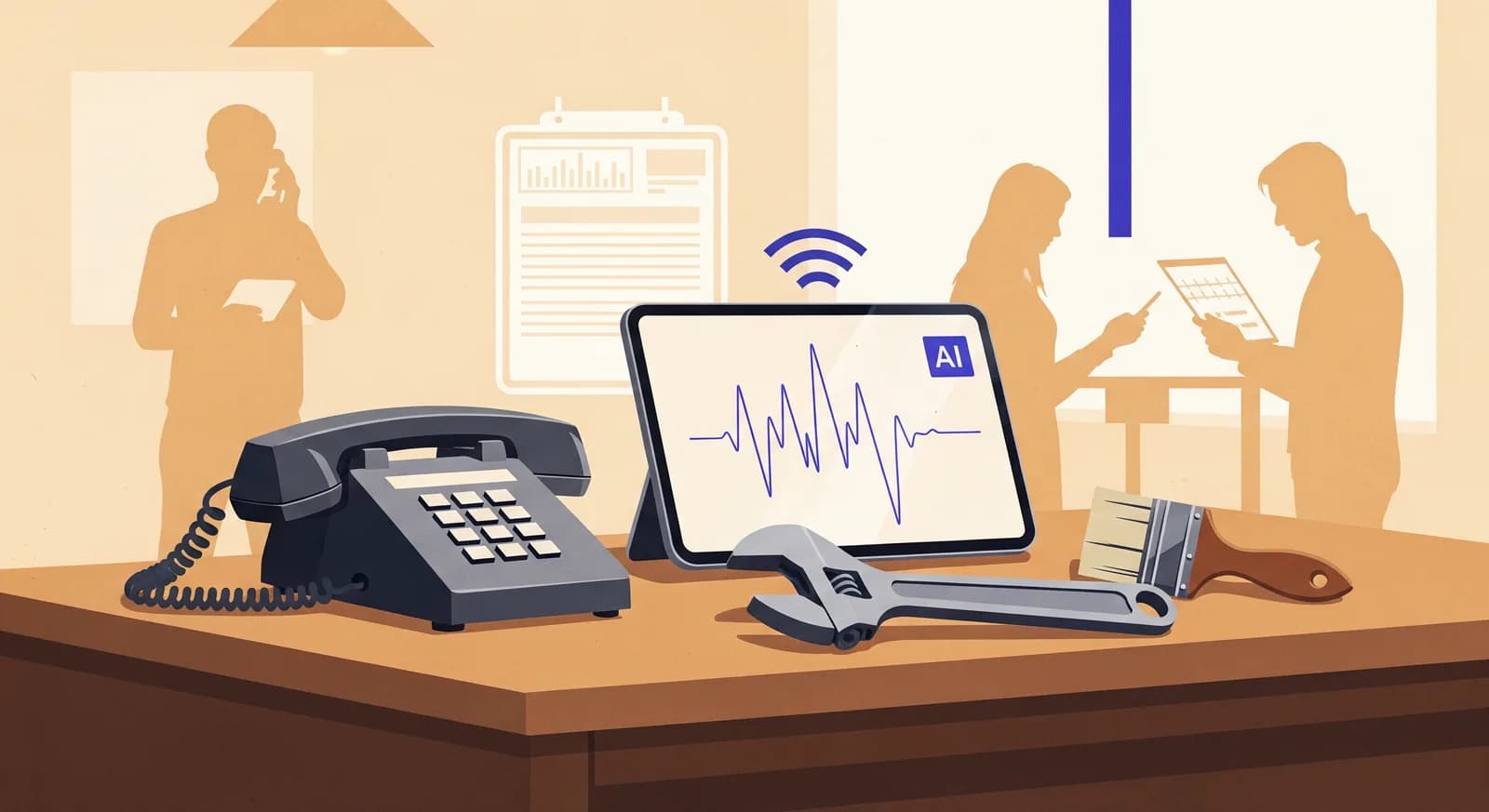
A burst pipe doesn't care that it's 6:40pm and you're elbow-deep in someone else's water heater. The homeowner is calling every plumber in the county, and the one who picks up gets the job. For trades, the phone isn't marketing — it's the front door of the business. An AI receptionist for home services exists to make sure that door is never locked.
For the trades, the phone is the job
Most home-services businesses live and die by the call. A homeowner smells gas, finds a soggy patch of ceiling, or wakes up to a cold house in January — and they reach for the phone. They're not filling out a contact form. They're not waiting for an email reply. They dial, and if you don't answer, they dial the next name on the list.
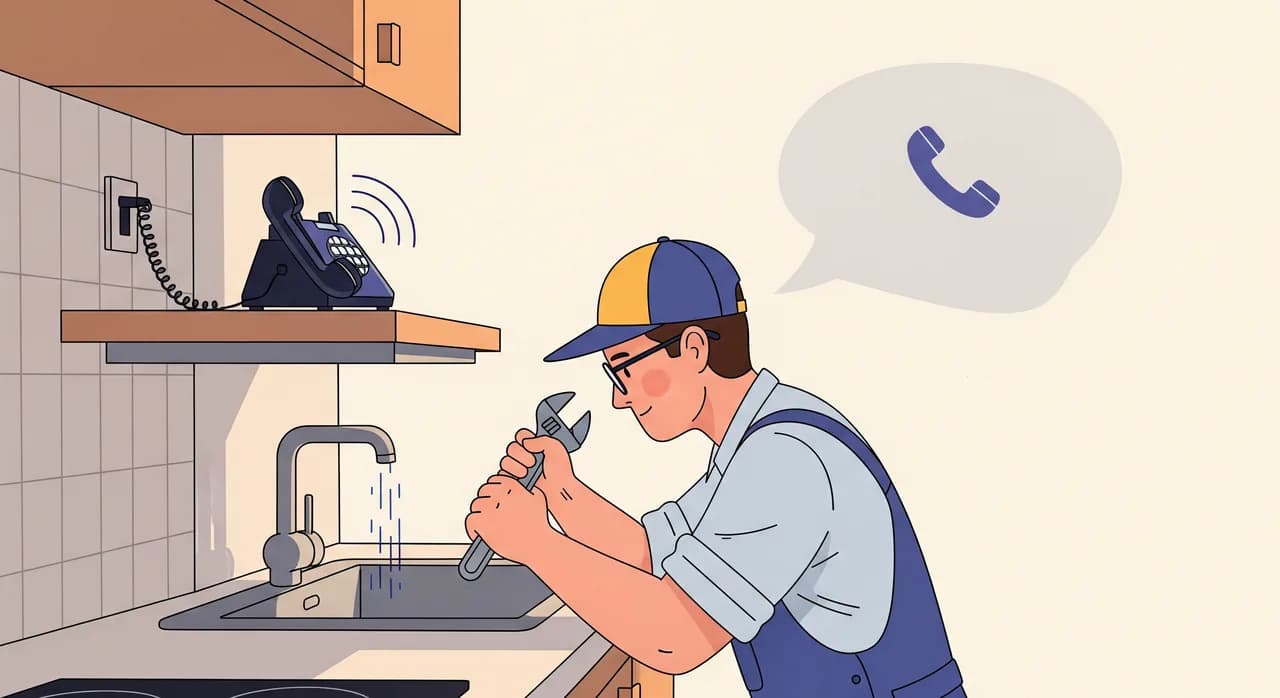
The cruel part is that the calls arrive precisely when you can't take them. You're under a sink, on a roof, driving between jobs, or 30 feet up a ladder with a live panel open. Answering means either stopping mid-task or letting it ring. Both cost you.
The math is uncomfortable once you look at it. If a plumber misses ten calls in a week and even three of them would have become jobs, that's not a rounding error — that's real revenue walking to a competitor. Over a year, the missed-call leak often dwarfs whatever you spend on ads to make the phone ring in the first place.
What an AI receptionist actually does for a trade
Strip away the jargon and it's simple. An AI receptionist answers your business line, speaks to the caller in a normal voice, and works from a profile you set up: what you do, where you work, roughly what things cost, when you're available, and who to reach in a real emergency.
It greets the caller, figures out what they need, asks the questions you'd ask, and then does one of a few things: books the job, takes a detailed message, or — if it's urgent — routes the call to whoever is on call. Every call ends with a written summary and a transcript landing in your inbox, so you're never guessing what someone said while you were on a roof.
What it is not: it's not pretending to be you, and it's not diagnosing the fault. When a caller asks whether they're talking to a person, it says it's an assistant. When a problem needs a human judgment call, it hands off. Used well, it's the calm, tireless dispatcher you could never afford to keep on staff — not a robot pretending to be a master electrician.
The core skill: telling urgent from routine
The single most valuable thing an AI receptionist does for a trade is triage. Not every call is an emergency, and treating them all the same is how you either burn out chasing false alarms or miss the one call that mattered. The goal is a clean split within the first thirty seconds of the conversation.
You define the triage rules once, in plain language, and the assistant applies them consistently — at 2pm and at 2am, on the tenth call of the day and the fiftieth.
What counts as urgent
- Plumbing: active leak or burst pipe, sewage backup, no water to the whole property, a water heater flooding.
- HVAC: no heat in freezing weather, no cooling during a heatwave for a vulnerable household, a suspected gas smell.
- Electrical: burning smell, sparking outlet, a total power loss, a scenario with any hint of a safety hazard.
- Anything the caller describes with words like flooding, smoke, sparks, gas, or can't shut it off.
What can wait until business hours
- Quote requests for planned work — a bathroom remodel, a panel upgrade, a new AC unit for next summer.
- A dripping tap, a slow drain, a thermostat that reads a couple degrees off.
- Maintenance and tune-up bookings, filter changes, annual service.
- General questions about pricing, availability, or your service area.
The dividing line isn't just severity — it's whether waiting until morning makes things materially worse. A slow drain at midnight is annoying. A sewage backup at midnight is a Tuesday you'll never forget. The assistant's job is to catch that difference and act accordingly.
Capturing the address and problem — accurately
A job you can't find is a job you don't have. Half of dispatch is knowing exactly where to send the truck and what to bring. This is where a patient assistant beats a scribbled note taken between hammer swings, because it confirms the details instead of assuming them.
The trick with addresses is spelling and confirmation. Voice makes street names and unit numbers slippery — "Thornbury" and "Thornberry," apartment 4B versus building 4, flat B. A well-built assistant reads the address back to the caller and asks them to confirm before it moves on. That one habit eliminates a huge share of no-show and wrong-house calls.
- 1The propertyFull street address, unit or apartment number, and a landmark or gate code if the place is hard to find. Read it back for confirmation.
- 2The problem, in the caller's wordsWhat's happening, where in the home, and when it started. Capture the exact phrasing — "water coming through the ceiling in the hallway" tells your tech more than "leak."
- 3The specifics that change the jobType of system where relevant (gas vs. electric water heater, breaker panel age, AC brand), and whether the water or power is currently on or off.
- 4Access and timingWhen someone can be home, whether there are pets, parking notes, and the best callback number.
- 5ConfirmationThe assistant summarizes the whole thing back — address, problem, timing — so both sides agree before hanging up.
“Half of dispatch is knowing exactly where to send the truck and what to bring. The other half is picking up.”
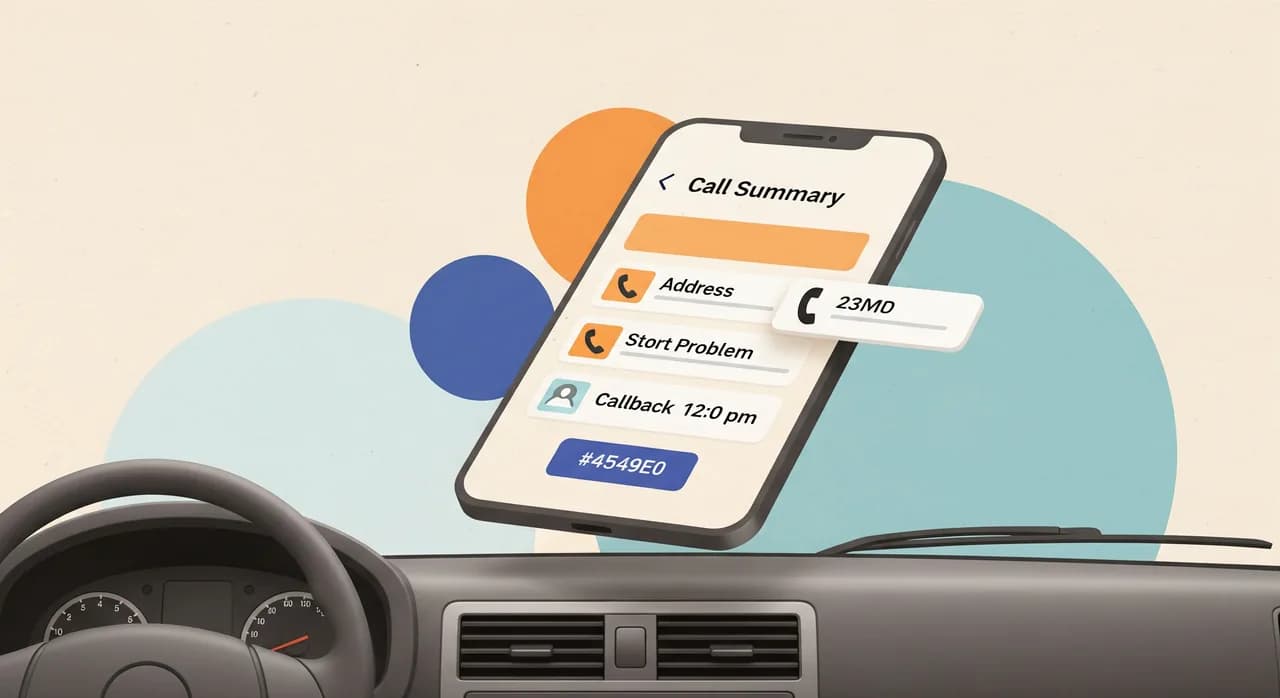
The payoff shows up on your phone as a clean summary: address confirmed, problem described in the caller's own words, water shut off at the main, someone home after 3pm, dog in the yard. You read that in ten seconds and you already know whether to roll now, in the morning, or to call back with a quote.
Turning quote requests into real leads
Not every call is a fire. A big share of them are people planning work — a homeowner pricing a heat pump, a landlord who needs a rewire quote, someone finally replacing that ancient boiler. These are your bread-and-butter margins, and they're the calls most likely to leak away when you can't pick up during the workday.
The problem with a plain voicemail is that it collects half a lead. "Hi, it's Sarah, call me back about a quote" gives you a name and a callback game of phone tag. A structured intake gives you a lead you can actually price and prioritize before you even dial back.
A good quote intake captures scope ("replace two-zone AC, roughly 1,800 square feet"), timeframe ("hoping to book before June"), whether it's owner-occupied or a rental, and any constraints the caller already knows about. That context lets you decide whether it's a five-minute phone quote or a site visit — and lets you call back sounding prepared rather than cold.
After-hours routing: the on-call playbook
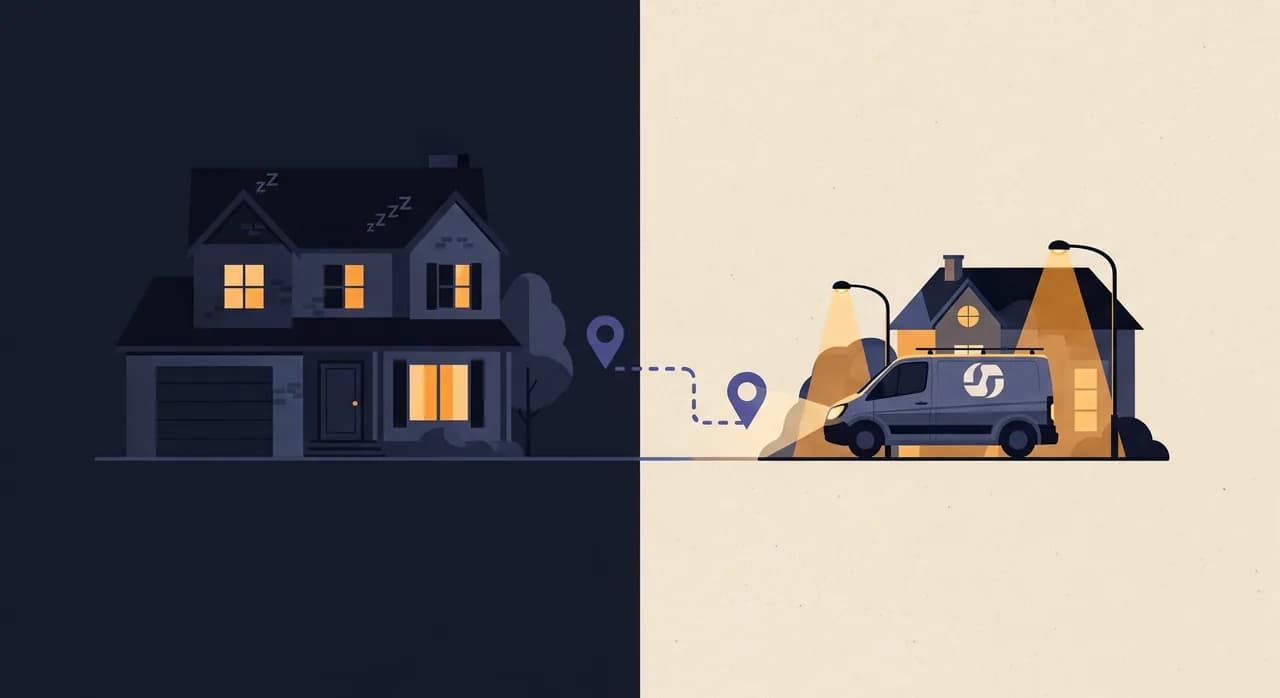
Nights and weekends are where trades win or lose. The emergency premium is real, and the homeowner with a flooding basement at 11pm is not price-shopping — they want whoever answers. The question is how to be reachable without living tethered to your phone.
This is where the routine-versus-urgent split earns its keep. After hours, the assistant applies stricter rules: a routine drip becomes a message and a next-morning callback, while a genuine emergency triggers a handoff to whoever is on call. You're not woken up for a dripping tap — but you never sleep through a burst main again.
How the routing decision plays out
- 1Answer and assessThe assistant picks up instantly, greets the caller, and runs the emergency triage questions.
- 2Routine after hoursIf it can wait, the assistant takes a full message and promises a morning callback — then logs it so it's at the top of tomorrow's list.
- 3Genuine emergencyIf it's urgent, the assistant confirms the address and the danger, then routes the call or fires an alert to the on-call tech, with the summary attached.
- 4If nobody picks upYou set the fallback: try a second number, take an urgent message flagged for immediate callback, or advise emergency services on a safety hazard. Nothing falls into a silent void.
The reason this matters: an after-hours emergency captured cleanly is often your highest-margin job of the week. Missing it doesn't just cost that call — the homeowner remembers who showed up at midnight, and that's who they call for the next decade. This is precisely what a dedicated after-hours answering setup is for.
Setting it up without a week of downtime
The fear with any phone tool is that setup will eat a day you don't have. In practice, getting a trades assistant running is closer to filling out a good job sheet than programming anything. You describe your business the way you'd explain it to a new apprentice.
- 1Describe the businessTrade, service area, hours, and the rough price bands you're comfortable quoting on the phone. A short wizard walks you through it.
- 2Write your triage rulesIn plain language: what counts as an emergency, what waits until morning, and who's on call when.
- 3Test it by calling itRing your own assistant and role-play a burst pipe and a quote request. Tweak the wording until it sounds like your shop.
- 4Forward your numberSend calls to it always, only after hours, or only when you don't pick up in a few rings — your call.
It works in 25+ languages, which matters more in the trades than people expect — a good share of home-services calls come from households where English isn't the first language, and "press one for" menus lose those jobs. A free trial means you can test it against your real calls before you commit to anything.
Where it fits — and where it doesn't
Straight talk, because overselling this helps nobody. An AI receptionist is excellent at the front-of-house work: answering, triaging, capturing details, booking routine jobs, and routing emergencies. It is not a replacement for your judgment on the job, and it shouldn't try to be.
- It won't diagnose the fault. It captures symptoms accurately; you decide what's actually wrong.
- It won't give safety instructions on hazards. On gas, fire, or live-electrical calls it escalates — it doesn't coach.
- It won't invent prices. It quotes only the bands you've set, and hands off anything outside them.
- It won't pretend to be human. Asked directly, it says it's an assistant — which callers respect more than a bad impersonation.
Think of it as the dispatcher and answering desk, not the tech. It makes sure every call is answered, sorted, and captured — so that the human work you do is the right work, on the right job, with the right details in hand.
Common questions from trades
Can an AI receptionist tell a real plumbing emergency from a minor issue?
Will it get the customer's address right over the phone?
What happens on an emergency call after hours if my on-call tech doesn't answer?
Does it replace my dispatcher?
How long does it take to set up for a plumbing or HVAC business?
Stop losing jobs to a ringing phone
Set up an AI receptionist that triages emergencies, captures every address correctly, and routes after-hours calls to your on-call tech. Describe your trade, test it in minutes, and try it free against your real calls.
See it for home services
Vunoon builds an AI phone assistant that answers your business calls 24/7 — it books appointments, answers common questions and sends you a summary of every conversation.