AI Receptionist Limitations: The Calls It Can't Handle Yet
An honest map of where an AI phone assistant hits its limits — the negotiations, judgment calls, and emotional conversations that still belong to a human. Knowing the edges is how you use it well.
 Vunoon16 min read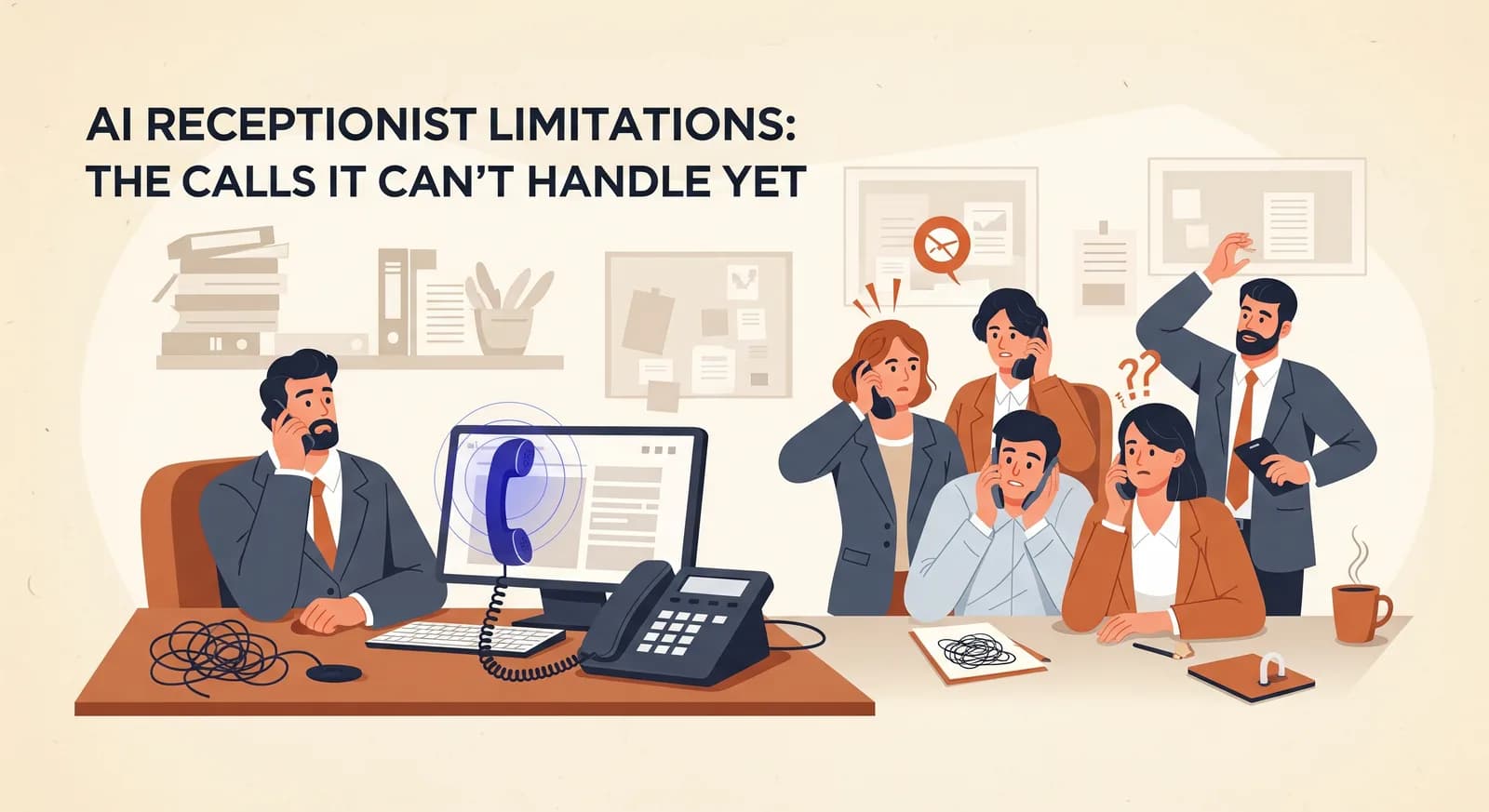
Every pitch for an AI phone assistant tells you what it can do. Fewer people will tell you what it can't — which is odd, because that second list is exactly what decides whether the thing helps you or embarrasses you. This is that list, written by people who build one.
Let's set the frame honestly. An AI receptionist is very good at a specific job: picking up the phone every time, being polite at 2am, answering the same twelve questions it gets asked forty times a day, and taking down a name, a number, and a reason for the call. For a small business drowning in missed calls, that alone is worth a lot. But good at a job is not the same as good at everything a phone call can throw at you, and the gap between those two is where reputations get dented.
So this piece is a boundary map. Not a hype takedown, not a sales page — a candid look at the calls where today's technology quietly reaches its limit, why it reaches it, and what a well-designed assistant should do when it gets there. If you understand the edges, you can point the tool at the middle where it shines and route the edges to yourself. That is the whole trick.
Why an AI receptionist has limits at all
It helps to know the shape of the machine before you know its edges. An AI phone assistant works by listening to what a caller says, turning it into text, deciding on a response from what it knows about your business, and speaking that response back — all in about a second. It is fluent, patient, and consistent. What it is not is a person with a stake in the outcome.
That distinction matters more than any technical spec. A human receptionist reads a room they can't see. They hear the tremor in a voice, notice that a regular customer sounds off today, sense when a caller is bluffing about going elsewhere, and quietly decide to bend a rule because the situation obviously calls for it. Those aren't features you switch on. They come from having skin in the game and years of pattern-matching against real consequences. Current AI can imitate the surface of that and genuinely help — but it does not understand stakes the way a person who owns the outcome does.
Keep that one idea in your pocket for the rest of this article. Almost every limit below is a variation on it: the call requires judgment about consequences the assistant cannot feel, or context it was never given, or authority it does not have.
The negotiation it shouldn't be having
Imagine a caller who wants a discount. Not a listed offer — a discount they are inventing on the spot because they've had three bad experiences and they're testing how much goodwill they can extract. A good human handling that call is running a fast, unspoken calculation: how valuable is this customer, how justified is the complaint, what can I give away without setting a precedent, and how do I make them feel heard while still protecting the business?
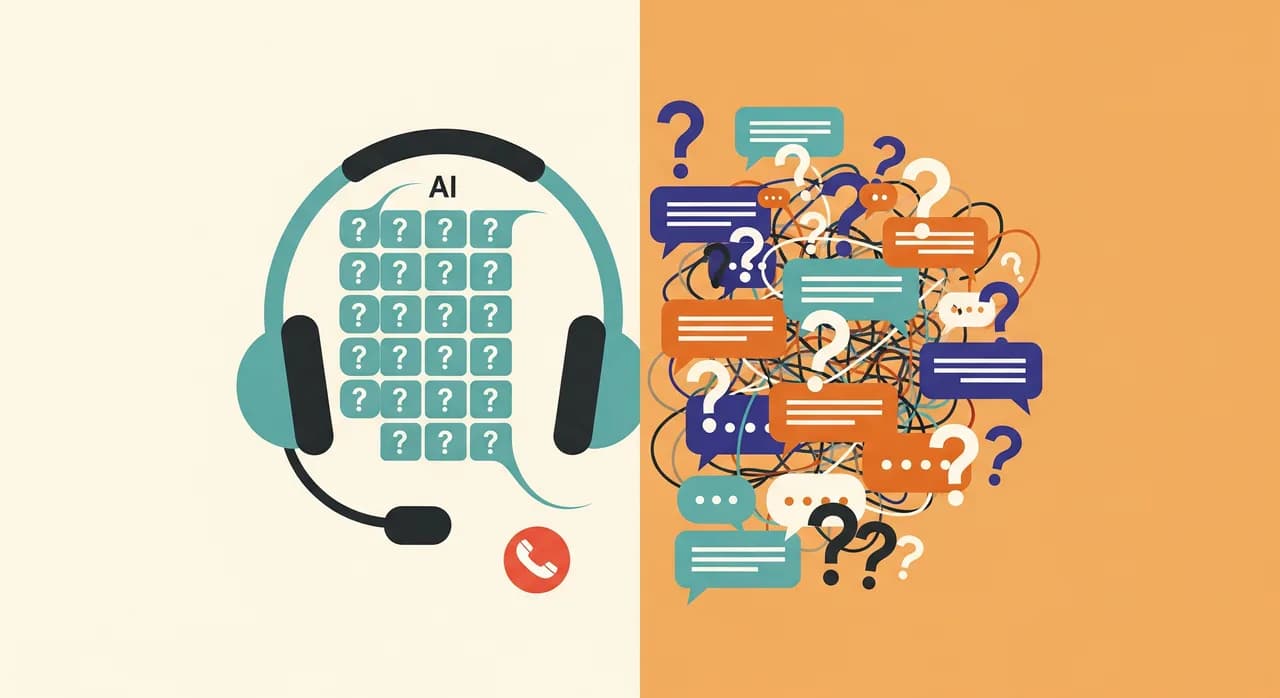
An AI assistant can hold a pleasant conversation with that person. What it cannot do — and should not be allowed to do — is improvise commercial terms. Discounts, payment plans, waiving a fee, quoting a bespoke price for a complicated job — these are decisions with money and precedent attached. The assistant has no authority to spend your margin, and no way to weigh the long-game value of a customer it has never met.
The failure mode here is subtle because the assistant sounds confident. It won't stammer or say "I'm not sure." It'll answer smoothly — which is exactly why an unbounded assistant is dangerous in a negotiation. Confidence without authority is how you end up honouring a price nobody meant to give. The fix isn't smarter AI; it's a hard boundary: negotiations get captured, summarised, and handed to you, warm and unresolved, so you can make the call that's actually yours to make.
Emotionally heavy calls belong to a human
Some calls aren't about information at all. Someone rings a veterinary clinic because their dog collapsed. Someone calls a dental practice at midnight in real pain and real fear. Someone phones to cancel a wedding venue booking and their voice cracks halfway through the sentence. These calls carry weight, and how they're handled is remembered for years.
An AI can be trained to sound gentle. It can say the calming words. But a distressed caller can usually tell — and even when they can't, the empathy is performed, not felt, and the moment it hits a question it wasn't built for, the warmth evaporates into a scripted deflection. That contrast, kindness followed by a robotic wall, is worse than an honest "let me get someone."
“A caller in distress doesn't need a perfect answer. They need to feel that a human is now involved — and that is the one thing a script can't fake.”
The right behaviour for emotionally charged calls is triage, not resolution. The assistant should recognise the register of the conversation, respond with genuine brevity and respect, and get out of the way fast — flag it as urgent, escalate to whoever's on call, or take a message it marks in red. What it must never do is try to counsel, reassure at length, or handle the emotional labour of the moment. That labour is precisely the part that requires a person.
Judgment calls with no right answer in the manual
A regular customer of eight years calls to ask if they can drop off their car an hour after closing because their childcare fell through. There is no policy for this. The right answer depends on who they are, how the day went, whether the mechanic is happy to wait, and a dozen human factors that live entirely outside the business profile. This is a judgment call, and judgment is the thing AI is furthest from replacing.
The assistant knows your posted hours. It does not know that this particular customer refers half your new business, or that your lead mechanic owes them a favour, or that you'd happily stay ten minutes late for someone who's never once been late themselves. It answers from the rulebook because the rulebook is all it has. And the rulebook is exactly what a good owner overrides all day long.
- Exceptions to policy — squeezing someone in, bending a cancellation window, honouring a promise a staff member made verbally.
- Reading a relationship — treating a decade-long client differently from a first-time caller, when the system sees both as "a caller."
- Weighing trade-offs — is it worth staying open late for this booking, given what else is on today? The assistant can't see "what else is on today."
- Sensing a bad fit — noticing that a job is more trouble than it's worth and gently steering it elsewhere, which requires a nose the machine doesn't have.
None of this is a knock on the technology. It's a description of what judgment is: applying values to a situation the rules didn't anticipate. Let the assistant handle the cases the rules cover cleanly, and hand you the few that need a human. Trying to make it decide the few is how you get a decision you'd never have made yourself.
Chaos: three requests, two people, one phone
Real phone calls are messier than any demo. A caller changes their mind mid-sentence. Someone in the background shouts a correction. A single call bundles a booking, a complaint, and a question about something the business doesn't even offer. People trail off, backtrack, use the name of a staff member who left two years ago, and expect the person on the line to just keep up.
Humans are astonishingly good at this. We hold three threads at once, guess what someone meant from a half-finished phrase, and gracefully ignore the noise. An AI assistant is improving here fast, but chaos is still where it's most likely to lose the plot — literally. Give it one clear intent and it's excellent. Give it a tangle of three overlapping ones and it may latch onto the wrong thread, confirm a detail nobody said, or answer the question it understood rather than the one that was asked.
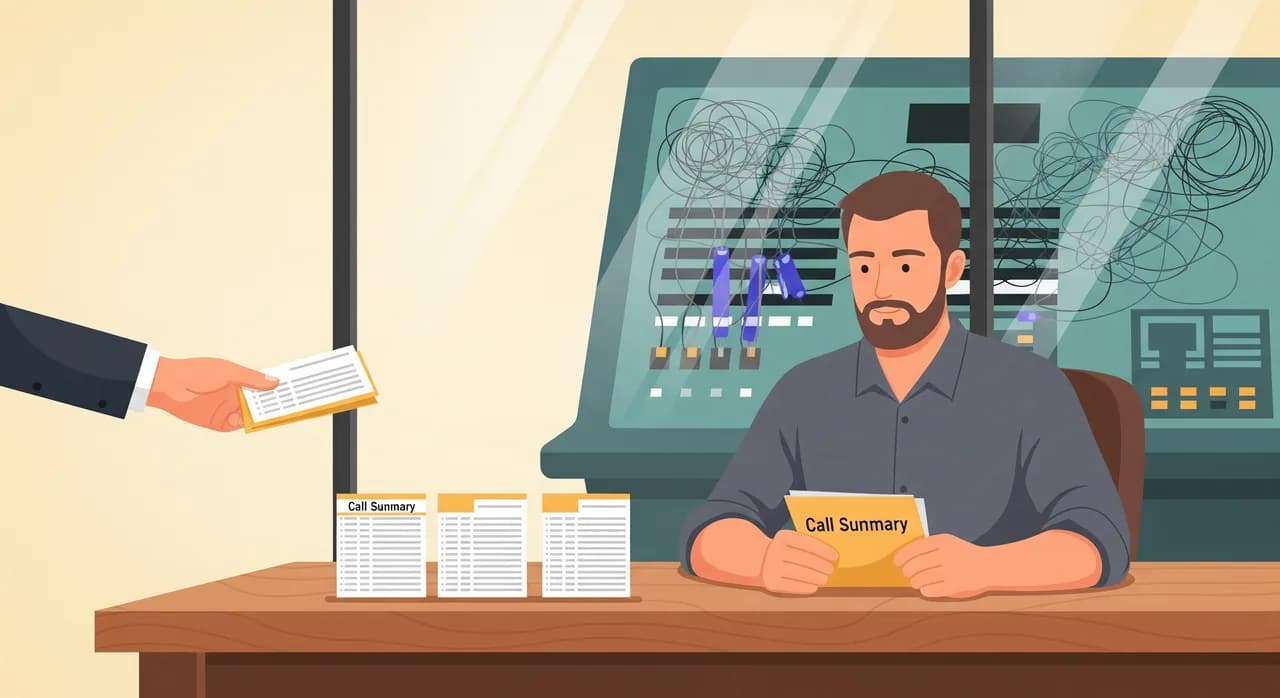
The saving grace is that a good assistant fails safely here. Faced with confusion it can't resolve, the right behaviour is to slow down, confirm what it did catch, and — if it's still lost — stop guessing and take a message. A wrong booking confidently confirmed is far more expensive than an honest "I want to make sure I've got this right, so let me have someone call you straight back." Design for graceful surrender, not heroic guessing.
“The measure of a good AI receptionist isn't how rarely it gets stuck. It's how gracefully it behaves the moment it does.”
Questions it was never told the answer to
This one is often mistaken for a flaw in the AI when it's really a flaw in the setup. An assistant knows what you tell it: your services, your hours, your prices, your policies. Ask it something outside that profile — "do you use hypoallergenic products?", "can you fit a booking for a group of fourteen?", "is your upstairs room wheelchair accessible?" — and if you never told it, it has two choices. Admit it doesn't know, or make something up.
The good news is that knowledge gaps shrink every time you use the thing. The summaries it sends you reveal the questions callers actually ask, and you add those answers to the profile. Within a couple of weeks it knows far more than it did on day one. But on any given day it only knows what's in the profile, and pretending otherwise — expecting it to have opinions on things you never mentioned — is a recipe for confident nonsense. Feed it well and set it up to say "I'll check" for everything else.
When a single wrong word is a real problem
Most calls tolerate a little slack. If the assistant mishears "Thursday" as "Tuesday" and you catch it in the summary, no harm done. But some domains have no slack at all. A caller giving a long insurance policy number, a medication name spelled letter by letter, an exact legal deadline, a dosage — here a single transposed character isn't a rounding error, it's a genuine problem.
Speech recognition is very good and still not perfect, especially with accents, background noise, unusual names, and long strings of digits. For a booking, that's fine — you can confirm details later. For anything where precision is the entire point, an AI phone assistant should be capturing intent and routing to a human, not being the system of record. It's a brilliant front door and a poor place to store your most exact, most consequential information.
| Type of call | AI handles it | Human should own it |
|---|---|---|
| The same FAQ, forty times a day | Yes — this is its home turf | No |
| Taking a booking with normal details | Yes, with a confirmation step | Only if disputed |
| Negotiating a discount or bespoke price | No — capture and hand off | Yes |
| A distressed or emergency caller | Triage and escalate only | Yes |
| A judgment call outside policy | Capture context, don't decide | Yes |
| Exact numbers where one digit matters | Capture, then human confirms | Yes |
The handoff is the whole ballgame
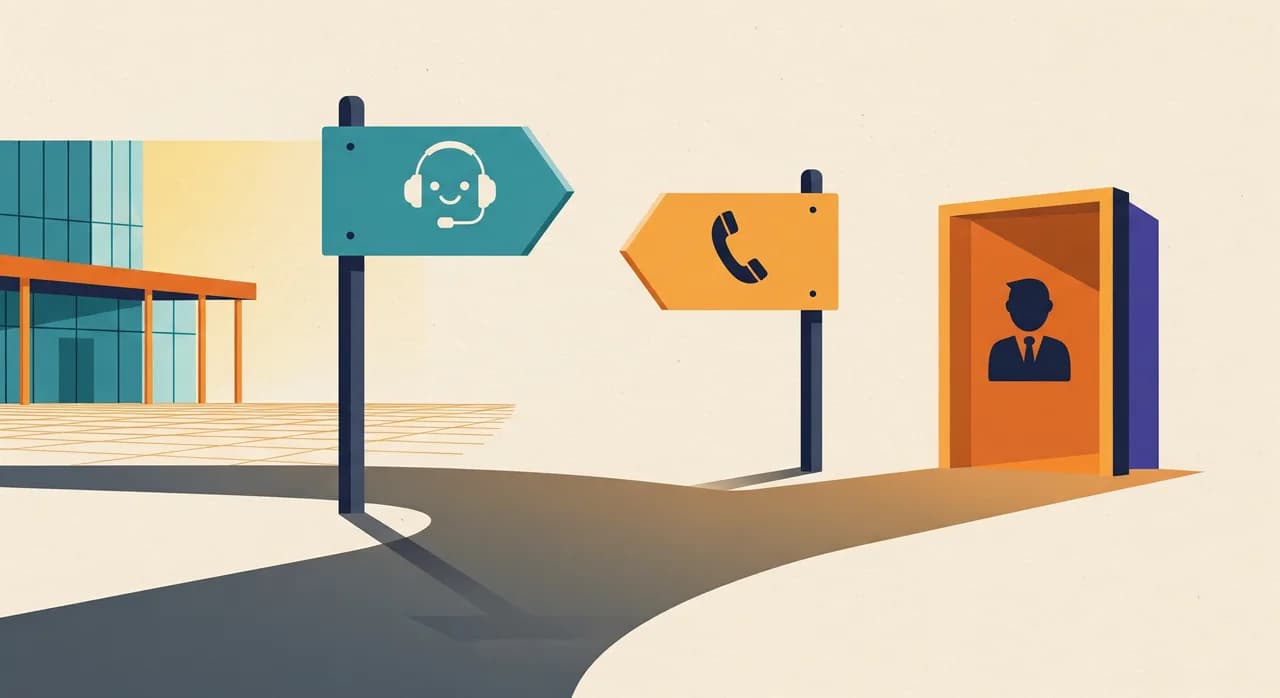
Read back over every limit above and you'll notice they share a solution. The assistant doesn't need to solve the hard calls. It needs to recognise them and hand them off cleanly. A limit is only a problem if the tool tries to power through it. Handled well, a limit is just a well-marked exit.
That's why the quality of the handoff matters more than the length of the feature list. When the assistant hits its edge, what happens next? Does the caller get an honest, unbotherd "let me have someone call you right back," or a loop of the same three canned lines? Does the owner get a crisp summary — who called, what they wanted, why it needs a person — or a vague "missed call" with no context? The difference between a helpful assistant and an annoying one is almost entirely here.
- 1Recognise the edgeThe assistant should notice the markers of a call beyond its remit — negotiation, distress, confusion, a question it can't answer — rather than plough ahead.
- 2Be honest, not evasiveIt should say plainly that a person will follow up. Vunoon's assistant doesn't pretend to be human when asked, and it doesn't fake an answer it doesn't have.
- 3Capture the contextName, number, reason for the call, and the emotional temperature if it matters — everything you'd need to pick up where it left off.
- 4Route it fastUrgent calls jump the queue; the rest land in a summary and transcript sent straight to you, so nothing rots in a voicemail you'll check tomorrow.
How to use it well, limits and all
Knowing the boundaries isn't a reason to avoid an AI receptionist. It's a reason to set one up thoughtfully. A tool used inside its competence is a huge help; the same tool pushed past its competence is where the horror stories come from. Here's how to stay on the right side of that line.
- Load the profile properly. The more it knows about your real services, hours, prices, and policies, the fewer calls fall into the "it doesn't know" bucket.
- Define your escalation triggers. Decide up front which situations mean get a human now, and make sure the assistant is set to hand those off instantly.
- Read your summaries for a week. They tell you exactly which questions to add and which calls it's routing correctly, so it improves fast.
- Test it on the hard calls before you trust it. Pretend to be an angry customer, a confused one, an emergency. Watch how it exits. That behaviour is what your callers will actually experience.
- Treat it as your front door, not your final decision-maker. It catches every call and sorts the easy from the hard. You still own the hard ones.
Do that, and the maths gets very friendly very quickly. If you miss even a handful of calls a week and each could have been a booking, an assistant that reliably catches every one — and honestly hands you the tricky few — pays for itself long before you've finished reading its transcripts. The limits are real. They're also easy to work around once you can see them.
What are the main limitations of an AI receptionist?
Can an AI phone assistant handle an angry or upset customer?
Will an AI receptionist make things up if it doesn't know the answer?
What happens when the assistant can't handle a call?
Does the assistant get better at these edge cases over time?
See exactly where the line sits
The clearest way to understand what an AI phone assistant will and won't do for your business is to walk through how it actually handles a call — routine and tricky alike.
See how the handoff works
Vunoon builds an AI phone assistant that answers your business calls 24/7 — it books appointments, answers common questions and sends you a summary of every conversation.