Missed Calls and Quiet Churn: How Phone Availability Protects Customer Retention
Everyone worries about the leads a missed call costs. The bigger, quieter loss is the regular customer who tried to reach you, couldn't, and never came back. Here's how phone availability shapes customer retention.
 Vunoon13 min read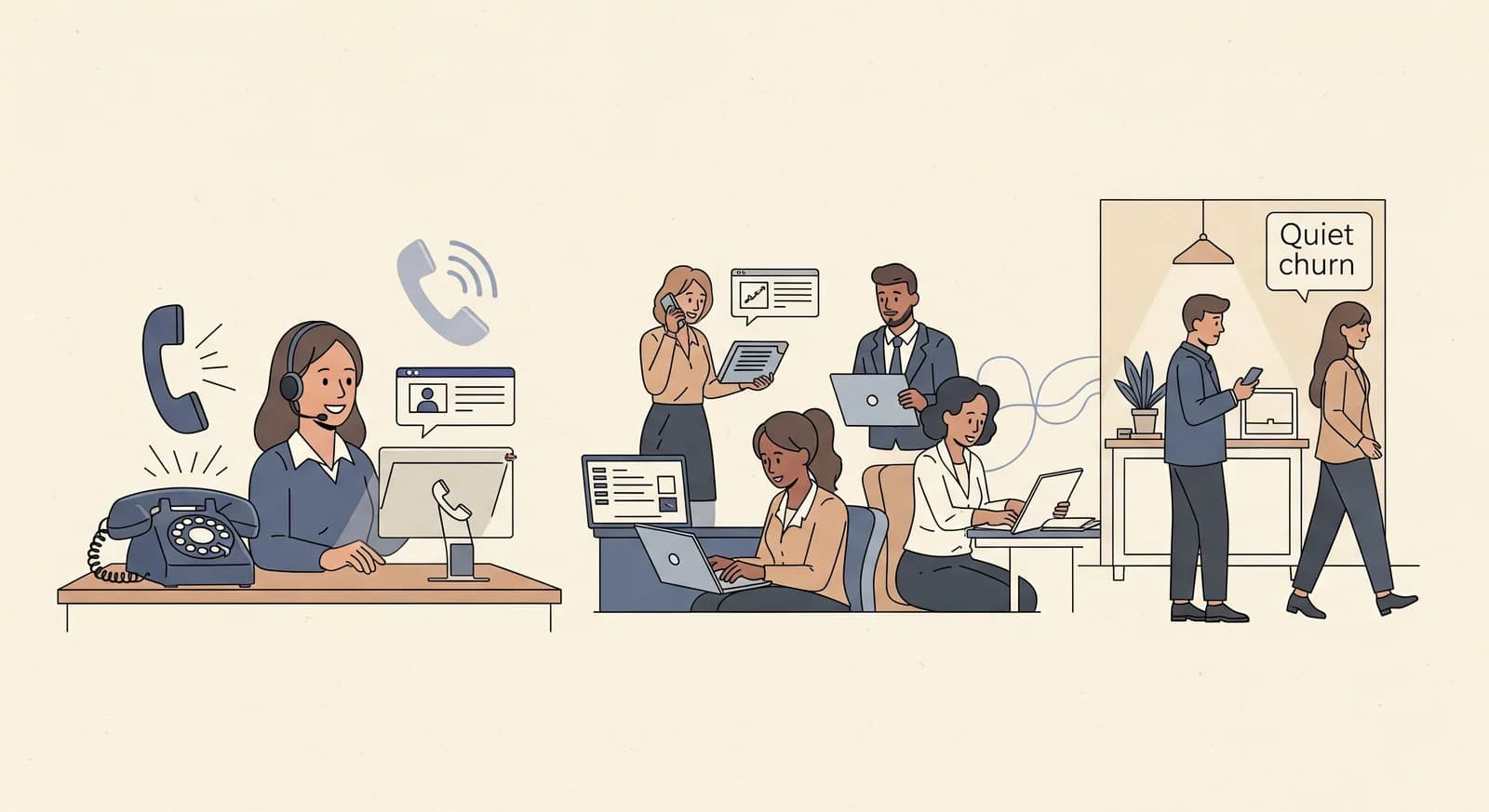
There's a version of losing a customer that never shows up as a dramatic event. Nobody complains. Nobody leaves a one-star review. A person who has quietly paid you for two years calls on a Tuesday to reschedule, gets voicemail, tries a competitor because they need it handled today, and simply never rings your number again. You don't feel the loss until you notice, months later, that a familiar name has stopped appearing on the calendar.
The loss you can't see is bigger than the one you can
Most of what's written about missed calls is about leads. A new customer discovers you, calls, gets no answer, and books someone else. That's real money, and it's worth fixing. But it's the visible half of the problem. The invisible half is customer retention, and it's usually the larger number, because keeping a customer you already earned is far cheaper than winning a new one.
The connection between phone availability and retention is easy to miss precisely because it's undramatic. A missed lead call feels like a near-miss you can picture. A missed customer call feels like nothing at all — the phone rang, it stopped, life went on. The customer didn't rage-quit. They just stopped needing to be loyal, because loyalty is mostly a habit, and habits break when they become inconvenient.
This article is about that quieter erosion: why your existing customers drift when they can't reach you, why it hides from your metrics, and what changes when someone — or something — actually answers.
Regulars don't call to buy — they call to keep buying
New leads and existing customers call for different reasons, and that difference matters. A lead calls to be sold. An existing customer calls to be maintained. They want to move Thursday's appointment to Friday, check whether you carry a part, ask if their booking is confirmed, tell you the gate code changed, or find out whether they need to bring anything. None of these are sales calls. All of them are retention moments.
Here's the trap: because these calls don't feel like revenue, they're the ones businesses most cheerfully let slip. The owner is with a client, the phone rings, and the unspoken logic is it's probably just an existing customer, they'll call back. Often they don't. They handle it another way — and "another way" is where churn lives.
“A new customer calls to be sold. An existing customer calls to be kept. Businesses let the second kind ring out because it doesn't feel like revenue.”
Consider a two-chair dental practice. A patient of six years calls at 8:10 in the morning because a filling came loose overnight. The front desk isn't staffed until nine. The call goes to voicemail. By nine, the patient — who was in genuine discomfort — has phoned two other practices and taken a same-day slot at whichever answered first. They weren't unhappy with you. They were just in pain at 8:10 and you weren't there. That's not a lost lead. That's a lost relationship, and probably a lost family, since dental patients bring their households.
Why this churn is invisible in your numbers
Lead-based missed calls at least leave a trace: an unknown number in the call log, a quote that never got sent. Retention churn leaves almost nothing. The customer's number is familiar, so a missed call from them looks like any other. There's no obvious "we lost this one" moment. The gap only becomes visible in aggregate, over quarters, as a slow decline in repeat visits that's easy to blame on the economy, the season, or the weather.
- No complaint is filed. People rarely tell you they left because you didn't pick up. They just leave.
- The number looks routine. A missed call from a regular is indistinguishable from a wrong number in your log.
- The decline is gradual. One drifted customer a week is invisible; fifty over a year is a real dent in revenue.
- It gets misattributed. "Things are slow lately" is easier to believe than "customers can't reach us."
The retention moments most likely to be missed
Not every missed call threatens a relationship equally. Some are trivial; some are the whole ballgame. The dangerous ones share a trait: the customer needs a small thing handled now, and if you're not reachable, the friction of trying you again exceeds the friction of switching.
The reschedule
The single most common retention call, and the most quietly costly. A customer's plans change; they want to move an appointment. If they can't reach you, two bad things can happen. They no-show the original slot (you lose the time), or they cancel by giving up and rebooking with whoever picks up. A caught reschedule is a saved relationship and a saved slot. A missed one loses both.
The quick question
"Do you have my size in stock?" "Is my car ready?" "What time do you close today?" These feel too small to matter, which is exactly why they erode loyalty. A customer who has to chase you for a thirty-second answer three times will, on the fourth, quietly decide it's not worth the effort — even if they liked you.
The urgent one
A leak, a pain, a locked door, a pet that won't eat. Urgency compresses patience to zero. This is the call where phone availability and retention are most tightly linked, because the customer's decision to stay or go is made in the ninety seconds after they hang up on your voicemail.
What a lost regular actually costs
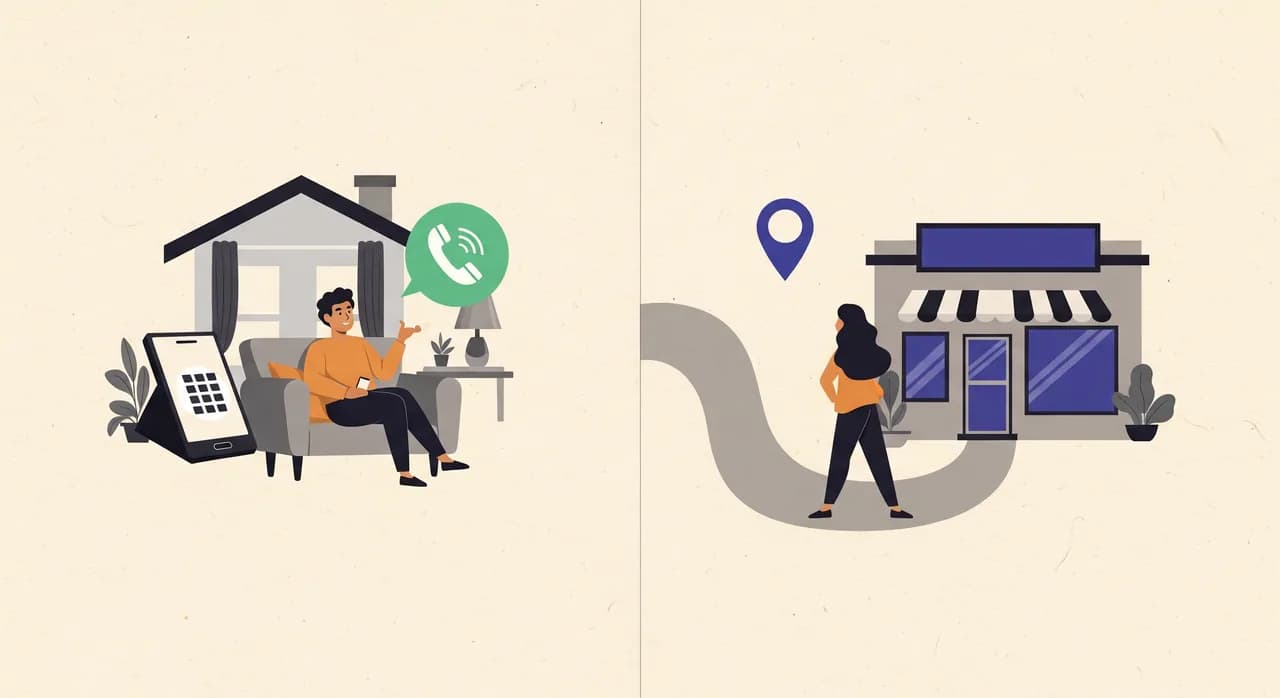
The math on a lost lead is a single transaction. The math on a lost regular is a subscription you didn't know you had. If a customer spends with you a few times a year for several years, the number attached to their departure isn't one visit — it's the whole tail of future visits, plus the referrals they would have sent, minus the cost of replacing them with a stranger who has no reason to trust you yet.
You don't need a fabricated statistic to feel this. Take your own average customer: how often do they come back, how much do they spend, for how long? Multiply it out. The reschedule call you missed on a Tuesday morning wasn't worth one appointment. It was worth the remaining years of that relationship, and the friends they'd have mentioned you to.
Why the usual fixes don't protect retention
Most businesses have already tried something. It's worth being honest about why the common approaches leave the retention gap open.
Voicemail
Voicemail is a message box, not a resolution. For a lead it's weak; for a retention call it's often useless, because retention calls are time-sensitive. "Please call back during business hours" doesn't help the patient in pain at 8:10, and by the time you return the message the reschedule has already happened somewhere else.
Missed-call text-back
Auto-texting someone who called is better than silence, and for a brand-new lead it can keep a conversation alive. But your regulars didn't want to start a conversation — they wanted a specific thing done. A text asking "how can we help?" adds a step to a person who was hoping to save one. Sometimes it works. Often it reads as a brush-off from a business that used to just pick up.
"We'll call them back"
The intention is good and the follow-through is the problem. Callbacks slip when you're busy, and the busiest days — the ones where you miss the most calls — are exactly the days you're least likely to work through a callback list. Meanwhile the customer has moved on. Retention isn't lost because you didn't care; it's lost because the window closed before your good intentions caught up with it.
“Your regulars didn't want to start a conversation. They wanted a specific thing done. A fix that adds a step reads as a brush-off.”
What actually answering changes
The retention fix is unglamorous: be reachable, and resolve the small thing on the first try. When a customer's reschedule is handled in one call, their loose filling gets a same-day slot, their "is it ready?" gets an instant yes — the relationship doesn't just survive, it deepens. Reliability is the quiet thing loyal customers are actually loyal to.
This is where an AI phone assistant earns its place, and it's worth being precise about what it does and doesn't do. It's not there to replace the relationship you have with regulars. It's there to make sure the phone is never the reason a relationship ends.
- It answers every call, 24/7 — including the 8:10 a.m. and the after-dinner reschedule, the exact moments your desk isn't staffed.
- It handles the routine retention calls: confirming appointments, answering hours and stock and "is it ready" questions from the profile you set up.
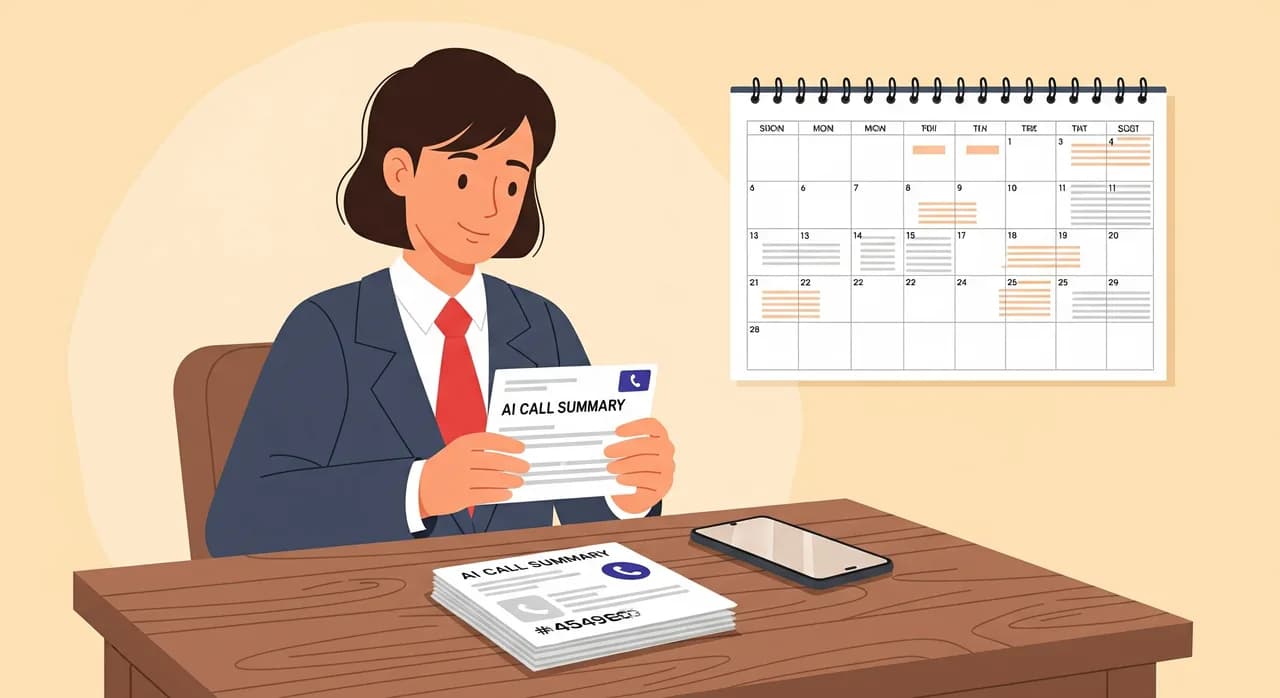
- It takes reschedules and messages and sends you a summary plus a transcript, so nothing lands only in a voicemail you forget to check.
- It hands off gracefully when it can't help — taking a message or arranging a callback rather than pretending, so the customer feels dealt with, not fobbed off.
A day in the life of a caught call
Return to the two-chair dental practice, but this time the phone is answered. At 8:10 the patient calls about the loose filling. The assistant greets them, hears the problem, checks the day's availability, and offers a same-day emergency slot — then texts the practice a summary so the dentist walks in already knowing an urgent case is booked. The patient never had to chase, never rang a competitor, and now tells their spouse the practice "sorted it out first thing." That's not a saved appointment. That's a reinforced habit.
Multiply that across a week of small saves: three reschedules kept on the calendar instead of no-showing, five "is it ready" questions answered without interrupting the work, two after-hours callers who felt looked after instead of ignored. None of these are dramatic. All of them are the raw material of retention.
- 1Map your retention callsList the routine reasons your existing customers phone: reschedules, confirmations, stock and status questions, closing times. These are the calls you most want caught.
- 2Write down the answersFor each, note the exact response — your hours, your reschedule policy, what "ready" means for you. This is what an assistant works from, and it's clarity your staff benefits from too.
- 3Cover the danger windowsIdentify the hours you're least reachable — early morning, lunch, after close, holidays. Those windows hold a disproportionate share of your retention risk.
- 4Set up an always-on answerWhether it's staff coverage or an AI assistant, make sure someone or something resolves the routine call on the first try during those windows.
- 5Read the transcriptsReview summaries of what customers actually call about. You'll spot patterns — a policy that confuses people, a question you should answer on your website — that quietly reduce churn at the source.
How to know it's working
Retention improvements are slow to show, which is why they're worth measuring deliberately rather than trusting to gut feel. You won't see a spike; you'll see a decline that stops.
- Answer rate. The share of inbound calls actually resolved — the most direct lever on retention, and the easiest to track.
- Repeat-visit interval. Whether regulars are coming back on their usual rhythm rather than stretching out or disappearing.
- Reschedules vs. no-shows. A caught reschedule keeps both the customer and the slot; watch that ratio move.
- Off-hours resolutions. Count the calls handled outside staffed hours — every one is a retention moment that used to be a coin flip.
Does phone availability really affect customer retention, or just new sales?
My regulars know me. Won't they just call back if I miss them?
Isn't a missed-call text good enough for existing customers?
Can an AI assistant handle reschedules for existing customers?
Will customers be annoyed to reach an assistant instead of a person?
Stop losing customers you already earned
Vunoon answers every call 24/7, handles reschedules and routine questions, and sends you a summary of each one — so the phone is never the reason a loyal customer drifts away. Set it up in minutes and test it yourself.
See how never-miss-a-call works
Vunoon builds an AI phone assistant that answers your business calls 24/7 — it books appointments, answers common questions and sends you a summary of every conversation.