How to Reduce No-Shows With Better Phone Confirmations
Most no-shows aren't flaky customers — they're bookings that were never really confirmed. Here's how the words you use on the phone quietly decide who shows up.
 Vunoon14 min read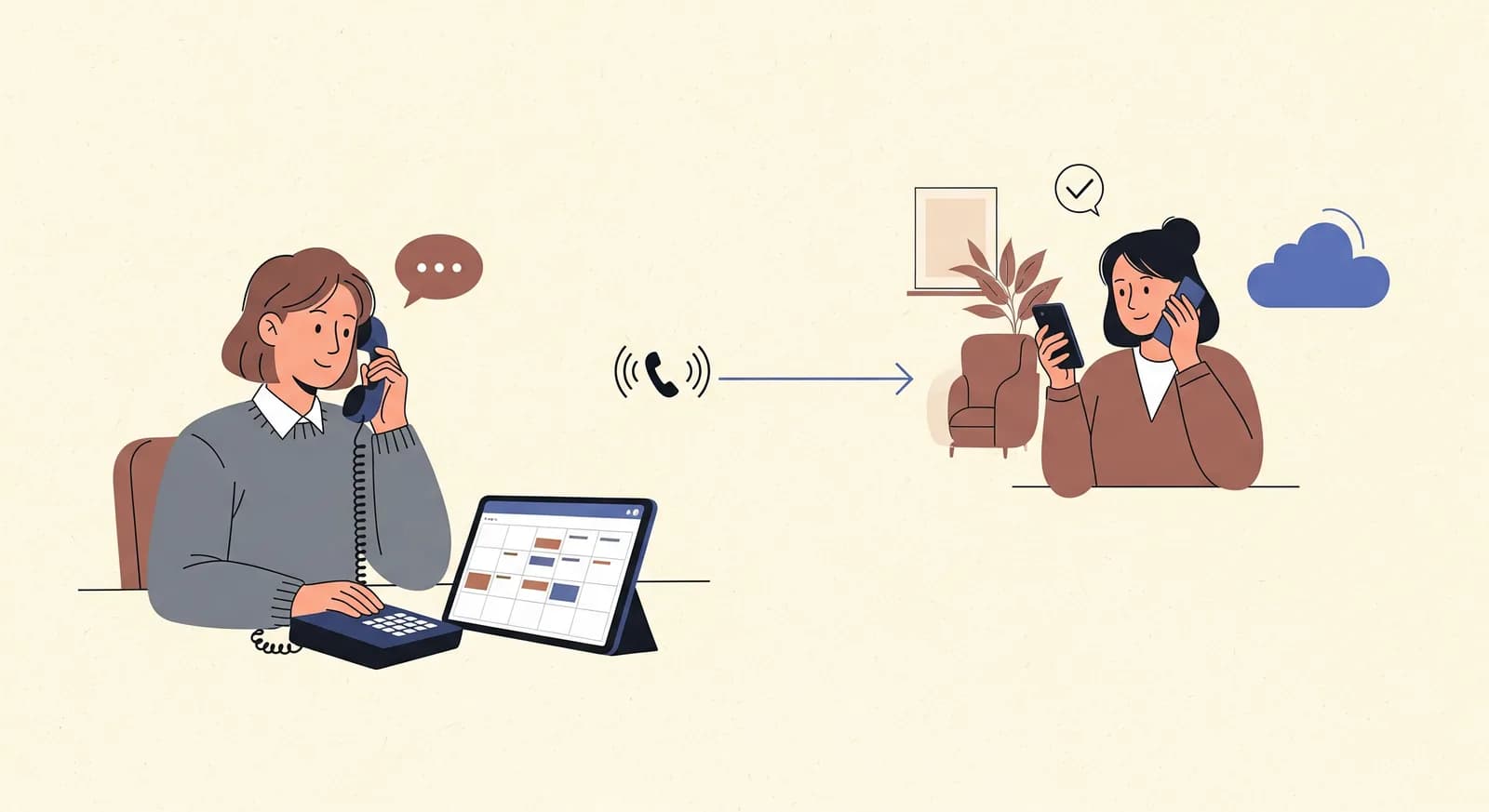
A no-show costs you twice: the empty chair now, and the customer you turned away to hold that slot. But most no-shows aren't disloyal people — they're bookings that were never really nailed down. The fix usually isn't a stricter policy. It's the words spoken during the call that made the appointment.
Why bookings evaporate between the call and the day
Picture the last customer who didn't turn up. There's a decent chance the booking was made in a rush: a quick call between two other tasks, a half-remembered time, no confirmation, and no written trace anyone could check later. By the time the day arrived, the appointment existed clearly in exactly one place — your calendar — and not at all in the customer's head.
That's the pattern behind a surprising share of no-shows. Not malice, not even forgetfulness in the usual sense. The booking simply never became real to the person on the other end of the line. Three quiet failures do most of the damage, and all three happen during the phone call itself.
- No confirmation. The time was mentioned once and never repeated back. The customer heard a number, maybe wrote it down, maybe didn't. Nobody closed the loop.
- Unclear details. The when was fuzzy ("sometime Tuesday afternoon"), or the where, or what to bring, or how long it would take. Ambiguity quietly gives permission to drift.
- Too-easy cancellation — of the wrong kind. Not a friendly cancel option, but the invisible one: the customer never felt on the hook, so skipping costs nothing and requires telling no one.
Notice what's not on that list: your prices, your location, your reputation. Those matter for whether someone books at all. They barely move whether a booked customer shows up. Show-up rate is a communication problem, and the phone is where communication either happens or doesn't.
A confirmation isn't a formality — it's a decision point
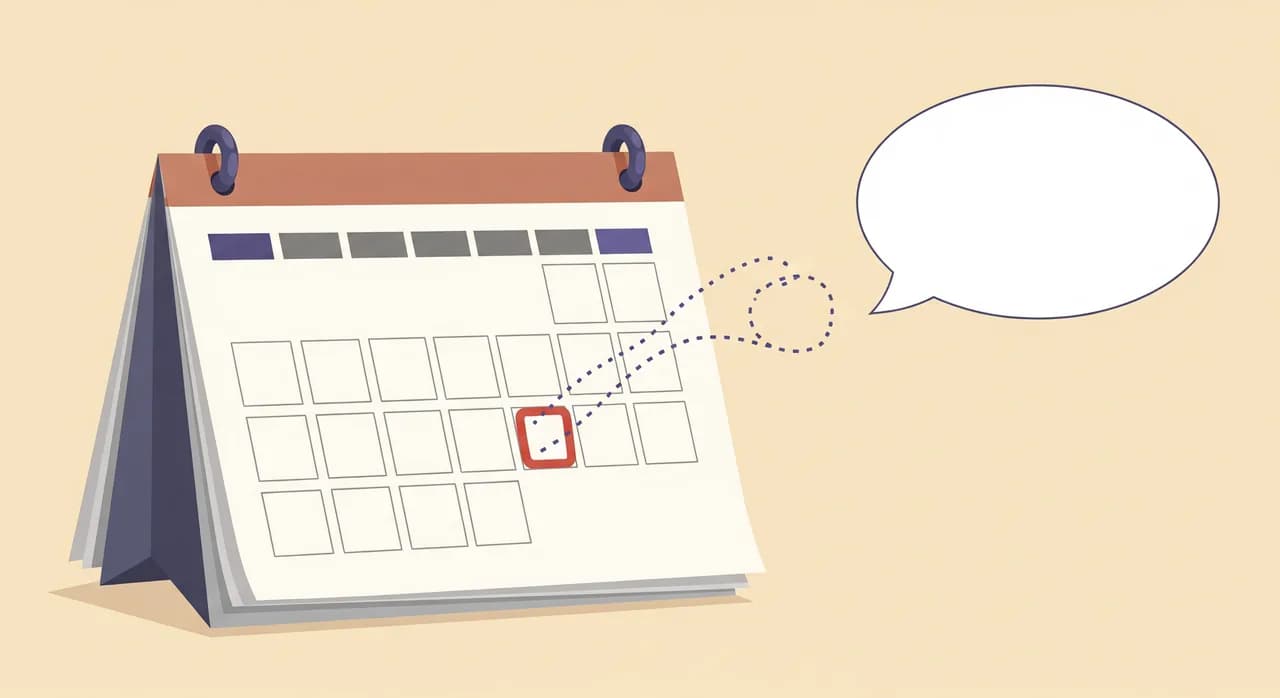
There's a tempting mental model where the booking is "done" the moment the time is agreed, and the confirmation is just polite paperwork. Flip that around. The confirmation is the moment the customer actually commits. Everything before it is a proposal.
When you say the time back and the customer says "yes, that works," something small but important happens: they've now spoken the commitment out loud, in their own voice. Psychologists have a dozen names for why that matters. You don't need the theory. You just need to notice that "I'll pencil you in for Tuesday" and "So that's Tuesday the 15th at 2pm — does that work for you?" produce very different show-up rates, even though the appointment is identical.
“The confirmation is the moment the customer commits. Everything before it is just a proposal.”
This is why a good confirmation can't be silent or automatic. The customer has to participate. A time you announce is information. A time they agree to, out loud, is a promise. Your whole confirmation technique is really just a way of turning the first thing into the second.
The repeat-back technique, in practice
"Repeat-back" is exactly what it sounds like: before the call ends, you restate the whole booking and ask the customer to confirm it. Pilots do it. Nurses do it with medication orders. It's boring on purpose, because boring is what catches the mistake before it becomes a wasted afternoon.
A weak version sounds like: "Great, see you Tuesday." A strong version restates the four things that actually go wrong — the day, the date, the time, and the person. Here's the shape of it:
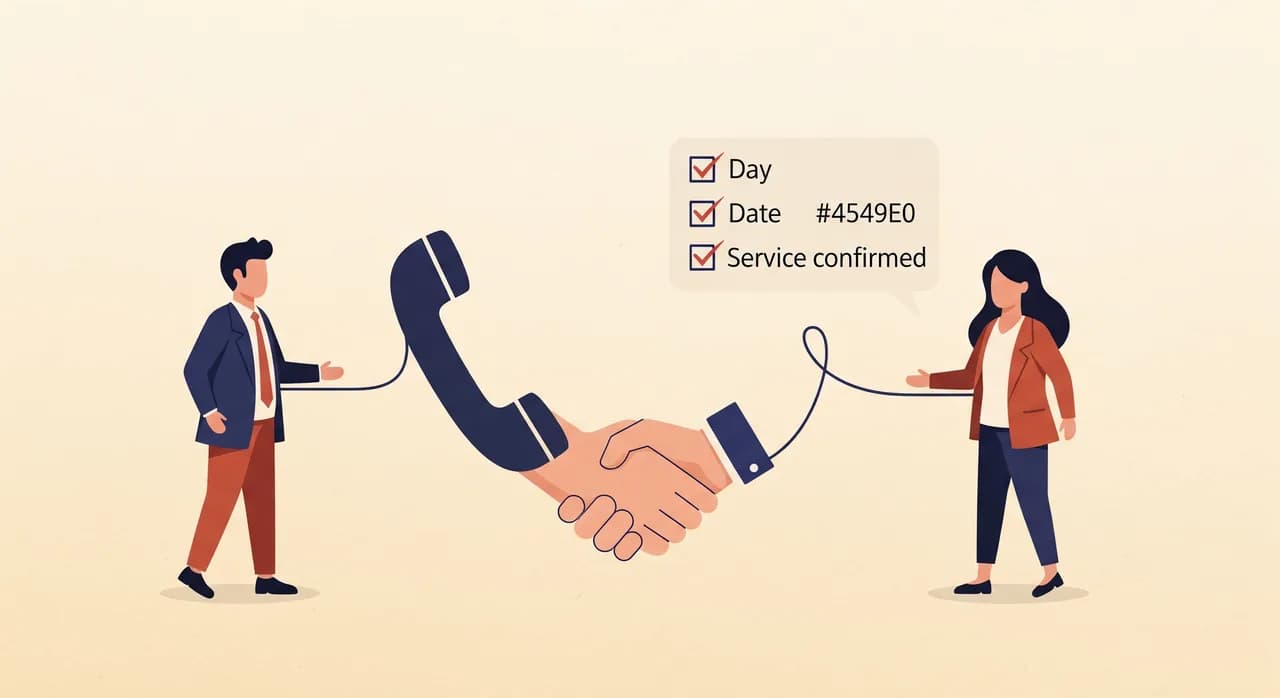
- 1Say the day and date together"So that's Tuesday the 15th" — not just "Tuesday." Half of missed appointments are the right time on the wrong week. Pairing the weekday with the calendar date catches the mismatch instantly, because if you say the wrong one, the customer usually notices.
- 2Say the time, then the duration"...at 2 o'clock, and it'll take about 45 minutes." Duration isn't a detail — it's what lets the customer check the booking against the rest of their day. "2pm" fits a lot of afternoons that "2 to 2:45" does not.
- 3Name the service and anything to bring"...for the colour and cut, and just come with dry hair." Now the appointment has a shape in their mind, not just a slot. Concrete instructions also create a tiny sense of preparation, and people are far less likely to skip something they've already prepared for.
- 4Hand the confirmation to themEnd on a question, not a statement: "Does all of that work for you?" That single question is the whole trick. It forces a yes, and the yes is the commitment. If they hesitate, you've just found a problem while you can still fix it — for free, on the phone — instead of at 2pm on an empty Tuesday.
You'll notice the whole sequence takes maybe fifteen seconds. That's the good news and the catch. It's cheap enough that there's no excuse to skip it — and just tedious enough that a busy human, on the fortieth call of the day, will skip it anyway. Consistency is the hard part, not knowing what to say.
Confirmation wording that actually holds
Beyond repeat-back, a handful of small wording choices punch above their weight. None of them are scripts to read robotically — they're habits to lean toward.
Use absolute dates, not relative ones
"This Thursday" is a trap. If the call happens on a Wednesday evening, does "this Thursday" mean tomorrow or eight days from now? People genuinely disagree, and both walk away certain. "Thursday the 10th" has exactly one meaning. Relative words like next, this, and the day after tomorrow are where bookings quietly split into two different appointments — one in your head, one in theirs.
Get the reason in the customer's own words
A quick "and what's this for?" does more than help you prepare. When the customer says why they're coming — "my knee's been playing up," "I need it done before the wedding" — they re-anchor to their own motivation. That motivation is what survives until the appointment day. A booking attached to a real reason is much stickier than a slot attached to nothing.
Make cancelling easy — the honest kind of easy
This sounds backwards, so stay with it. You want cancelling to be socially easy and logistically obvious: "If something comes up, just give us a quick call and we'll move it." A customer who knows they can cancel without a fight will actually cancel — which hands you the slot back with notice, instead of an empty room and a silence. The no-show you can't refill is worse than the cancellation you can. Friction doesn't reduce no-shows; it just converts them into the version you find out about too late.
Why every booking needs a paper trail
Here's the failure mode that no amount of repeat-back fixes on its own: the confirmation lived in a conversation, and conversations evaporate. Fifteen seconds after hanging up, the perfect confirmation you just delivered exists only as a memory in two heads — and memories of times and dates are notoriously bad.
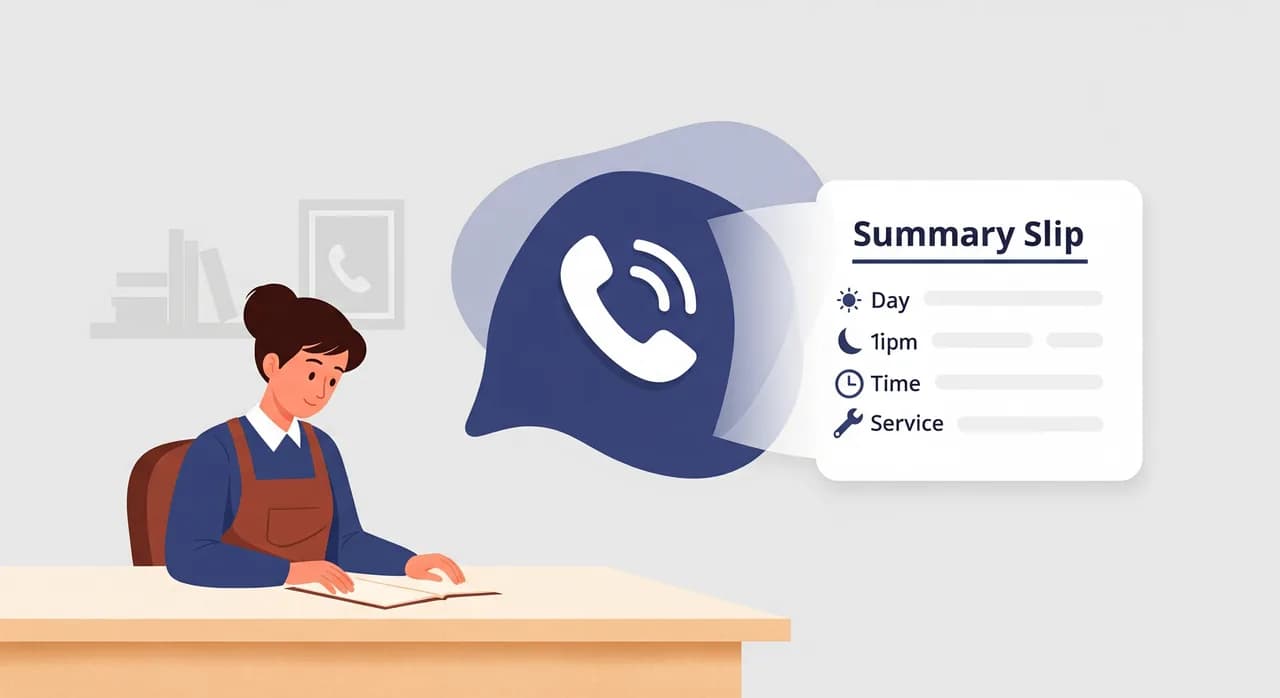
The customer needs something to look back at. Not a reminder days later — a record they can glance at the same evening when their partner asks "so what are you doing Tuesday?" A short written summary sent right after the call does three quiet jobs at once:
- It settles disputes before they happen. If you wrote 2pm and they remember 3, the message is right there in black and white. No arguing, no lost slot, no "well, I'm sure you said…"
- It re-triggers the commitment. Seeing the appointment written down is a second, silent repeat-back. The customer confirms it to themselves all over again.
- It gives them a way to reach you. A summary with your number attached turns a would-be no-show into a quick "actually, can we move it?" — the outcome you want.
“A no-show is often just a cancellation that never had anywhere to go.”
This is the part that quietly separates businesses that battle no-shows from businesses that mostly don't. The good confirmation on the phone starts the commitment; the written summary keeps it alive. One without the other leaks. A brilliant repeat-back that no one records still depends on human memory. A written summary of a vague, unconfirmed time just documents the confusion. You need both — the moment of agreement and the record of it.
The real problem: doing this every single time
By now the technique is obvious. Say the day and date together. State duration. Get the reason. End on a question. Send a summary. None of it is clever. And that's exactly why it fails in real businesses — because "obvious" and "reliable" are different things when you're the one answering the phone.
The confirmation gets skipped on the busy calls, which are precisely the calls where a mistake is most likely. It gets skipped when you're mid-service and answering with one hand. It gets skipped on the after-hours voicemail that just says "call me back." The summary rarely gets sent at all, because writing and sending a message per booking is a job nobody has time to do forty times a day. The method is free; the discipline is expensive.
So the honest question isn't "what should I say?" You already know. It's "how do I make sure it's said the same way on every call, including the ones I can't take?" That's a systems question, not a scripting one.
Where an AI phone assistant fits in
This is the gap Vunoon is built for. It answers your business phone, and because it isn't rushed, tired, or mid-haircut, it runs the same confirmation on the fortieth call as the first. It reads the day and date back together, states the service, confirms the time, and — crucially — it does the part humans almost never do consistently: it produces a written record of every call automatically.
After a call, you get a summary and a transcript of exactly what was agreed: who called, what they booked, for when. That's the paper trail, generated without anyone having to remember to write it down. If there's ever a question about whether it was 2pm or 3, the answer isn't a memory — it's a transcript.
It's also honest about its limits, which matters here. When a caller wants something it can't settle, it takes a message or arranges a callback rather than inventing an answer or guessing at a time — because a confidently wrong confirmation is worse than no confirmation at all. It doesn't pretend to be a person when asked. And on the after-hours calls that today become a voicemail nobody returns, it can take the booking properly instead of letting it fall into the silence where no-shows breed.
You can set it up yourself in a few minutes: describe your business in a short wizard — your services, hours, and how long things take — then test it by talking to it before you forward your number. It works in over 25 languages, so the confirmation lands cleanly even when the caller's first language isn't yours. It won't turn a genuinely flaky customer into a reliable one. What it will do is make sure the reliable ones never miss an appointment because of a fuzzy, unrecorded booking.
A five-minute audit of your own confirmations
Before changing anything, listen to yourself. On your next few bookings, notice whether these five things happen. Each missing one is a leak.
- Did I say the weekday and the calendar date together, or just one of them?
- Did I state how long the appointment takes, so they could check it against their day?
- Did I end the booking on a question the customer had to answer, not a statement I made?
- Did the customer say why they were coming, in their own words?
- Did anything in writing reach the customer, so the appointment survives outside two memories?
Most small businesses hit two or three of these on a good call and none on a bad one. Getting all five, every time, is the entire game. It's not more effort per call — it's the same effort, aimed properly, and made consistent.
| Moment in the call | Leaky version | Confirming version |
|---|---|---|
| Agreeing the time | "I'll pop you in for Tuesday." | "So that's Tuesday the 15th at 2 — does that work?" |
| Setting expectations | (nothing said about length) | "It'll take about 45 minutes, come with dry hair." |
| Handling a change of plan | Customer just doesn't show | "If anything comes up, call and we'll move it." |
| After the call | Lives in two memories | Written summary of who, what, and when |
Common questions about confirmations and no-shows
What's the single most effective way to reduce no-shows for appointments?
Do reminder texts before the appointment actually help?
Won't making cancellation easy just lead to more cancellations?
Should I take a deposit to stop no-shows?
How does an AI phone assistant reduce no-shows?
Confirm every booking the same way, every time
Let Vunoon answer your calls, run a clear confirmation on every booking, and send you a written summary of who booked what and when — so fewer appointments slip away. Set it up in minutes and test it before you forward your number.
See how appointment booking works
Vunoon builds an AI phone assistant that answers your business calls 24/7 — it books appointments, answers common questions and sends you a summary of every conversation.