How to Test Your AI Phone Assistant Before Going Live
A pre-launch protocol of 15 caller scenarios to role-play, exactly what to listen for on each one, and how to close the gaps before a real customer ever hears them.
 Vunoon14 min read
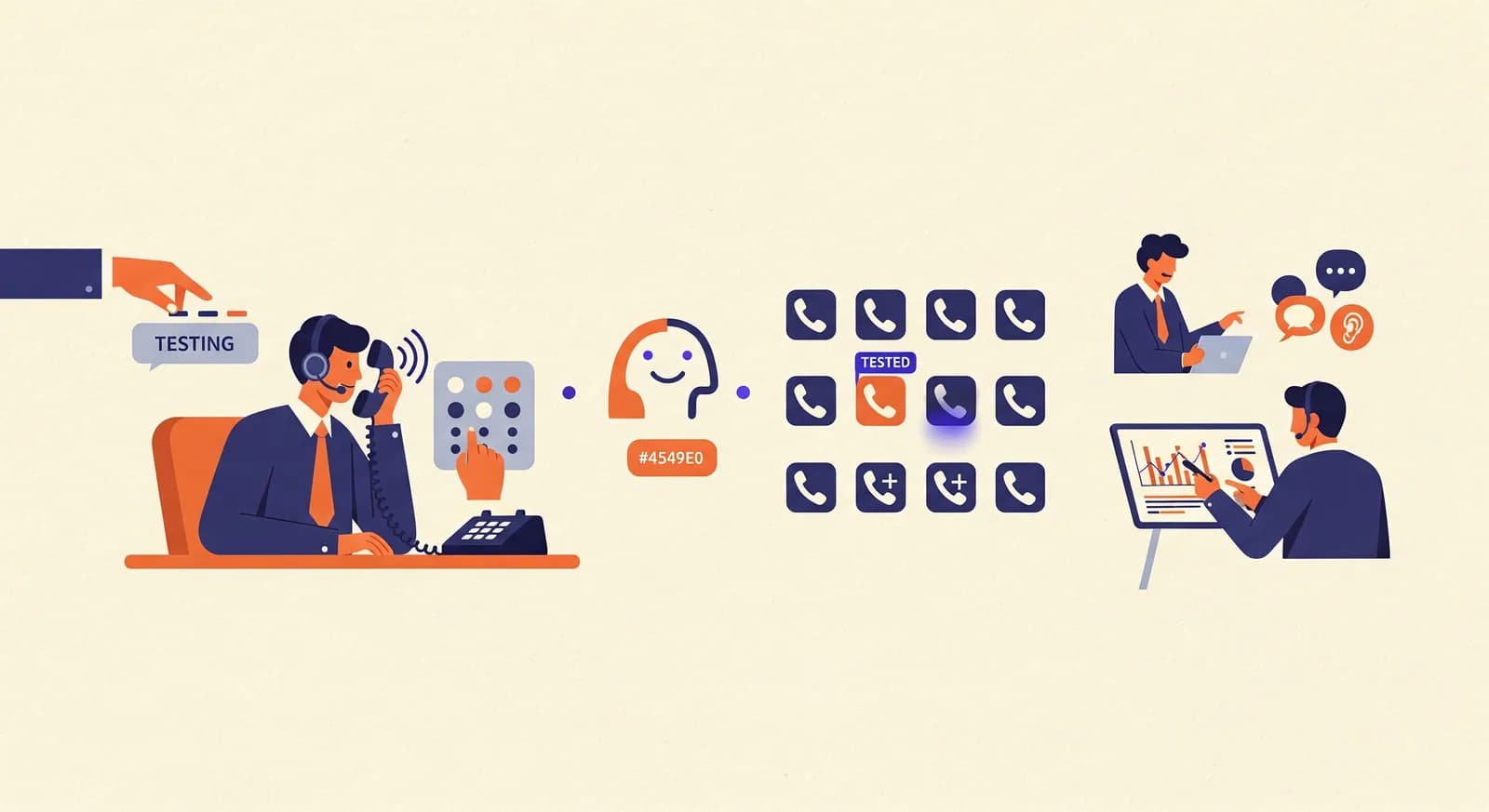
Nobody hires a receptionist, hands them the keys, and disappears on day one. You'd sit with them for an afternoon, throw a few awkward calls their way, and watch how they handled the person who's convinced you're their pharmacy. Your AI phone assistant deserves the same afternoon. Here's how to run it — call by call — before a single real customer is on the line.
Setting up an AI receptionist is genuinely quick: you describe your business in a short wizard, and it's ready to answer. But ready to answer and ready to represent you are two different things. The wizard captures what you told it. It doesn't capture the strange, specific, half-mumbled ways your actual callers ask for things. The only way to find those gaps is to go looking for them yourself, on purpose, while the stakes are zero.
This guide gives you a repeatable test protocol: fifteen caller scenarios to role-play, what a good answer sounds like for each, and what to change when the answer isn't good. Budget forty-five minutes. Do it before you forward your number — not after.
Why a quiet launch is the real risk
The tempting move is to forward your number, cross your fingers, and check the transcripts tomorrow. It feels efficient. It's actually the most expensive way to test, because every rough edge is discovered by someone who was about to give you money.
A caller who hits a dead end doesn't file a bug report. They hang up and call someone else. You never find out the assistant fumbled the question about parking, or quoted a service you stopped offering last spring, or couldn't understand the word "filling" over a bad connection. The failure is silent, and silent failures are the ones that quietly cost you bookings for weeks before you notice the numbers are soft.
Testing first flips that around. You become the difficult caller. Every gap you find in the next hour is a gap a customer never has to. And because your assistant answers from a profile you can edit in seconds, most fixes take longer to describe than to apply.
“Every rough edge you find while testing is a rough edge a paying customer never has to.”
Before you dial: set the stage
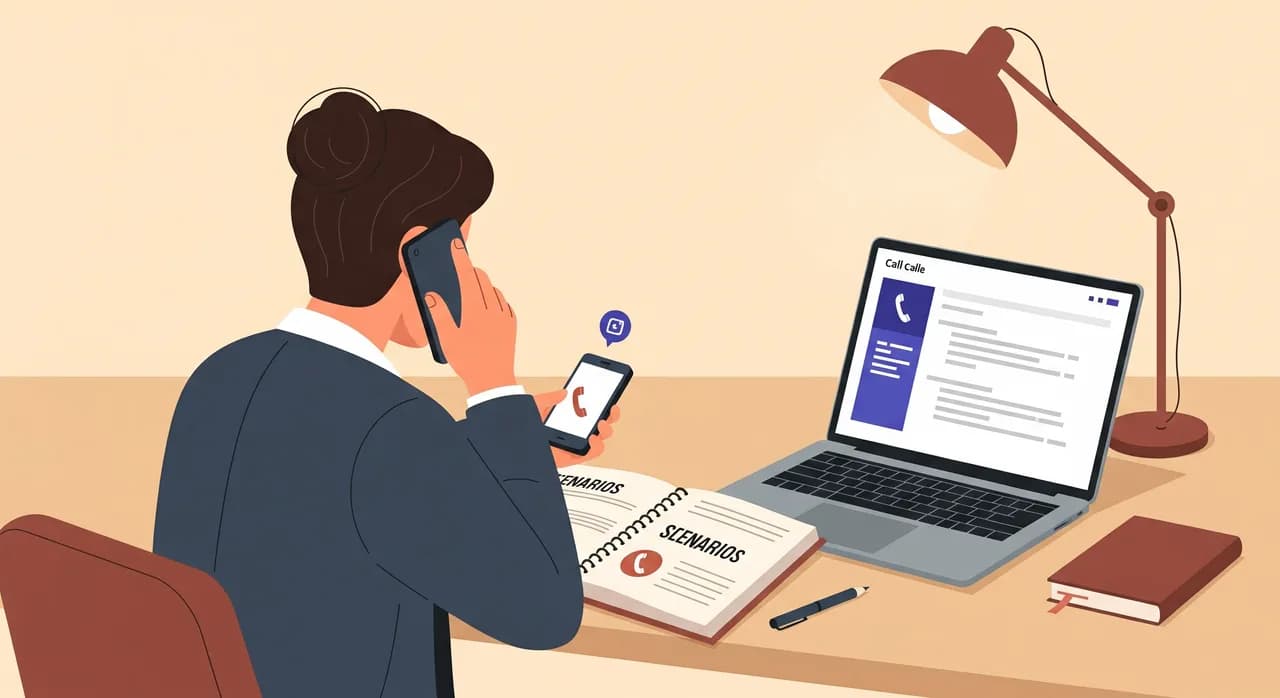
Two minutes of prep makes the test worth running. First, complete the profile properly — hours, your real service list, prices you're comfortable stating aloud, your booking rules, and anything a caller asks weekly that isn't obvious. A half-filled profile fails the test for reasons that have nothing to do with the assistant; you'll just be discovering blanks you already knew about.
Second, test it the way it will actually be used: out loud, on a real phone, in the room where you take calls. Reading questions silently off a screen hides the two things that break most calls — background noise and the odd rhythm of real speech. If your workshop has a compressor running or your salon has music, test with that on.
Third, decide your bar. You're not looking for a robot that recites a manual. You're looking for an assistant that a normal person would find helpful and wouldn't be annoyed by. "Would I be happy if my most impatient customer got this answer?" is the question to hold in your head on every call.
The fifteen scenarios to role-play
Group these into four batches. Run all fifteen the first time. On future check-ups you can spot-test a handful. Each one below has the scene to act out and the thing to listen for — the answer isn't just "did it respond" but "did it respond the way you'd want a good employee to."
Batch one: the bread-and-butter calls
These are eighty percent of your real volume. If the assistant nails these, most callers will hang up satisfied. If it fumbles them, nothing else matters.
- 1. The straightforward booking. "Hi, I'd like to book an appointment for a haircut on Thursday afternoon." Listen for: does it collect the right details in a natural order, confirm back what it heard, and land on a clear next step — a booked slot, or a promise that you'll confirm the time?
- 2. The price question. "How much is a standard service?" Listen for: does it state the price you actually configured, without inventing a number or dodging? If you don't publish prices, does it say so gracefully and offer to have you follow up, rather than guessing?
- 3. The hours question. "Are you open on Saturday?" Listen for: correct hours, including the edge — a caller who asks "and what time do you close?" should get a straight answer, not a repeat of the opening time.
- 4. The location question. "Where exactly are you? Is there parking?" Listen for: it gives your address and any parking or access detail you put in the profile. If parking isn't in the profile, this is a gap you just found — add it.
Batch two: the curveballs
These separate a decent assistant from an embarrassing one. The goal here is not encyclopedic knowledge — it's graceful handling of the unknown. An assistant that admits a limit and offers a way forward beats one that confidently makes things up every single time.
- 5. The thing you don't offer. Ask for a service you've never provided. Listen for: does it say you don't offer that — rather than cheerfully booking a haircut at a car repair shop? A false yes here is worse than a no.
- 6. The oddly specific question. "Do you use organic products?" or "Can you fit a caller in a wheelchair?" Listen for: if it's in your profile, it answers; if not, it doesn't bluff. It should offer to take a message so you can answer personally.
- 7. The two-part question. "Are you open now, and if so can I come in for a quick check?" Listen for: does it handle both parts, or answer one and forget the other? Real callers stack questions constantly.
- 8. The vague opener. "Yeah, hi, I was calling about... the thing." Say almost nothing useful. Listen for: does it ask a friendly clarifying question and steer the call, or does it freeze?
- 9. The out-of-scope ask. "Can you give me advice on whether I need this treatment?" Listen for: it should not hand out medical, legal, or financial advice. It should offer to have you or a qualified person follow up. An assistant that overreaches here is a liability, not a feature.

Batch three: the humans behaving like humans
People aren't tidy. They interrupt, they're upset, they mumble, they call the wrong number. How your assistant handles a bad mood or a bad connection is a bigger part of your reputation than most owners expect.
- 10. The angry caller. "This is the third time I've called and nobody helps me!" Say it with heat. Listen for: does it stay calm, acknowledge the frustration, and route to a solution or a callback — without arguing or getting weirdly chirpy? Tone under pressure matters.
- 11. The interrupter. Talk over it mid-sentence. Listen for: does it recover gracefully and pick up what you actually said, or does it barrel on with its script as if you hadn't spoken?
- 12. The wrong number. "Is this the dentist on Main Street?" when you're a plumber. Listen for: it should clarify who you are politely and let them go, not try to book them for a root canal.
- 13. The mumbler / bad line. Speak quietly, quickly, with your hand near the mic, or from a noisy spot. Listen for: does it ask you to repeat clearly and patiently, or mishear and run with a wrong booking?
- 14. "Are you a robot?" Ask directly. Listen for: it should be honest — a good assistant doesn't pretend to be a person when asked. Callers respect the honesty far more than a clumsy dodge.
Batch four: the handoff
The single most important thing an AI receptionist does is know its own edge — the moment to stop trying and get a human involved. Test that edge deliberately.
- 15. "I need to speak to the owner." Or: "This is complicated, can someone call me back?" Listen for: does it take a clean message — name, number, reason, best time — and confirm that you'll get it? Then check the actual summary and transcript that lands in your inbox. That handoff is where a rescued booking lives or dies.
What "good" actually sounds like
It helps to have a shared idea of the target before you start grading calls. Across all fifteen scenarios, a strong answer tends to share the same handful of traits, and a weak one tends to fail on the same few.
| Trait | Good answer | Answer that needs a fix |
|---|---|---|
| Accuracy | States only what's in your profile | Invents a price, hour, or service |
| Honesty about limits | Says "I'm not sure, I'll have someone follow up" | Bluffs a confident wrong answer |
| Tone | Calm and warm, even with an upset caller | Robotic, defensive, or oddly upbeat |
| Handoff | Takes a complete, confirmed message | Loses the caller or the details |
| Recovery | Handles interruptions and mishears cleanly | Freezes or runs with the wrong input |
Notice what's not on that list: sounding perfectly human, or knowing things you never told it. Those aren't the bar. A caller doesn't need your assistant to be indistinguishable from a person. They need it to be accurate, honest, and easy to talk to — and to hand them off cleanly when it hits its edge.
Turning your findings into fixes
By now your notes page has a list of small failures. The good news is that the overwhelming majority trace back to one root cause: the profile didn't have the answer. The assistant answered from what it knew, and what it knew had a hole. Close the hole and the same call goes right the next time.
- 1Sort your list by causeMost items will be "missing info" (parking, a service, a policy). A few will be "wrong info" (an old price, closed on a day you now open). A rare few are "tone or handling" — how it managed the angry caller or the mumbler.
- 2Fix the missing and wrong info firstAdd the parking detail, the access note, the seasonal hours, the service you forgot. Correct the stale price. This clears the bulk of the list in a few minutes, because these are just profile edits.
- 3Tighten the instructions for tone and edgesTell it plainly what to do with out-of-scope questions, how to greet, and when to offer a callback. Clear guidance on its limits is what produces graceful handling under pressure.
- 4Re-run the failed calls onlyYou don't need all fifteen again. Re-role-play just the scenarios that failed and confirm they're fixed. This is fast and it's how you know the edit actually landed.
- 5Do one full pass, coldOnce your list is empty, walk away for an hour, come back, and run the full fifteen once more as if you'd never heard the assistant. Fresh ears catch things familiarity hides.
“Nearly every failed test call is really the profile telling you it has a blank you forgot to fill.”
The honest limits of testing
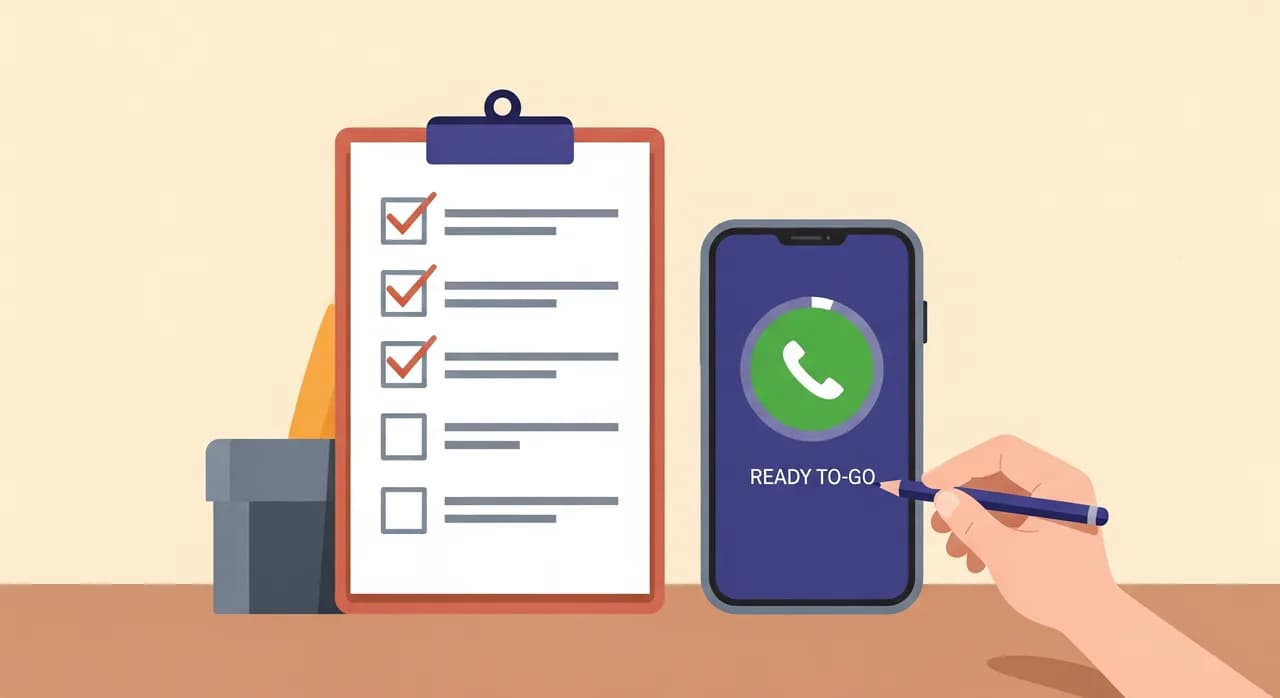
Here's the part most guides skip. Testing catches a lot, but it can't catch everything, and pretending otherwise sets you up for a surprise. You should go live knowing exactly what testing does and doesn't buy you.
You can't fully imitate your own customers. You know the answers, so you ask cleaner questions than they do. Real callers will phrase things in ways you'd never think of, use local slang, and stack requests you didn't rehearse. Testing gets you the common eighty percent and the obvious edges — it won't surface the truly weird twenty percent until real calls arrive.
That's fine, as long as you plan for it. The move is a soft launch, not a set-and-forget. Once your fifteen scenarios pass, go live — but read the transcripts for the first week. Every real call is a test you didn't have to write. When you spot a question the assistant handled awkwardly, you already know the drill: add the answer to the profile, and it's fixed for good.
A quick word on multilingual and accents
If your callers speak more than one language, or have strong regional accents, test in those too. Don't assume that because the assistant handles clear English it handles a rushed caller switching between languages mid-sentence. Role-play a call in each language you actually serve, and specifically test a booking and a handoff in each — those are the two moments where a language slip costs you a customer.
The same principle applies: if it stumbles, it's usually not that the assistant "can't" — it's that your profile guidance was written with one kind of caller in mind. Add a note about the languages you serve and how to greet in each, and re-test.
How long does it take to test an AI phone assistant properly?
Should I test before or after forwarding my number?
What if the assistant gives a wrong answer during testing?
Do I really need to test the angry-caller and wrong-number scenarios?
Can I trust it after testing, or do I still need to watch it?
Set it up, then put it through its paces
Create your assistant, describe your business in the wizard, and run your own fifteen-call test before a single customer is on the line. It only takes an afternoon to launch with confidence.
Set up and test your assistant
Vunoon builds an AI phone assistant that answers your business calls 24/7 — it books appointments, answers common questions and sends you a summary of every conversation.