Business Phone Etiquette: A Modern Playbook for Small Teams
Answering fast, greeting well, holding politely, and ending with a confirmed next step — the small habits that turn a ringing phone into booked work. Written for owners, not call centres.
 Vunoon19 min read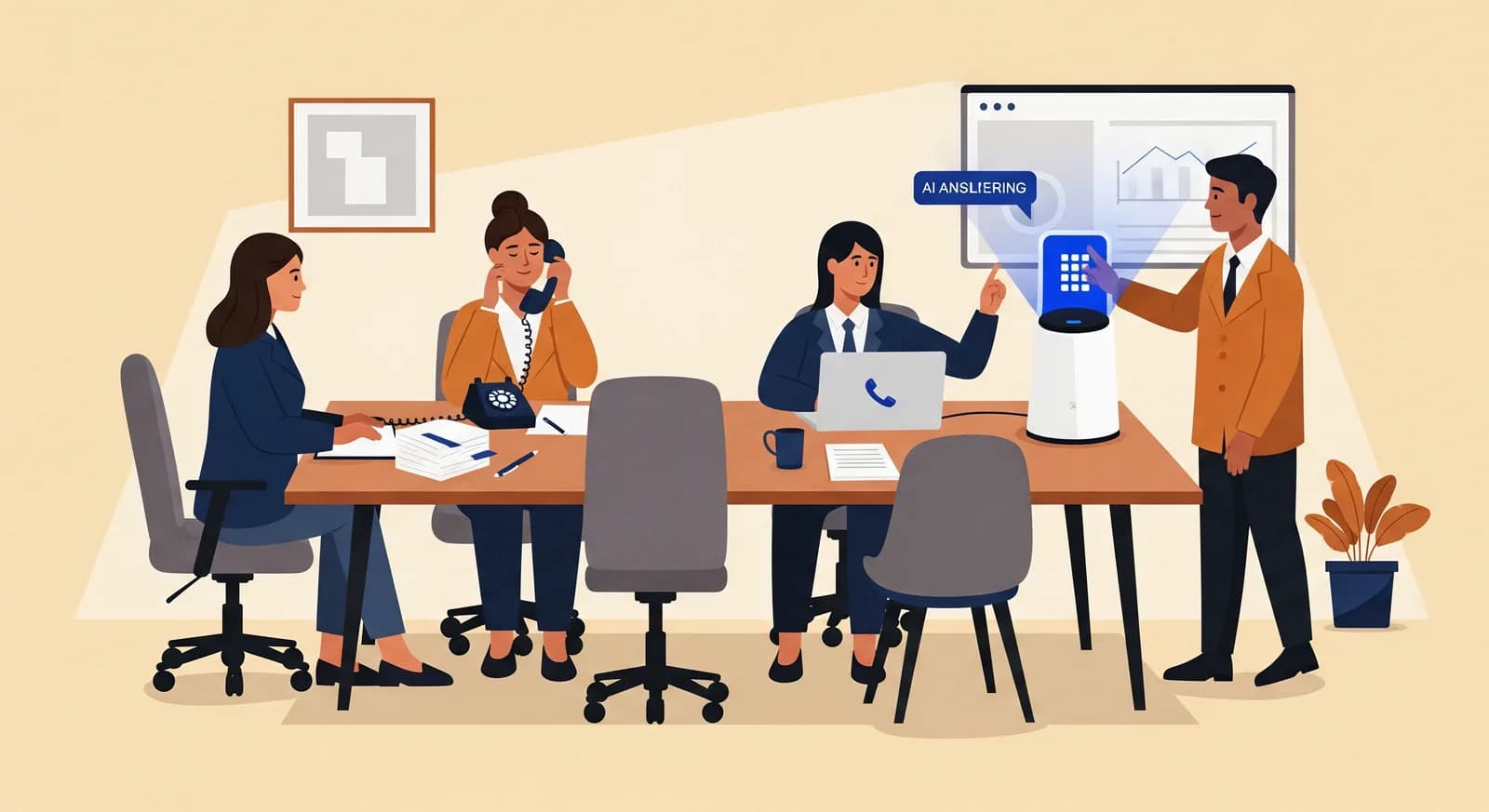
A ringing phone is a stranger deciding, in about four seconds, whether you sound like a business worth their money. Business phone etiquette is not about sounding posh. It is a small set of habits — answer quickly, greet cleanly, handle holds and transfers without making people feel abandoned, and close with a next step both sides agree on. Get those right and the same phone that used to interrupt your day starts filling your calendar.
Most advice on this topic reads like it was written for a 40-seat call centre with a headset policy and a QA team. That is not you. You are running a two-chair salon, a plumbing van, a physio clinic, a bakery. You answer between jobs, with your hands full, while a customer stands at the counter. This playbook is built for that reality: what to say, in what order, and how to keep the manners intact even when you are the receptionist, the technician, and the accounts department all at once.
The good news is that phone etiquette is unusually forgiving. Callers do not expect theatre. They expect to be heard quickly, understood, and told what happens next. That is the whole game. Everything below is a way of doing those three things reliably, even on a bad day.
Why phone etiquette is quietly a revenue problem
It is tempting to file this under "nice to have." It is not. For a small local business, the phone is often the single highest-intent channel you own. Someone who calls has already skipped past ten search results and decided you might be the one. They are further down the buying path than any web visitor, and they are ready to book now. Fumble that call and you have not lost a lead — you have lost a customer who was mid-decision.
Consider the arithmetic of an ordinary week. Say ten calls slip through the cracks: a rushed hello that scared someone off, three rings too many so they hung up, a hold that turned into a dropped line, a transfer into a voicemail no one checks. If even a third of those callers would have booked, and your average job is worth real money, that leaked revenue dwarfs almost anything else you could optimise this month. Etiquette is the cheapest sales training you will ever do, because it costs nothing but attention.
The three-ring rule (and why speed beats polish)
Pick up within three rings. It is the oldest rule in the book and it survives because it works. One ring can feel jarring, as if you were lurking by the handset. Two or three feels attentive and human. By the fourth ring the caller starts wondering whether anyone is there, and by the sixth a meaningful share of people simply hang up and dial the next name on their list.
There is a subtle trap here: owners often optimise for the quality of the greeting and forget the speed of it. A caller will forgive a slightly clumsy hello answered fast far more readily than a beautiful hello answered on the seventh ring. Speed is the first courtesy. It signals that you are open, present, and not too swamped to care.
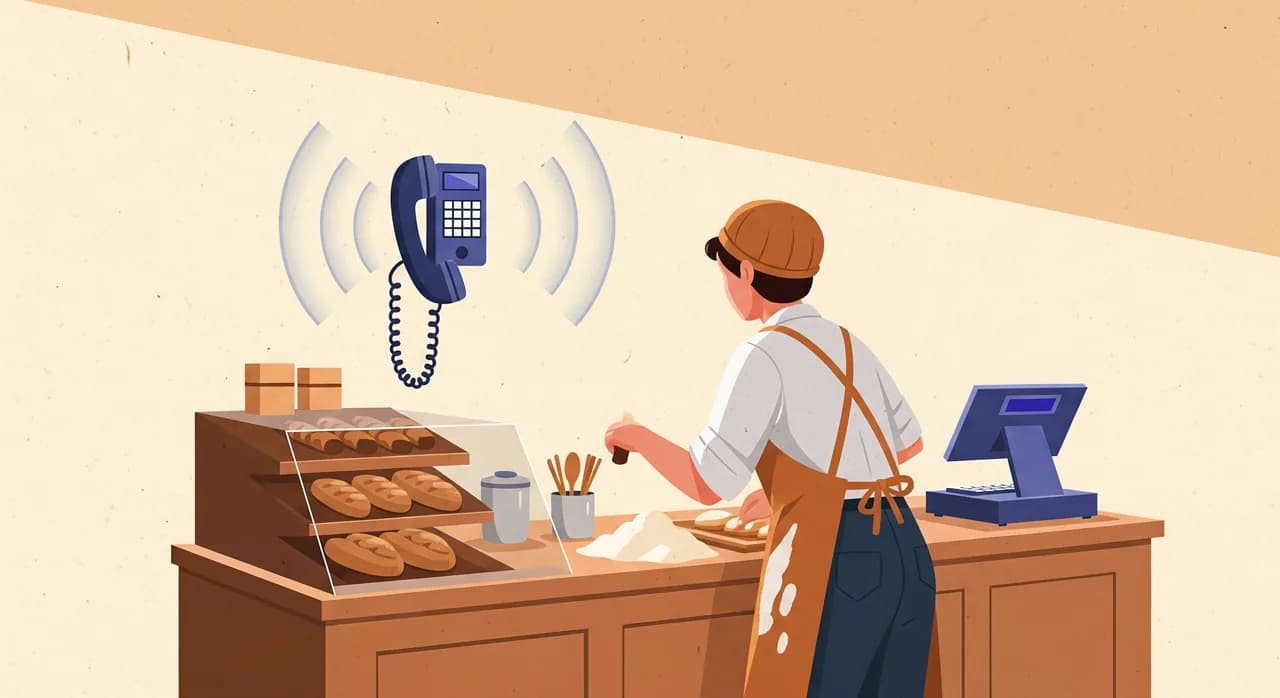
Of course, three rings is impossible when you are elbow-deep in an engine, mid-treatment, or serving the person in front of you. That is not a failure of discipline; it is physics. The honest move is to decide in advance what happens to calls you genuinely cannot take, so the rule becomes "every call is answered within three rings — by someone or something," not "every call is answered by me personally." We will come back to that.
The greeting: a tiny script that does three jobs
A strong business greeting is not improvised charm. It is a small structure that does three jobs in about three seconds: it tells the caller they reached the right place, it tells them who they are speaking to, and it invites them to talk. Name the business, name yourself, offer help. That is the whole thing.
"Good morning, Riverside Dental, this is Sam — how can I help?" is nearly perfect. The business name reassures the caller they dialled correctly. Your first name makes it a conversation between two people rather than a transaction with an institution. "How can I help" hands the floor over cleanly. Notice what it does not do: it does not ramble, it does not launch into a promotion, and it does not make the caller guess whether they got through.
- Lead with the business name so a wrong number knows instantly and hangs up without wasting anyone's breath.
- Give your first name. It is the difference between "the plumber's office" and "Marco, who I spoke to." People book with people.
- End with an open invitation — "how can I help" or "what can I do for you" — not a closed "can I help you?" that begs a yes/no.
- Match the time of day. "Good morning" and "good afternoon" cost nothing and warm the line instantly.
- Smile before you speak. It genuinely changes the shape of your voice; a caller can hear a smile even if they will never admit it.
Tone, pace, and the art of not sounding rushed
The words matter less than how you say them. Two things sink more calls than any script error: sounding rushed, and sounding bored. Rushed makes the caller feel like an interruption. Bored makes them feel like a number. Both push them toward hanging up and trying someone who seems glad they rang.
The fix is mostly pace. When you are busy your instinct is to speak faster to get the call over with, which is exactly backwards — it makes the caller feel unwelcome and, worse, makes them repeat themselves, which lengthens the call. Slow down by maybe ten percent. Let there be a beat of silence after they finish speaking so they feel heard rather than steamrolled. Paradoxically, the unhurried call is usually the shorter one, because nobody has to say anything twice.
Use the caller's name once you have it, but sparingly — once when you catch it, once near the end. Sprinkling it into every sentence sounds like a sales course, not a conversation. And mirror their register: a caller who is brisk and businesslike does not want small talk; a nervous first-timer booking a difficult appointment wants a little warmth before you get to logistics. Reading that in the first ten seconds is the whole skill, and it comes with practice.
“A caller will forgive a clumsy hello answered in two rings long before they forgive a polished one that finally picks up on the seventh.”
Holding without making people feel abandoned
Hold is where good intentions go to die. The problem is rarely the wait itself; it is the silence and the ambush. Being dropped into hold music without warning, then left there wondering if you have been forgotten, is one of the most reliably infuriating experiences in customer service. Yet the fix is almost trivial: ask, then update.
- 1Ask, do not announce"Do you mind if I put you on hold for a moment while I check that diary?" gives the caller agency. It takes two seconds and completely changes how the wait feels. Waiting because you agreed is fine; being silenced is not.
- 2Give a time, and make it honest"About thirty seconds" sets an expectation. If you say thirty seconds, come back at thirty seconds — even just to say you need a little longer. An honest "I need one more minute" beats a silent two.
- 3Thank them when you return"Thanks for holding" acknowledges that you asked something of them and they gave it. Then pick up exactly where the conversation was, so they never have to re-explain.
- 4Never hold to stallIf you do not have the answer, say so and offer to call back rather than parking someone while you flounder. Hold is for a genuine, brief pause — not a hiding place.
A rough limit: if a hold is going to run past a minute, offer a callback instead. "I need to dig this out properly — can I take your number and ring you back within the hour?" respects their time far more than a long silence. Most people gladly take the callback, and you have just turned a frustrating hold into a small promise you can keep.
Transferring calls without the cold drop
The classic bad transfer: "Let me put you through," a click, then either a dead line or a colleague who answers with no idea who is calling or why. The caller now has to tell their whole story again to a stranger. Do that twice and even a patient person starts to feel like a parcel being passed around a warehouse.
A courteous transfer has two parts, and the second is the one people skip. First, tell the caller what is happening and why: "Bookings are handled by Priya — let me pass you to her, one moment." Second, and this is the difference between a good business and a shambolic one, brief the person you are transferring to before you connect them. "Priya, I've got Tom on the line, he wants to move his Thursday appointment to next week." Now Tom picks up mid-conversation and never repeats himself. That is a warm transfer, and callers notice it even when they cannot name what felt so smooth.
- Say who and why. Name the person and the reason so the transfer feels purposeful, not like you are getting rid of them.
- Brief before you connect whenever you can, so the caller never re-tells their story.
- Offer a fallback. "If she can't pick up, I'll take a message and she'll call you back" — so a missed transfer isn't a dead end.
- Stay on until it lands. If it's a cold transfer, wait to hear the other person answer before you drop off. Never fling someone into a ringing void.
Taking a message that actually leads somewhere
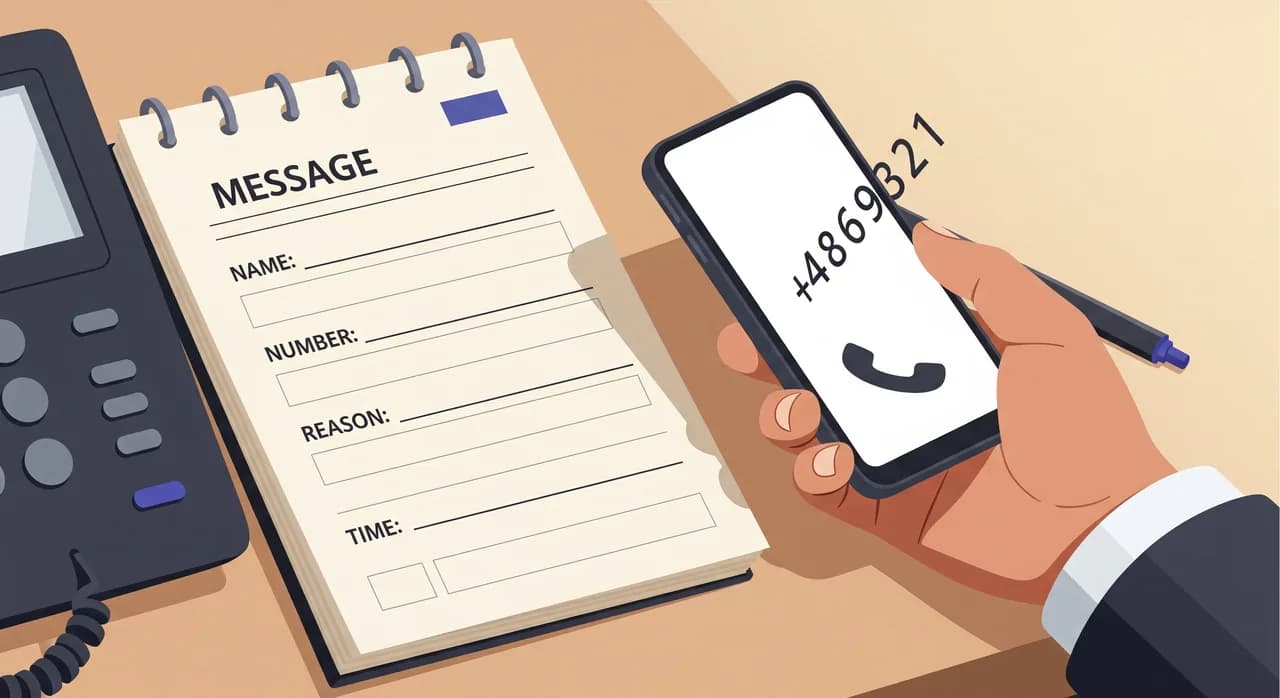
Not every call can be resolved on the spot, and that is fine — as long as the message you take is one someone can act on. A useful message has four things: who called, a number that works, what they actually want, and how urgent it is. "Someone rang about a job" is not a message; it is a mystery. "Rachel, on 07…, wants a quote for a bathroom refit, hoping to start next month" is something you can pick up and run with.
Read the number back. Always. It takes five seconds and it is the single most common point of failure in the entire chain — a transposed digit turns a hot lead into a dead end that neither side ever understands. And set an expectation for the callback: "He'll be back this afternoon and will call you before five." A message with a promised time attached is a message the caller trusts, and a promise you can then actually keep.
The most-skipped rule: end with a confirmed next step
Here is the habit that separates businesses that convert calls from businesses that merely answer them. Never end a call in the fog. Every call should close with both sides agreeing on what happens next — and, crucially, with that next step said out loud and confirmed.
"So that's Thursday the 12th at 2pm, I've got you down, and I'll text you a reminder the day before — anything else I can help with?" does an enormous amount of work in one sentence. It confirms the booking, states what you will do, catches any error while the caller is still on the line, and gives them room to raise the thing they almost forgot. Compare that with a vague "great, see you soon," which leaves the caller unsure whether they are actually booked, and leaves you unsure whether they will turn up.
Then close warmly and let them hang up first where you can. A slightly-too-eager click can feel like a door shut in someone's face. "Thanks for calling, speak soon" — a beat — and you are done. It is a small grace note, and small grace notes are most of what people remember about a business.
Difficult callers, angry callers, and the ones who ramble
Not every call is a delight. Someone is furious about a late delivery. Someone else has been telling you their life story for four minutes and has not yet said what they want. Etiquette is easy when the caller is pleasant; it is defined by how you behave when they are not.
For the angry caller, the instinct to defend yourself is the wrong one. Let them finish. Acknowledge the feeling before you address the facts: "I can hear this has been really frustrating, and I'm sorry — let me sort it out." You are not admitting fault; you are refusing to argue with someone who feels wronged, which is the only way to lower the temperature. Then move straight to a concrete next step, because action is what actually calms people, not sympathy on its own.
For the rambler, the kindness is gentle structure. A warm, decisive question — "So I can help you fastest, are you looking to book, or is this about an existing order?" — steers without cutting them off. You are not being rude; you are rescuing them from their own tangent. Most ramblers are relieved to be given a track to run on.
The etiquette of the calls you can't take
The hardest etiquette problem for a small business is not the call you answer badly. It is the call you cannot answer at all — the one that comes in while you are on a ladder, mid-treatment, driving, or asleep. Straight-to-voicemail is technically "answering," but a caller who wanted a person and got a beep often just hangs up and rings the next business. To them, an unanswered phone reads as a closed one.
So the same etiquette rules have to apply even when you personally are not on the line. Whatever picks up in your place should still answer fast, greet cleanly, answer the obvious questions, take a proper message or booking, and end with a confirmed next step. The medium changes; the manners do not. A caller does not care whether a person, a colleague, or a system handled them well — only that they were handled well.
This is precisely the gap an AI phone assistant is built to fill. Vunoon answers your calls when you cannot — 24/7, in the same three-ring window, with a greeting you configure and answers drawn from the business profile you set up in a few minutes. It takes bookings and messages, then sends you a summary and full transcript of every call, so nothing is lost and you decide who to ring back. It hands off gracefully too: when a caller needs a human or asks a question outside its brief, it takes a message and passes it to you rather than bluffing. It is not there to replace the warm call you take yourself; it is there so the calls you would otherwise miss still follow the playbook.
Turning etiquette into a habit your whole team keeps
None of this sticks by reading about it once. It sticks the way any habit does — with a small, visible standard and a bit of repetition. You do not need a training manual. You need a single card by the phone and the discipline to follow it for a fortnight until it stops feeling like a script and starts feeling like you.
| Moment | The habit | Sounds like |
|---|---|---|
| Ringing | Answer within three rings | Pick up by ring two or three, every time |
| Greeting | Business, name, invitation | "Good morning, Riverside Dental, Sam speaking — how can I help?" |
| Hold | Ask, time it, thank them | "Do you mind holding thirty seconds while I check?" |
| Transfer | Say who and why, brief first | "Let me pass you to Priya in bookings — one moment." |
| Message | Name, number, reason, urgency | Read the number back, promise a callback time |
| Ending | Confirm the next step | "So that's Thursday at 2 — I'll text a reminder the day before." |
If more than one person answers your phone, do the card together and agree on the greeting so callers get the same experience whoever picks up. Then, every so often, listen to yourself — record a call with consent, or just pay attention to one call a day. You will hear the rushed hello or the vague ending long before a customer complains about it, and you will fix it in a week.
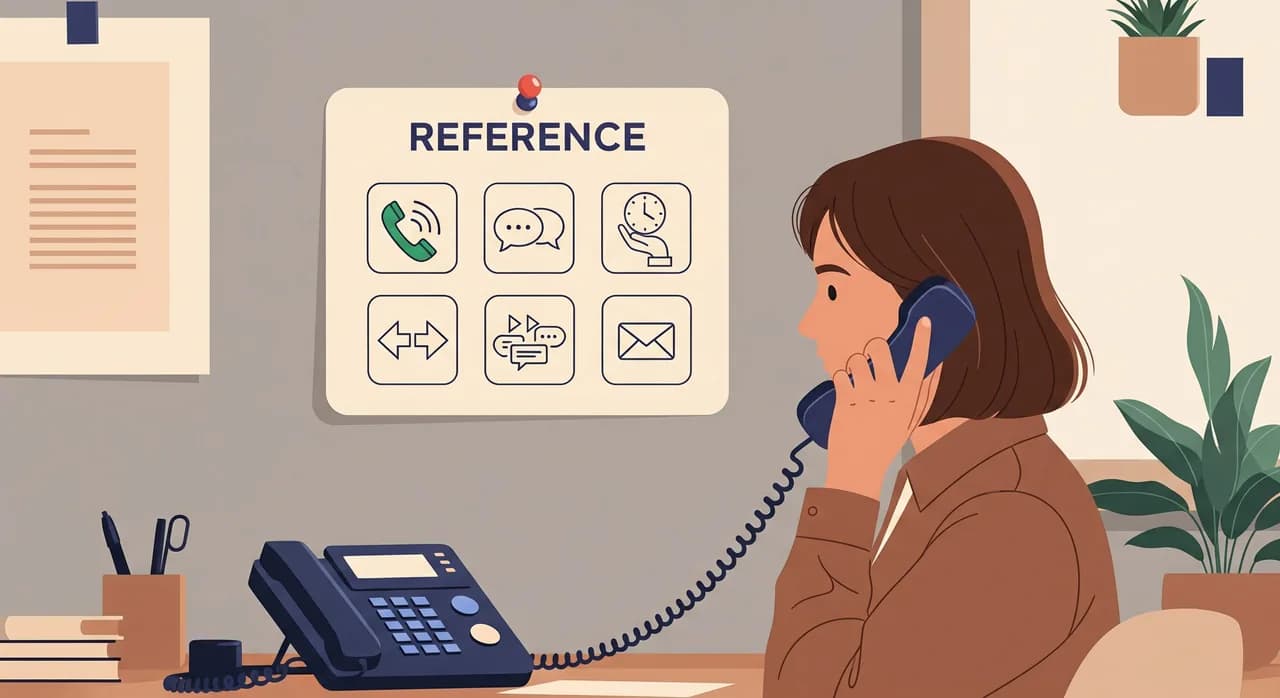
“Callers do not remember your script. They remember whether they felt respected, understood, and told what happens next.”
How many rings before you should answer a business call?
What is the best way to greet a caller professionally?
How long is too long to leave someone on hold?
How do you transfer a call politely?
What should you always do before ending a business call?
Does phone etiquette matter if an AI or answering service picks up?
Make sure the calls you can't take still follow the playbook
See how Vunoon answers within three rings, greets the way you configure, takes the booking, and sends you a full transcript — so a missed call stops meaning a lost customer.
See how Vunoon answers your calls
Vunoon builds an AI phone assistant that answers your business calls 24/7 — it books appointments, answers common questions and sends you a summary of every conversation.