Call Forwarding to an Answering Service: A Setup Guide, Step by Step
Unconditional, busy, no-answer, unreachable — the four kinds of call forwarding, the GSM codes that switch them on, and which combination actually gets your calls answered.
 Vunoon14 min read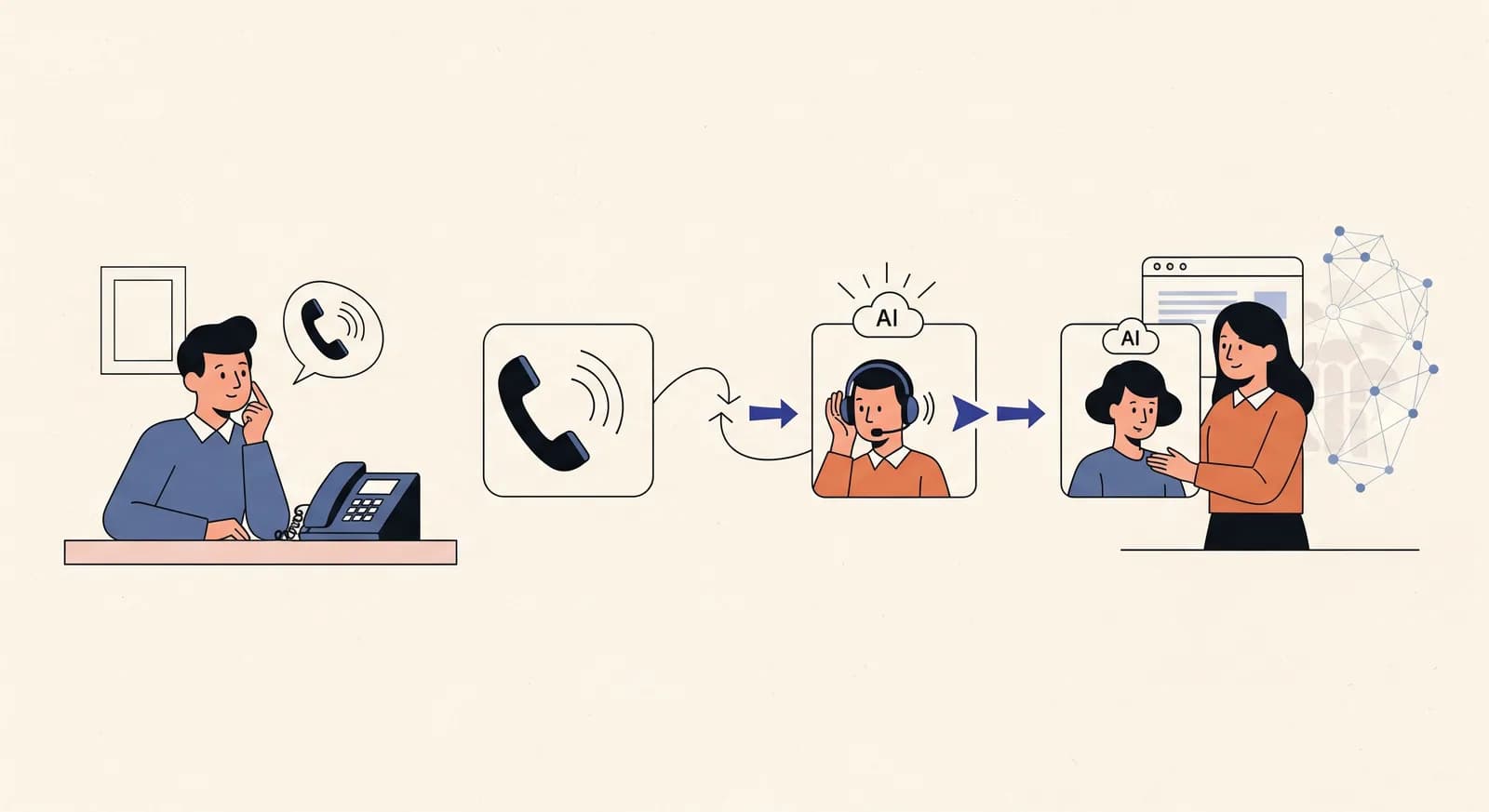
Setting up call forwarding to an answering service sounds like a two-minute job. Then you discover there isn't one switch — there are four, they behave differently on every carrier, and picking the wrong combination means either your callers hit a dead line or your own phone stops ringing entirely. This guide walks through all four, the codes that control them, and how to test each path before you trust it with a real customer.
Here's the scenario nearly everyone starts with. You've signed up for an answering service — maybe a human one, maybe an AI receptionist like Vunoon — and it's given you a phone number to forward your calls to. You dial some code into your phone, calls seem to go somewhere, and you move on. Two weeks later a regular customer tells you they called three times and got voicemail. What happened?
What happened is that call forwarding is not one feature. It's a family of them, and the differences between the members decide whether your phone rings first, whether it ever rings, and what happens when you're already on a call. Get the family right and the handoff is invisible. Get it wrong and you've quietly built a machine for losing customers.
The four kinds of call forwarding
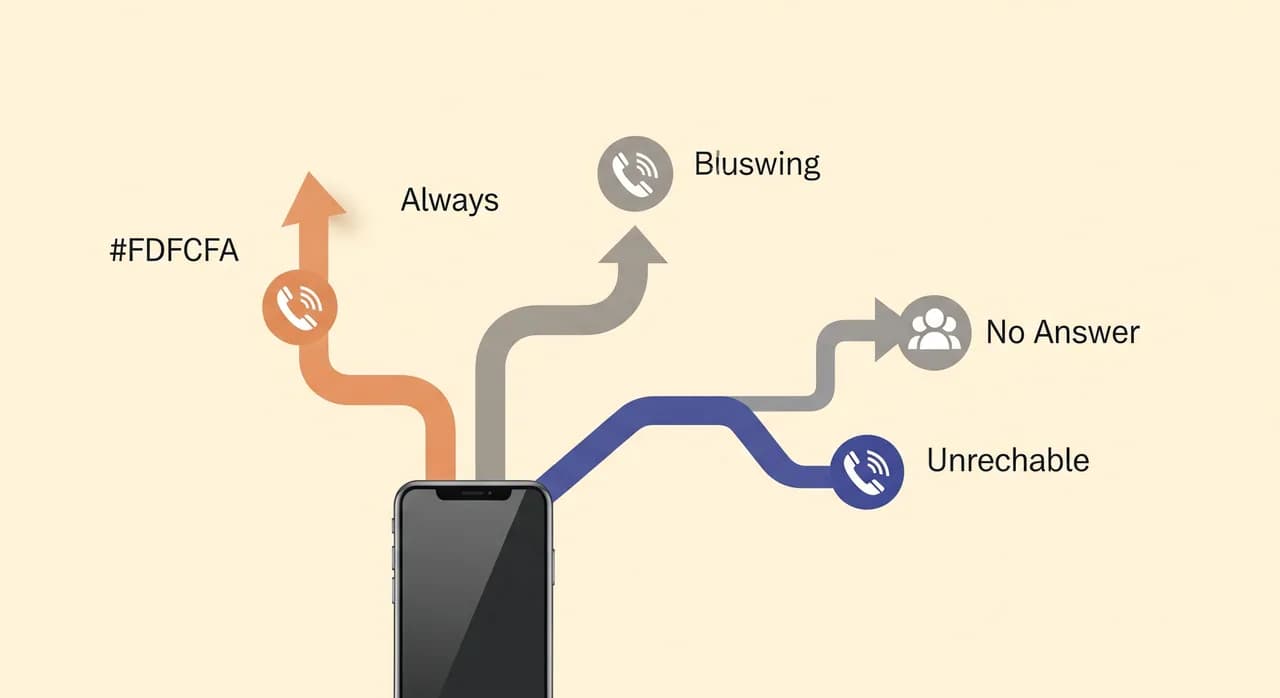
Almost every phone network on earth supports four distinct forwarding conditions. They're standardised — the underlying GSM supplementary services are the same whether you're on a mobile in Vienna or a landline in Denver — even though the menu names and marketing labels drift from carrier to carrier. Learn the four concepts and the carrier's wording stops mattering.
- Unconditional (CFU) — every call goes straight to the forwarding number. Your own phone never rings.
- Busy (CFB) — calls forward only when you're already on another call.
- No answer (CFNRy) — calls ring your phone first, then forward if you don't pick up within a set number of seconds.
- Unreachable (CFNRc) — calls forward when your phone is off, out of coverage, or in airplane mode.
The last three — busy, no-answer, and unreachable — are collectively called conditional forwarding. They only kick in under a specific condition, which is exactly why they're the interesting ones. Unconditional is the blunt instrument. Conditional forwarding is the scalpel.
Why the difference actually matters
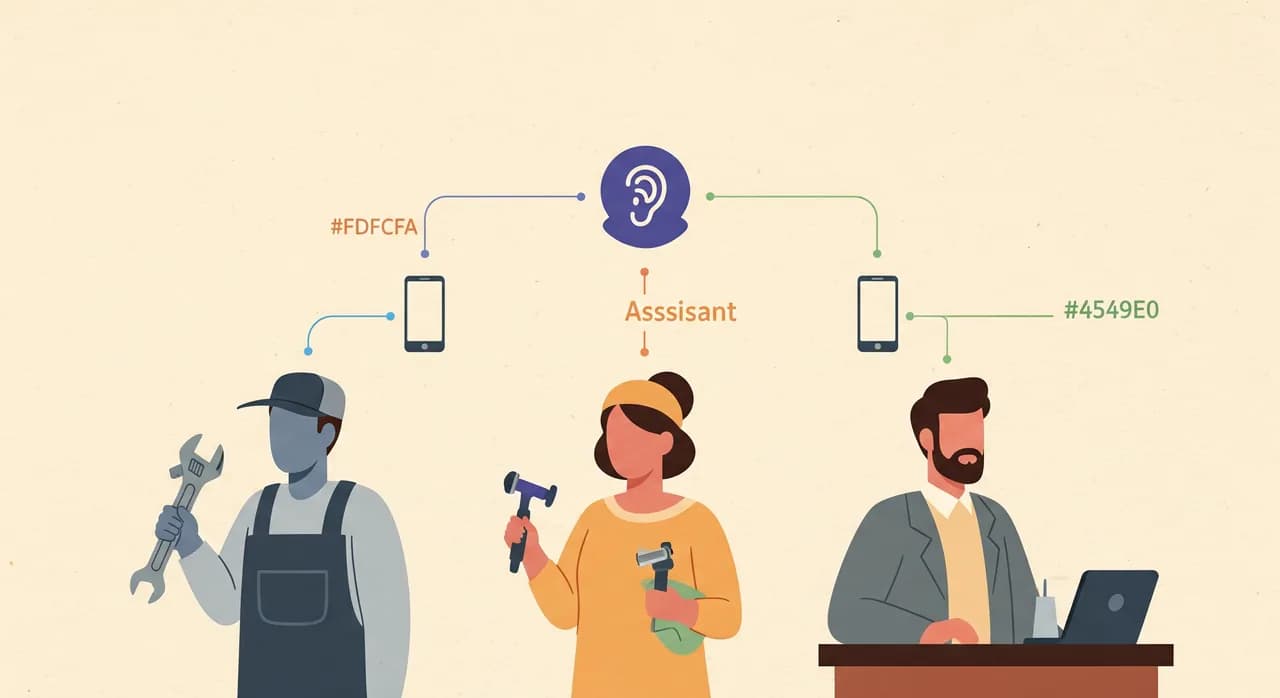
Imagine a two-van plumbing business. The owner still wants to answer the phone himself when he can — a live voice from the actual plumber closes the job faster than anything. He just can't answer when he's under a sink with both hands full, or driving on the motorway, or asleep at 11pm when a burst pipe calls.
If he sets unconditional forwarding, every single call — including the ones he could easily have taken — skips his phone and lands on the answering service. He's paying for a receptionist to intercept calls he wanted. If instead he combines busy + no-answer + unreachable, his phone rings for every call, and only the ones he genuinely can't reach fall through to the service. Same forwarding number, completely different business outcome.
“Unconditional forwarding hands away every call. Conditional forwarding only hands away the ones you were going to lose anyway.”
Now flip the scenario. A solo esthetician runs back-to-back appointments and physically cannot answer the phone during a treatment without ruining it for the client in the chair. She doesn't want her phone buzzing at all during work hours. For her, unconditional forwarding during the day — with the AI receptionist taking bookings and questions — is exactly right, and she flips it off in the evening when she's happy to talk. The correct setup depends on how you actually work, not on a default.
The GSM codes that switch each one on
You can usually configure all of this through your phone's settings menu, but menus hide options, rename them, and sometimes only expose unconditional forwarding. The reliable way — the one that works on almost any GSM network for mobile — is to dial short star codes directly. These are the raw supplementary-service commands the settings menu is calling behind the scenes.
The pattern is consistent. To activate a forward you dial a code, a star, the destination number, and a hash. To turn it off you dial a hash-star-code. In the tables below, replace DEST with the number your answering service gave you, including the country code where relevant.
| Condition | Activate | Deactivate | Check status |
|---|---|---|---|
| Unconditional (CFU) | **21*DEST# | ##21# | *#21# |
| Busy (CFB) | **67*DEST# | ##67# | *#67# |
| No answer (CFNRy) | **61*DEST# | ##61# | *#61# |
| Unreachable (CFNRc) | **62*DEST# | ##62# | *#62# |
| All conditional at once | **004*DEST# | ##004# | *#004# |
| Cancel everything | ##002# | — | — |
For the no-answer code you can often specify the ring delay before forwarding by adding it to the string: **61*DEST**20# forwards after roughly 20 seconds — about five rings. Carriers usually allow values between 5 and 30 seconds in five-second steps. This one number matters more than people expect, and we'll come back to it.
Which combination fits which goal
There's no universally correct setup. There's the setup that matches your coverage goal. Here are the three that cover most small businesses.
Goal: keep answering yourself, catch only what you miss
This is the default most owners actually want. Enable all three conditional forwards (busy, no-answer, unreachable) pointing at your answering service — the **004*DEST# shortcut does it in one go. Your phone rings for everything. When you're already on a call, the next caller is caught. When you can't get to the phone in time, they're caught. When your battery dies mid-day, they're still caught. You lose nothing, and the service only earns its keep on calls you'd otherwise have missed.
Goal: never be interrupted during work
For anyone whose hands are occupied — treatments, repairs, driving, kitchens — set unconditional forwarding during working hours so the phone genuinely never rings, then cancel it when you're free. The trade-off is honest: you're handing every call to the service, including easy ones. That's the point. An AI receptionist that takes bookings and answers routine questions makes this trade far more palatable than sending everyone to voicemail.
Goal: cover after-hours and overflow only
If you have someone answering during the day and only need coverage evenings, weekends, and holidays, the cleanest approach is time-based forwarding rather than the raw GSM codes. Most VoIP systems and some mobile carriers let you schedule it — unconditional forwarding from 6pm to 8am, off during business hours. If your carrier can't schedule, you fall back to toggling unconditional forwarding manually, which works but relies on you remembering.
“The right forwarding setup isn't the most advanced one. It's the one that matches how your hands are occupied during the day.”
The ring-delay trap nobody warns you about
The no-answer delay — how long your phone rings before forwarding — is the single most common cause of "it went to voicemail even though I set up forwarding." Here's the trap: your carrier's voicemail is itself a no-answer forward. It's usually set to grab the call after about 20 to 25 seconds. If you then add a no-answer forward to your answering service with a longer delay, voicemail wins the race and swallows the call first.
So when you point no-answer forwarding at an answering service, you're not adding a forward — you're replacing the one that pointed at voicemail. Setting **61*DEST# overwrites the hidden voicemail forward with your service's number. Good. But if you set the delay too long — say 30 seconds — some networks still snatch the call for voicemail earlier. Keep the no-answer delay in the 15-to-20-second range so the service reliably wins.
Step by step: forwarding to an AI receptionist
Here's the full sequence for the most common goal — catching what you miss — using Vunoon as the destination. The steps are the same for any answering service; only the number you forward to changes.
- 1Get your forwarding number firstBefore touching your phone settings, make sure the service is actually ready to answer. In Vunoon you sign up, describe your business in a short wizard, and test it by talking to it yourself. Only once it's answering the way you like do you get the number to forward to.
- 2Note your current voicemail behaviourCall your own number from a different phone and let it ring. Time how long before voicemail picks up. That number is roughly your carrier's built-in no-answer delay, and it's what you're about to replace.
- 3Clear any old forwardsDial ##002# to cancel every existing forward. This gives you a clean slate and avoids stacking a new setup on top of a forgotten old one.
- 4Set the conditional bundleDial **004*DEST# (replacing DEST with your forwarding number). This activates busy, no-answer, and unreachable forwarding together, all pointing at the service. Your phone still rings for every call.
- 5Tighten the ring delay if allowedIf your carrier supports it, set the no-answer delay explicitly with **61*DEST**15# for a 15-second window. Short enough to beat voicemail, long enough to grab the phone when you can.
- 6Confirm the statusDial *#004# to read back your conditional forwarding status. You should see all three conditions active and pointing at your service's number.
Test every path before you trust it
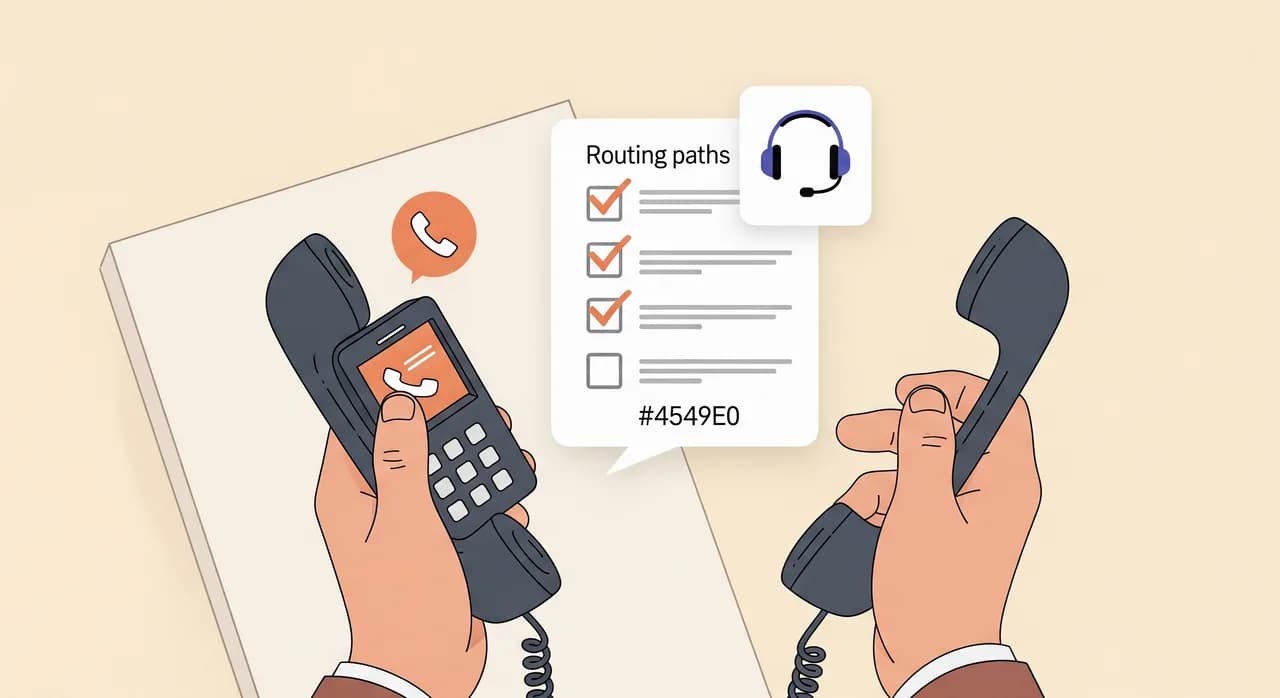
This is the step everyone skips and everyone regrets. You configured four conditions; you need to prove each one actually routes to the service. Grab a second phone — a friend's, a spare, anything with a different number — and run through the paths deliberately. It takes five minutes and it's the difference between "I set up forwarding" and "forwarding works."
- Test unreachable: switch your phone off completely, then call it from the second phone. The service should answer within a couple of rings.
- Test no-answer: turn your phone back on, call it, and simply don't pick up. After your ring delay, the service should answer — not voicemail.
- Test busy: put your phone on a call (call the speaking clock, or someone), then have the second phone call you. It should forward straight to the service.
- Test the answering quality itself: on at least one of these calls, act like a real customer. Ask a question you'd expect a caller to ask and confirm the service answers it correctly.
Common mistakes and how to avoid them
Most forwarding problems come from a handful of predictable errors. If your setup misbehaves, it's almost certainly one of these.
- Setting unconditional when you meant conditional. If your phone stops ringing entirely, you've enabled CFU. Cancel it with ##21# and use **004*DEST# instead.
- Forgetting the country code. A forwarding number without the correct international prefix fails silently on some networks. Include the full number.
- Leaving voicemail to win the race. Too long a no-answer delay and voicemail grabs the call. Shorten it to around 15 seconds.
- Stacking new forwards on old ones. Always clear with ##002# first if things get tangled.
- Never testing the unreachable path. It only triggers when your phone is off, so it's the one people forget — and it's the one that saves you when your battery dies mid-shift.
One more honest note: forwarding codes are carrier-dependent. The codes in this guide are the GSM standard and work on the overwhelming majority of mobile networks, but a handful of carriers use their own variants or restrict conditional forwarding on certain plans. If a code returns an error, your carrier's support page or a two-minute call to them will confirm the local equivalent. It's the one part of this you can't fully control from your own handset.
The goal is an invisible handoff
When forwarding is set up well, your callers never know a handoff happened. They dial your number, and either you answer or a capable receptionist does — no dead air, no "the person you're calling is unavailable," no voicemail black hole. A good AI receptionist takes the booking, answers the routine question, or takes a message and sends you a summary and transcript, so nothing is lost even on the calls you never saw.
That invisibility is the whole point of getting the four conditions right. Forwarding is plumbing — nobody should ever notice it working. They only notice when it's broken and their call vanishes. Spend the ten minutes to set it up deliberately and test all four paths, and you'll have plumbing that just quietly works, call after call.
What's the difference between unconditional and conditional call forwarding?
Which forwarding code sends all my missed calls to an answering service at once?
Why do my forwarded calls still go to voicemail?
Does call forwarding work on a landline or only on mobiles?
How do I test that my call forwarding is set up correctly?
Set it up, then forward with confidence
Build your AI receptionist in a few minutes, test it by talking to it yourself, and only forward your number once it answers the way you want. See exactly how the setup and handoff work.
See how the setup works
Vunoon builds an AI phone assistant that answers your business calls 24/7 — it books appointments, answers common questions and sends you a summary of every conversation.