Choosing an AI Receptionist: A 12-Point Evaluation Checklist
A vendor-neutral, printable checklist for evaluating a virtual receptionist service — voice quality, booking depth, languages, escalation, data handling, setup effort, and pricing — so you buy on evidence, not marketing.
 Vunoon16 min read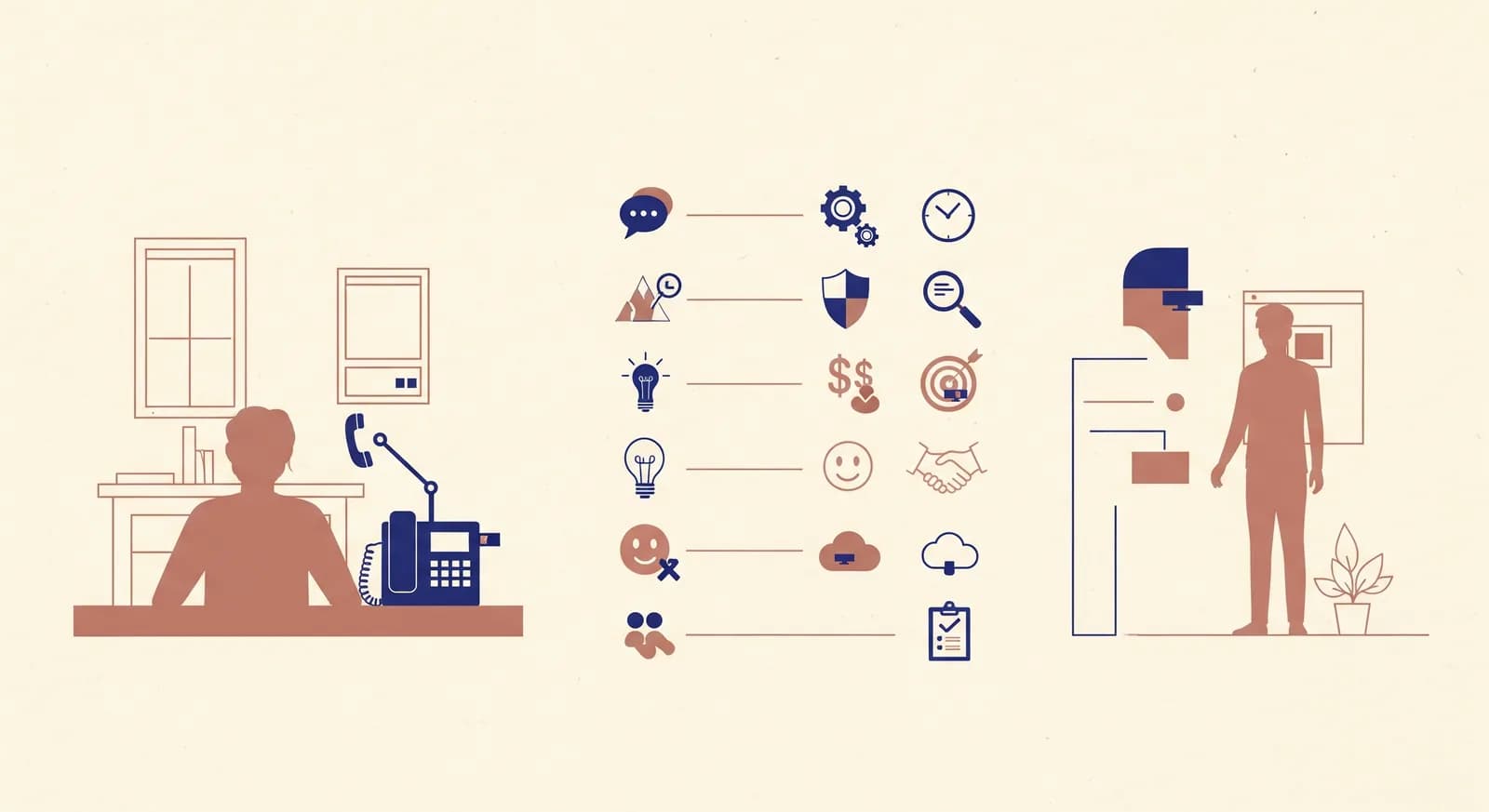
Nearly every virtual receptionist service demo sounds great. That is the problem. The polished thirty-second clip on a landing page tells you almost nothing about how the thing behaves at 6:47 on a Tuesday evening when a confused caller trails off mid-sentence and there is a booking on the line. This checklist is built to cut through the demo and test the twelve things that actually decide whether an AI receptionist earns its keep — regardless of which vendor's logo is on it.
We sell one of these tools, so treat everything below with the skepticism it deserves. But the checklist itself is deliberately vendor-neutral: it is written so that a careful reader could use it to reject us as easily as anyone else. That is the point. A good evaluation should be something you can run on a trial account with a notepad, not a spec sheet you take on faith.
Print it, or copy it into a doc. Score each item honestly on the free trial before your card is ever charged. If a vendor makes it hard to test any single point on this list, that is data too — and usually the most useful data you will get.
Why you need a checklist and not a comparison table
Comparison tables reward whoever writes them. Every feature becomes a checkmark, every checkmark looks equal, and "multilingual support" sits in the same visual weight as "answers the phone." But the features that matter are not binary and they are not equally important to your business. A single-chair barber and a twelve-therapist physio clinic need almost opposite things from the same category of product.
A checklist forces you to do the work a table hides: to weigh each criterion against your actual call patterns and then test it, rather than trusting a marked-up grid. The twelve points below are ordered roughly by how often they surprise people after purchase — the early ones look obvious and rarely are.

1. Voice quality — but the boring kind
Everyone tests whether the voice sounds human. That is the wrong test, because in a curated demo it always does. The real test is whether the voice stays intelligible and unbothered under stress: background noise, a caller who talks over it, a bad mobile connection, a name it has never heard. Call your trial from a car with the window cracked. Call it from a noisy kitchen. Mumble a street name.
- Does it interrupt gracefully, or does it steamroll a caller who starts talking?
- When it mishears, does it ask a sensible clarifying question, or does it plough ahead with the wrong answer?
- Is there an awkward two-second pause before every reply that makes callers think the line dropped?
- Does it sound natural at the speed real people talk, not just the slow, clear pace of a demo?
Latency — the gap between the caller finishing and the assistant starting — is the quiet killer here. A voice can be gorgeous and still feel robotic if it stalls. Time it roughly with a stopwatch on three or four calls. If the pauses make you uncomfortable as a tester, they will make your customers hang up.
2. Booking depth: can it actually finish the job?
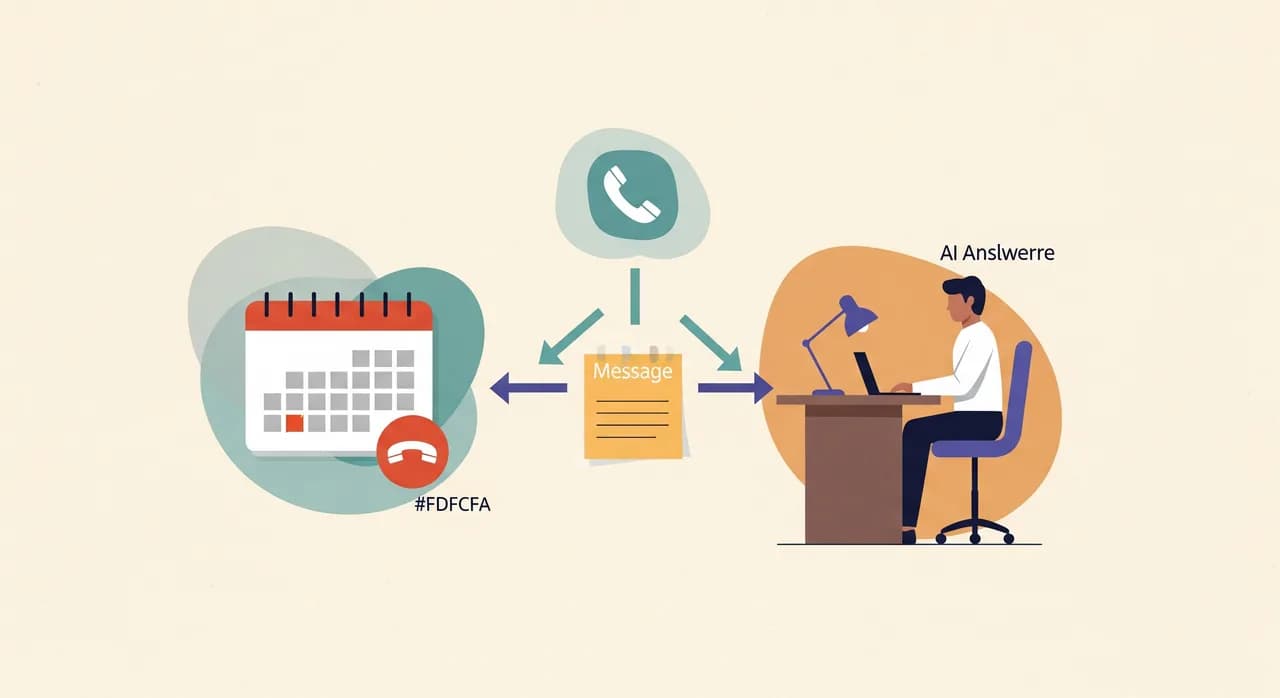
This is where most virtual receptionist services quietly diverge, and where the gap costs you money. There is a world of difference between an assistant that takes a message about a booking request and one that completes the booking — checking a live calendar, offering real open slots, and writing the appointment back.
Neither is wrong. A message-taker is honest and simple, and for some businesses it is exactly enough. But you must know which one you are buying, because "handles appointments" appears on both marketing pages. Ask the concrete question: after the call ends, is there a confirmed slot on my calendar, or a note in my inbox that someone wants one?
- 1Book a real slotOn the trial, ask the assistant to book you in. Then look at whatever calendar it claims to integrate with. Did the appointment appear, with the right time and details?
- 2Try to double-bookAsk for a time you know is already taken. A shallow tool will happily book the conflict. A real one will say it is not available and offer alternatives.
- 3Change your mind mid-callAsk to move the time, then ask a question, then confirm. See whether it holds the thread or resets.
- 4CancelTry to cancel or reschedule an existing booking by phone. Many tools can create but not touch what already exists.
“"Handles appointments" is on every marketing page. Ask instead: after the call, is there a confirmed slot on my calendar, or just a note that someone wanted one?”
3. Does it know your business, or just greet callers?
A large share of inbound calls are questions the owner could answer in one breath: Are you open Sunday? Do you take walk-ins? How much is a filling? Where do I park? An assistant that can only take messages sends every one of those to you as a callback task — which defeats half the purpose.
So test the knowledge layer directly. During setup you will describe your services, hours, and prices. Then ask the assistant the ten questions you get most often. Count how many it answers correctly and how many it fumbles or invents. An assistant that confidently makes up an answer is worse than one that says "let me have the owner confirm that" — a wrong price quoted on the phone is a promise you now have to honor or awkwardly retract.
4. Escalation and handoff: what happens when it can't cope?
No AI receptionist should try to handle everything, and the good ones don't pretend to. The question is what happens at the edge of its competence. A caller with a genuine emergency, an irate customer, a niche question, someone who simply says "I want to speak to a person" — the assistant's behavior in these moments defines whether it protects your reputation or damages it.
- Can it transfer or forward a live call to you or a colleague when it matters — or is taking a message the only exit?
- Does it offer a callback and actually capture a working number and a reason?
- When a caller asks "am I talking to a robot?", does it answer honestly? An assistant that pretends to be human will eventually get caught, and that is a far worse look than a polite "I'm an AI assistant for the practice."
- Is there a way to route urgent calls differently — for instance, a plumber wants a burst-pipe call to reach a human, not a message queue?
Escalation is the single most under-tested feature and the one most likely to bite you. Deliberately push the assistant past what it can do and watch how it fails. Graceful failure — "I'll take your number and have Dr. Weber call you back within the hour" — is a feature. Silent, stuck, or dishonest failure is a liability.
5. Languages — and how it decides which to speak
If a meaningful share of your callers are more comfortable in another language, this is not a nice-to-have. But "supports 25 languages" hides a harder question: how does the assistant know which language to use? Does it detect the caller's language automatically and switch, or must the caller navigate an English greeting first? Can it switch mid-call if someone starts in one language and continues in another?
Test it in the second language your callers actually use — not just the language count on the marketing page. Listen for whether the accent and phrasing are natural to a native speaker or merely a passable machine translation. A stilted second language can be worse than no second language, because it signals to that caller that they are an afterthought.
6. Coverage: after-hours, overflow, or both?
Be clear about the job you are hiring for, because it changes what "good" looks like. Three common shapes:
- After-hours only — you answer during the day, the assistant catches evenings, nights, and weekends. Here, reliable message-taking and booking matter most.
- Overflow — the assistant picks up when your line is busy or no one grabs it within a few rings, so a second and third caller aren't lost while you're on the phone. Here, how it hands off and how quickly it answers matter most.
- Full 24/7 front line — the assistant is the default answer and you are the escalation. Here, every point on this list matters at once.
Do the arithmetic on your own numbers. If you genuinely miss ten calls a week and even two of them would have booked, the value question answers itself long before you get to pricing. A tool that only ever needed to save you one appointment a week has usually paid for itself.
7. What lands in your inbox after the call
The call is only half the product. The other half is what you receive afterward, because that is what lets you follow up, spot problems, and trust the thing without listening to every recording. A good service sends a clear summary of each call — who called, what they wanted, what was decided, their number — plus, ideally, a full transcript for the calls where the summary isn't enough.
- Is the summary actionable at a glance, or a wall of text you have to decode?
- Does it capture the caller's number and reason reliably, so a callback isn't guesswork?
- Can you see a transcript when you need to check exactly what was promised?
- How fast does it arrive — a summary that shows up the next morning is far less useful than one that lands while the caller is still fresh in their mind?
8. Data handling: where your calls go and who can see them
Your calls contain personal information — names, phone numbers, sometimes health or financial details depending on your trade. That makes data handling a real criterion, not compliance theater. You do not need a law degree to ask sharp questions, and honest vendors answer them plainly.
- Where are call recordings and transcripts stored, and for how long? Can you set retention or delete on request?
- Who — human or third party — can access the content of your calls?
- If you serve customers in a region with strict privacy rules, does the vendor address that directly and in writing, rather than waving it off?
- Can you export or delete a customer's data if they ask you to?
9. Setup effort: minutes, days, or a sales call?
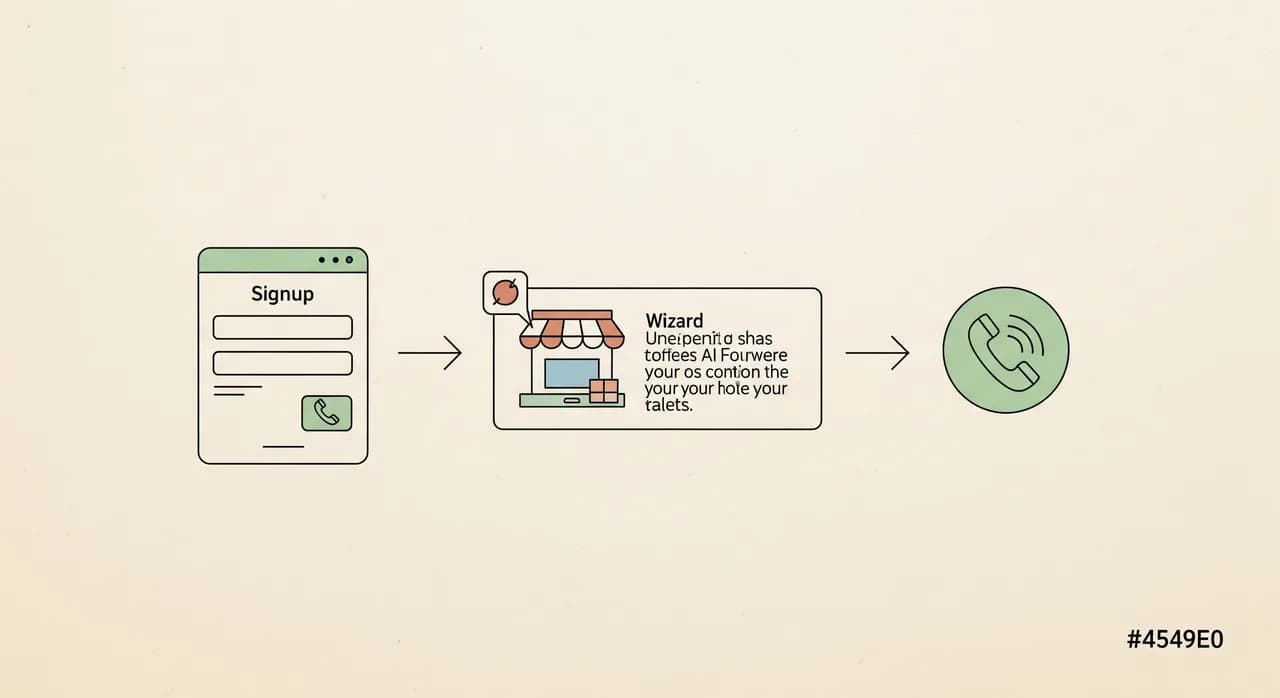
Setup effort is a hidden cost that rarely appears on the pricing page. Some virtual receptionist services are genuinely self-serve: you sign up, describe your business in a short wizard, test it by talking to it, and forward your number — all in an afternoon, without talking to anyone. Others require an onboarding call, a scripting session, and a wait before you can even try it.
Neither model is automatically better, but they suit different people. If you want to kick the tires tonight after closing, a mandatory sales call is friction. If your call flows are genuinely complex, hands-on onboarding might be worth it. The tell to watch for: can you experience the actual product before you commit? If the only way to evaluate is a scheduled demo run by a salesperson, you are evaluating the salesperson, not the software.
10. How it connects to your existing number
You almost certainly do not want to hand out a new phone number. The practical mechanism for most small businesses is call forwarding: you keep your existing number, and forward calls to the assistant either always, only after hours, or only when your line is busy or unanswered. This should be a setting on your existing phone plan, not a rebuild of your telephony.
- Can you forward conditionally — only unanswered or busy calls — so you keep answering when you're free and it catches the rest?
- Does it work with your current carrier and number, or does it push you onto a new one?
- How quickly can you turn it off if you go on holiday, or on if you're slammed? Control should be immediate, not a support ticket.
- Does caller ID survive, so you still see who called even when the assistant answered?
11. Reliability and control when things go sideways
An assistant that answers 98% of the time and drops the rest into silence is not a 98%-good product; it is a product with a reputation problem. Ask what happens if the service has an outage. Does the call fail silently, or fall back to voicemail, or ring through to you? A sensible failover — the call reaches a human or a voicemail when the AI can't — is the difference between an off-day and a lost customer.
Control matters too. You should be able to change your greeting, correct a price the assistant got wrong, adjust your hours, and pause the whole thing — quickly and yourself, without emailing support. Test a small edit during your trial and time how long it takes to go live. If updating your opening hours is a two-day round trip, imagine fixing a mistake during your busiest week.
12. The pricing model — not just the number
Save pricing for last, on purpose. Once you know a tool passes the first eleven points, the number becomes a question of value rather than a first filter. And the shape of the price often matters more than the headline figure. Common models each hide a different surprise:
| Model | What it looks like | The question to ask |
|---|---|---|
| Per minute | You pay for talk time | What's a realistic monthly total at my call volume? A chatty tool costs more. |
| Per call | Flat fee each answered call | Do short hang-ups and wrong numbers count as billable calls? |
| Flat monthly | One predictable price | What's included, and what triggers an upcharge — extra calls, extra languages, integrations? |
| Tiered | Plans by volume or features | Which tier do I really need, and how brutal is the jump when I outgrow one? |
The trap in every model is the same: the cheap headline that turns expensive at your real usage. Estimate your monthly cost using your actual call volume, not the vendor's example. And weigh it against the honest counterfactual — the calls you currently miss. If even a fraction of those would have become bookings, the comparison is not price versus zero; it is price versus revenue you're already losing. For where a specific tool lands, check its own pricing page rather than trusting a summary.
Putting the checklist to work
You do not need to score all twelve equally. Pick the three or four that matter most for your trade and treat them as pass/fail. A dental practice will weight booking depth and escalation heavily. A restaurant taking reservations in two languages will care most about language switching and after-hours coverage. A tradesperson will live or die on how urgent calls escalate to a human.
Then run the trial with the notepad open. Make the calls yourself. Make the awkward ones. The whole exercise takes an evening, and it replaces months of quiet regret with an hour of honest testing. A tool that survives your worst-case calls will handle your customers' ordinary ones easily — and one that stumbles on the trial was never going to improve once your card was charged.
What is the single most important thing to test in a virtual receptionist service?
Can I evaluate an AI receptionist without talking to a salesperson?
Do I need a new phone number to use an AI receptionist?
Will an AI receptionist book appointments or just take messages?
How should I compare pricing between AI receptionist services?
Run the checklist on a real assistant
The fastest way to score these twelve points is to test a working assistant against your own calls. Set one up in a few minutes, describe your business, and phone it yourself before you decide anything.
See how setup works
Vunoon builds an AI phone assistant that answers your business calls 24/7 — it books appointments, answers common questions and sends you a summary of every conversation.