Why Callers Hang Up on Voicemail Instead of Leaving a Message
Most callers don't leave voicemail anymore — they hang up and dial the next result on Google. Here's the behavior behind it, and what actually captures the request instead.
 Vunoon15 min read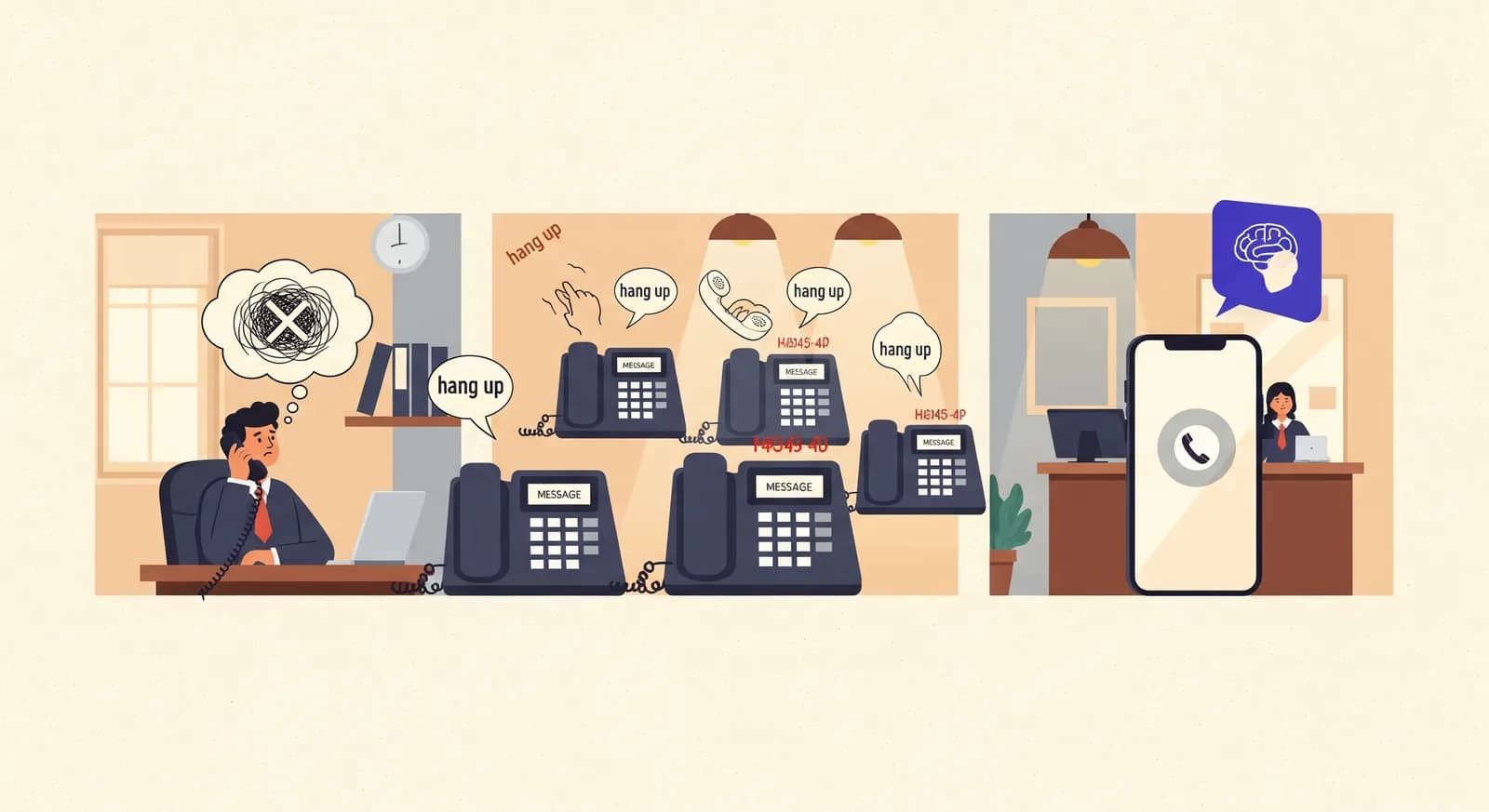
You check your phone at the end of a busy afternoon. Four missed calls, zero voicemails. It's tempting to read that as "nothing important" — but that's almost never what it means. Those four callers didn't have nothing to say. They just decided that saying it to a machine wasn't worth their time, and dialed the next result on Google instead.
The empty mailbox is lying to you
There's a quiet assumption baked into how most small businesses treat voicemail: if it mattered, they'd have left a message. It feels reasonable. It's also wrong, and it's costing you work you never find out about.
The reason callers dont leave voicemail has almost nothing to do with how much they want what you sell. It has to do with what happens in the three seconds after they hear the beep. Those three seconds are where the sale quietly dies — not because the caller lost interest, but because voicemail asks them to do something humans have collectively decided they're done doing.
Understanding that behavior is the whole game. Once you see why the mailbox stays empty, you stop trying to write a cleverer greeting and start fixing the actual problem: nobody picked up.
What actually happens in a caller's head after the beep
Put yourself on the other end. You've got a burst pipe, or a toothache, or a car that won't start, and you find a business that looks right. You call. It rings. It rings again. Then the recorded voice starts — and something shifts.
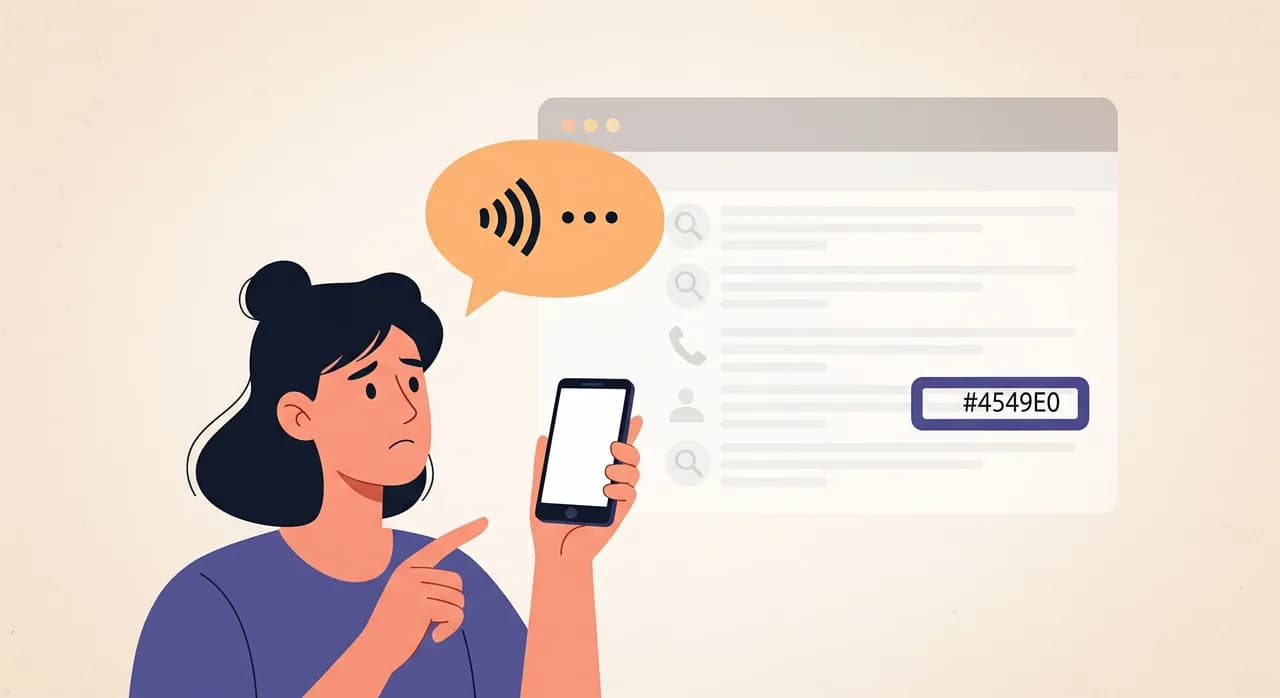
The moment the voicemail greeting begins, the caller stops being a person trying to solve a problem and becomes a person being asked to perform. They now have to compose a coherent message on the spot: their name, their number (say it slowly, say it twice), what they want, when they're free, all narrated into silence with no idea whether anyone will ever hear it. It's a tiny, cold, one-sided monologue, and most people simply don't want to give it.
“A missed call is a person with a problem. A voicemail greeting asks that person to perform a monologue instead — so they don't.”
There are a few distinct forces at work in those three seconds, and they stack on top of each other:
- The effort tax. Speaking to a machine takes more mental work than a conversation, not less. In a real call the other person carries half the load — they prompt you, they confirm the number, they ask the next question. Voicemail makes the caller do all of it alone.
- The uncertainty. Nobody knows if voicemail gets checked. We've all left a message into the void and never heard back. That memory makes the whole exercise feel like a gamble the caller would rather not take.
- The delay. Even in the best case, voicemail means waiting for a callback. But the caller wants the problem handled now — that urgency is exactly why they picked up the phone instead of sending an email.
- The easy exit. There is always another option one tap away. The search results are still open in another tab. Hanging up and calling the next business is faster and less awkward than leaving a message. So they do.
None of this is laziness. It's a rational response to a bad deal. Voicemail offers high effort, uncertain outcome, and delayed resolution — against a competitor who will pick up right now. Given that trade, hanging up is the sensible move.
Voicemail is a habit that broke, not a feature that failed
It's worth remembering that voicemail made sense in a world without alternatives. If the only way to reach a business was one phone number and one person, leaving a message was the rational thing to do — the payoff for the effort was high, because there was no easy next option.
That world is gone. A caller today isn't choosing between "leave a voicemail" and "give up." They're choosing between "leave a voicemail" and "call the three other businesses that also came up in the search." The moment a substitute exists, the whole calculation flips. Why narrate a monologue to your mailbox when the shop down the road might just answer?
This shift is generational and it's not reversing. People who grew up texting treat a phone call itself as a fairly high-commitment act; asking them to then also leave a spoken message is asking twice. For a lot of your callers, voicemail isn't a fallback — it's a dead end they back out of.
The quiet arithmetic of a hung-up call
Let's make this concrete, because "you're losing calls" is easy to nod along to and easy to ignore. Suppose you're out on a job, or with a client, and ten calls come in over a day that you can't get to. They roll to voicemail.
If voicemail worked the way owners assume, you'd end the day with ten messages to work through. In reality, a large share of callers hang up at the beep. Say three of the ten actually leave a message. The other seven didn't stop needing what you offer — they just took their need elsewhere. You'll never know their names. You'll never get the chance to say "actually, I can fit you in Thursday."
Now think about what a single call is worth to you. For a lot of trades and services, one answered call that turns into a booking is worth far more than an hour of your time. So the maths of a quiet mailbox isn't seven missing voicemails — it's seven missing chances at a job, most of which walked straight to a competitor who happened to be free to talk.
“Zero voicemails doesn't mean zero demand. It usually means demand that found somewhere else to go.”
The insidious part is that this leak is invisible on your side. Every other kind of lost sale leaves a trace — an abandoned cart, an unanswered email, a quote that went cold. A hung-up call leaves nothing. It's the one business problem that actively hides itself, which is exactly why it goes unfixed for years.
Why a friendlier greeting won't fix it
The common instinct, once an owner notices this, is to fiddle with the voicemail message. Make it warmer. Promise a fast callback. Add a cheerful "we really do check these!" It rarely moves the needle, and it's worth being honest about why.
The greeting isn't the problem. The medium is. A better greeting still asks the caller to do the hard thing — perform a monologue, into uncertainty, and then wait. You can make that request more politely, but you're still making it, and the competitor who answers live isn't making it at all. Politeness doesn't beat immediacy.
There's a second, sneakier issue. A long, reassuring greeting is more time the caller has to spend listening before they even reach the beep — and every extra second of recorded talk is another second in which they decide it's not worth it and tap away. Sometimes the most polished voicemail greeting loses more calls than a blunt one, simply because it takes longer to get through.
A live pickup changes the deal entirely
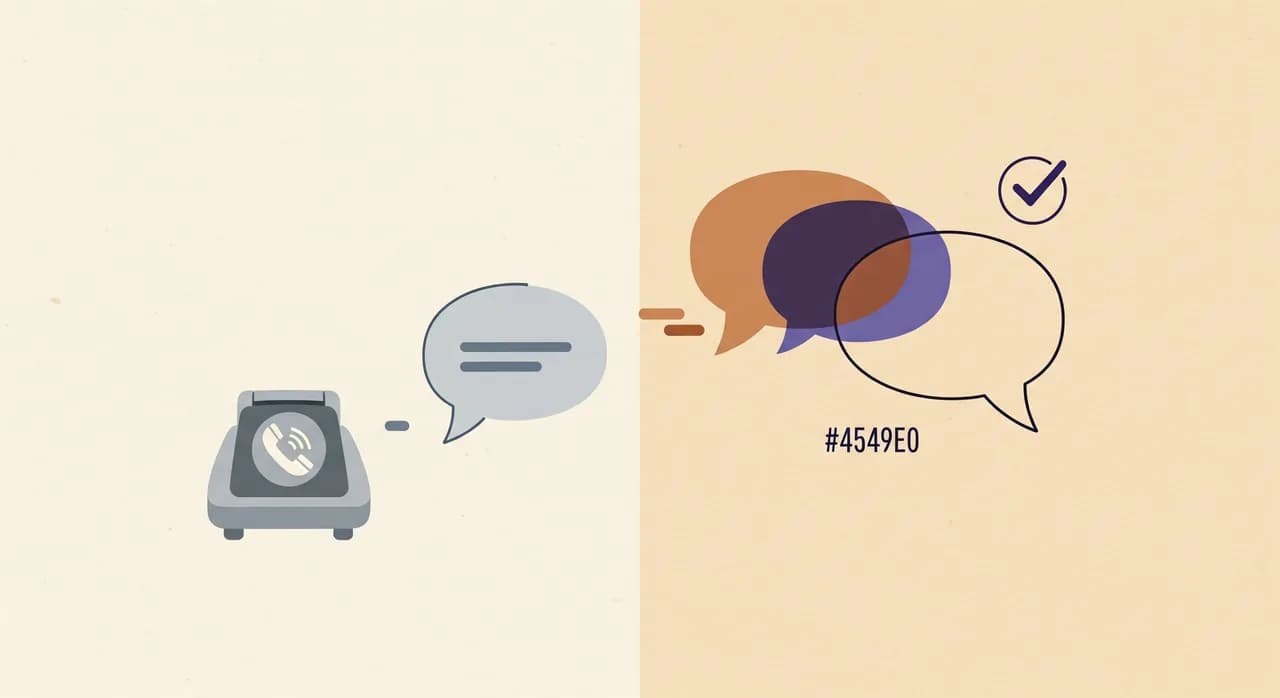
Here's the pivot. Everything that makes voicemail fail comes down to one thing: the caller is alone. No one is carrying the other half of the conversation. Flip that, and the behavior flips with it.
When a call is answered live, the effort tax vanishes. The caller doesn't have to compose anything — they're prompted. "Hi, thanks for calling. What can I help you with?" Now they're just talking, the thing humans are good at. The uncertainty vanishes too: someone is clearly listening and responding in real time, so there's no wondering whether the message went into a void. And the delay collapses, because the request is being captured in the moment rather than queued for later.
That's the entire difference between a caller who hangs up and a caller who books. Not a nicer greeting — a live back-and-forth that does the work for them. When someone else is holding up their end, people happily give you their name, their number, the nature of the problem, and a preferred time, all without friction, because the conversation is pulling the details out of them naturally.
But you can't personally answer every call — and shouldn't have to
The obvious objection: "Great, live pickup wins, but I'm on a ladder / mid-appointment / asleep. I can't answer live." That's true, and it's exactly the point. You physically cannot be on the phone and doing the work at the same time, and hiring a full-time person to sit by the phone rarely makes sense for a small business.
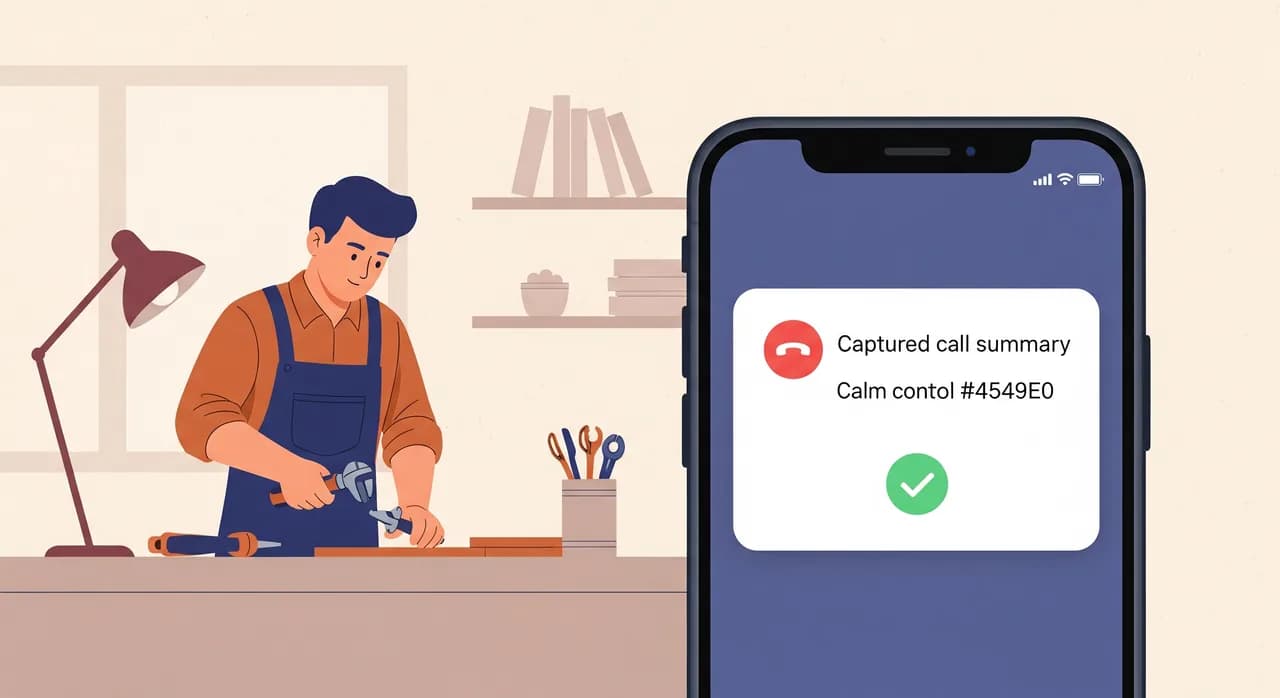
This is the gap that used to have only one bad answer — voicemail — and now has a better one. An AI phone assistant like Vunoon answers the call live when you can't, holds the actual conversation, and captures the request the way a person would, then sends you a clean summary and transcript. The caller gets the live back-and-forth that stops them hanging up. You get the details without dropping what you're doing.
It's not pretending to be you, and it's not trying to close the deal on your behalf. Think of it as the opposite of voicemail: instead of a machine that asks the caller to do all the work, it's a machine that does the work of listening and asking. When someone asks whether they're talking to a person, it's honest about what it is. What it won't do is leave your caller staring at a beep, deciding whether you're worth the effort.
What "capturing the request" actually looks like
"Capture the request" can sound like jargon, so let's ground it. Imagine a two-van plumbing outfit. Both plumbers are under sinks all morning. A call comes in from someone with a leaking radiator.
- 1The call is answered on the first couple of ringsNo long ring-out, no rolling to voicemail. The caller hears a real voice greeting them and asking how it can help — so the hang-up reflex never fires.
- 2The conversation pulls out the detailsInstead of a monologue into silence, the caller answers natural questions: what's the problem, roughly where are they, when would suit. The kind of thing a good receptionist would ask.
- 3The caller is told what happens next"I've noted all that down and passed it to the team — someone will call you back to confirm a time." No wondering whether the message vanished. Certainty, not a void.
- 4You get a summary the moment you're freeBetween jobs, you glance at your phone and there's a tidy note: name, number, leaking radiator, wants an appointment this week, plus the full transcript if you need the detail. You call back knowing exactly what you're walking into.
Compare that to the same caller hitting voicemail: three-second pause, hang-up, next business. The gap between the two outcomes isn't technology for its own sake — it's the difference between a conversation and a monologue, and the caller feels it instantly.
When voicemail is still perfectly fine (being honest)
It would be dishonest to claim voicemail never has a place. There are cases where it's genuinely enough, and pretending otherwise just sounds like a sales pitch.
- Low-stakes, no-substitute calls. If people call you for something where you're the only option — a specific person they already know, an internal line, a callback about an existing order — the caller has a reason to persist, and voicemail survives.
- Callers who expect it. Some relationships are built around "leave me a message and I'll get back to you." Existing clients who trust you'll return the call behave very differently from a cold prospect comparing three search results.
- Truly rare calls. If your phone rings twice a week, the leak is small in absolute terms, and the effort of changing anything may not be worth it — though even then, one lost job can outweigh a lot.
The place voicemail falls apart is precisely where most small-business demand lives: new callers, with an urgent need, who have other options a tap away. If that describes even a third of your incoming calls, an empty mailbox is not good news.
How to stop the leak without hiring anyone
You don't need a call center or a new full-time hire to fix this. The practical path is short:
- 1Find out how bad it actually isCheck your call log against your voicemail box for a week. Count missed calls versus messages left. The gap between those two numbers is your leak — and it's usually bigger than owners expect.
- 2Decide what a live answer is worth to youPut a rough figure on one booked job. If catching even a few extra calls a week comfortably beats the cost of answering them, the decision makes itself.
- 3Put a live pickup on the calls you can't takeSet up an assistant that answers when you don't, holds the conversation, and captures the request — then forward your number to it for the hours you're unreachable. Test it by calling yourself first, so you know exactly what your callers will hear.
- 4Keep voicemail as the true last resort, not the defaultVoicemail can still exist for edge cases. It just shouldn't be the first thing a new, urgent caller meets — because for most of them, it's where the call ends.
The setup is genuinely quick: describe your business in a short wizard so the assistant knows your services and hours, try talking to it yourself, then point your number at it. Minutes, not a project.
Why don't callers leave voicemail anymore?
Does an empty voicemail box mean I'm not missing business?
Will a warmer or shorter voicemail greeting fix it?
How is a live answer different from voicemail?
Can an AI phone assistant really replace voicemail?
Is voicemail ever still the right choice?
Turn missed calls into captured requests
Vunoon answers your calls live when you can't, holds the conversation, and sends you the details — so the next caller who'd have hung up on voicemail becomes a booking instead. See how it handles a call before you ever forward your number.
See how Vunoon catches missed calls
Vunoon builds an AI phone assistant that answers your business calls 24/7 — it books appointments, answers common questions and sends you a summary of every conversation.