Escalation Rules: When Your AI Receptionist Should Transfer to a Human
Most calls an AI can handle alone. A few should ring a real person immediately. This is how to set escalation rules that catch the ones that matter without dragging you out of every meeting.
 Vunoon16 min read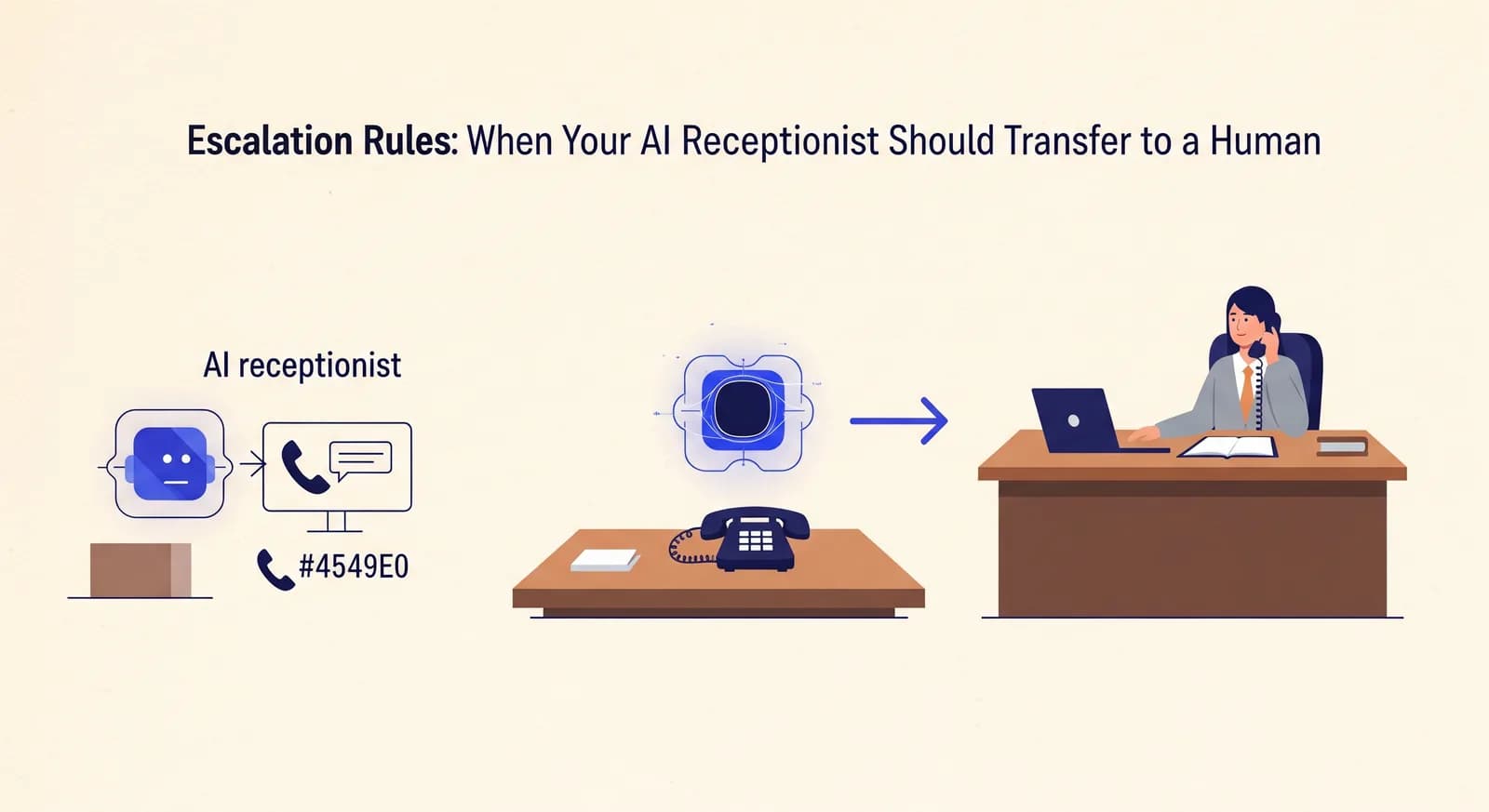
An AI receptionist that never transfers a call is either magic or lying. The whole point of escalation rules is to admit, up front, that some calls belong to a human — and to make sure those calls actually reach one, fast, while everything else gets handled quietly in the background.
When people first set up an AI receptionist, they usually obsess over the greeting and the booking flow. Fair enough — that is where most of the volume lives. But the setting that decides whether you trust the thing at 9pm on a Friday is a quieter one: the rule for when the AI should transfer to a human. Get it too loose and your phone rings for every price question. Get it too tight and a genuinely urgent caller ends up leaving a voicemail nobody hears until Monday.
This guide walks through how to define escalation rules that fit a real small business: which triggers are worth interrupting your day for, how to point transfers at different people depending on the hour, and — the part everyone forgets — what happens when the transfer itself doesn't connect. None of this requires a call-center background. It requires you to think, once, about which five kinds of calls you never want to miss.
What "escalation" actually means for a small business
In a big contact center, escalation is a tiered ritual: tier one, tier two, a supervisor queue. For a plumber, a dental practice, or a two-person law office, it means something much simpler. It means: this particular call should stop being handled by software and start ringing a phone that a person will pick up. That's it.
There are really only two ways a call gets escalated. Either the AI decides on its own — based on rules you set — that this call qualifies, or the caller asks to speak to a human and the AI honours it. A well-configured assistant does both without drama. It doesn't argue with a caller who wants a person, and it doesn't wait to be asked when someone says the word "emergency".
The five kinds of call actually worth a live transfer
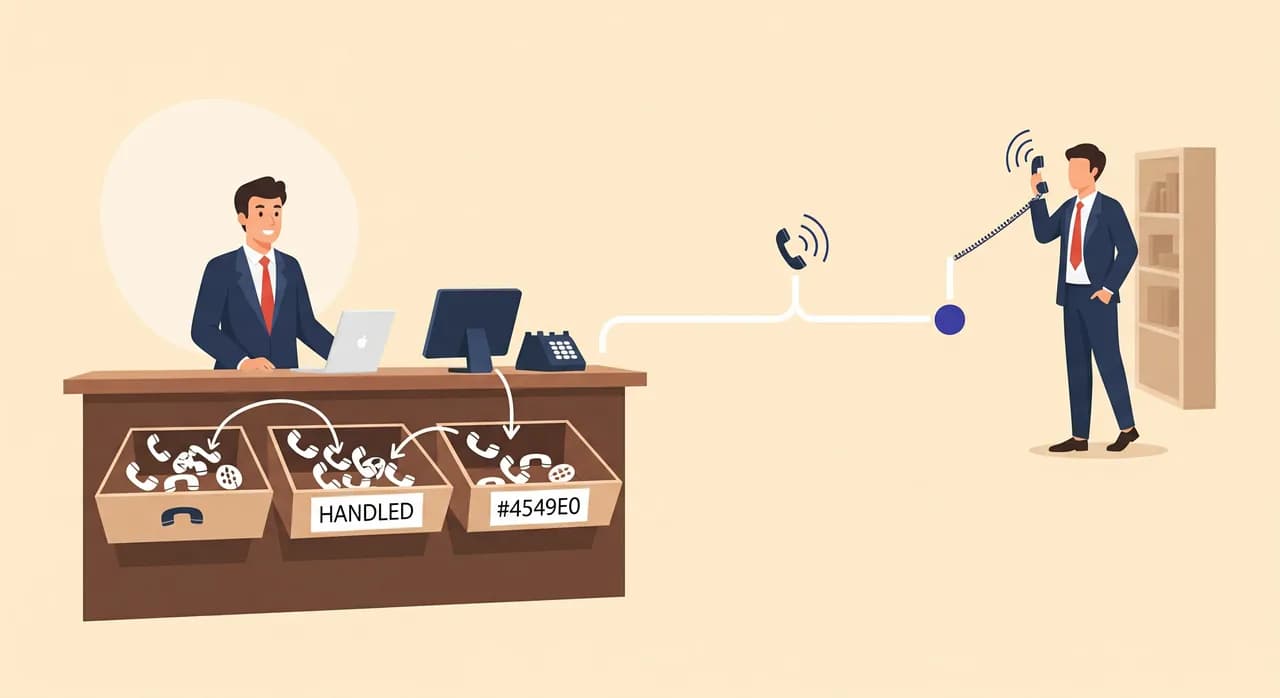
Before touching any settings, decide which calls deserve to interrupt a human. If you skip this and just turn on "transfer when unsure", you'll be pulled out of appointments constantly and you'll switch the feature off within a week. Most businesses converge on a short list.
- Genuine emergencies. A burst pipe, a patient in pain, a lockout at midnight. The caller is stressed and the clock matters. These should escalate the instant the AI recognises them.
- The caller explicitly asks for a person. Some people simply won't transact with software, and forcing them to is how you lose them. "Can I speak to someone?" is a valid, immediate trigger.
- High-value or complex inquiries. A large project quote, a corporate account, an unusual request the profile doesn't cover. Losing one of these to a clumsy voicemail costs far more than the interruption.
- Anything the AI can't confidently answer. Not "anything slightly ambiguous" — genuinely off-script questions where guessing would be worse than handing off.
- Situations with legal or safety weight. A complaint that sounds like it's heading somewhere serious, a health question that shouldn't be answered by software at all.
Notice what's not on this list: routine bookings, opening hours, "do you take card", rescheduling, directions. Those are the calls your AI should own completely. If you find yourself wanting to escalate those too, the honest fix is to add the answers to your business profile, not to transfer them.
“The goal isn't to transfer as many calls as possible. It's to transfer the three calls a week that would have genuinely hurt to miss.”
Trigger 1: urgent keywords and intent
The most common escalation rule keys off what the caller is saying. Modern assistants don't just match a literal word list — they read intent — but it still helps to think in terms of the language your urgent callers actually use, because that's what you'll review and refine later.
For a trades business, urgent language sounds like "flooding", "no heating", "gas smell", "can't get in". For a dental or medical practice it's "severe pain", "swelling", "bleeding won't stop". For a law office it might be "I've been arrested", "court tomorrow", "deadline". Write your own list based on the panicked calls you already get. You know them; you've taken them.
One practical refinement: pair urgent-intent detection with a spoken confirmation. Instead of transferring silently, the assistant can say, "This sounds like it can't wait — I'm putting you through to someone now, please hold." That single sentence reassures a stressed caller and, importantly, sets expectations before the ringing starts.
Trigger 2: the caller simply asks for a human
This is the escalation rule that protects your reputation more than any other, and the one people most often forget to configure well. A caller who says "just let me talk to a real person" and gets stonewalled by software will remember it — and tell others. Vunoon is built to never pretend to be human when asked, and to hand off gracefully rather than loop the caller. Your job is to decide where that handoff goes.
Be honest with yourself about how often you can actually pick up. If you're a solo operator who's elbow-deep in a job most of the day, a rule that transfers every "can I speak to someone" straight to your mobile will just ring out and frustrate the caller twice — once at the AI, once at your dead line. In that case the better handoff is: "I'll have [owner] call you back within the hour — what's the best number?" A promised callback that happens beats a live transfer that fails.
- 1Acknowledge the request immediatelyThe AI confirms it heard: "Of course, let me get you to a person." No arguing, no upsell, no "I can help with that myself" loop.
- 2Attempt the live transfer to the right targetIt dials whoever owns human calls right now — you, a colleague, the on-call line — based on your time-of-day rules.
- 3Fall back to a captured callback if nobody answersIf the transfer rings out, the AI takes name, number, and reason, then sends you the summary so the callback actually happens.
Trigger 3: high-value and complex inquiries
Some calls are worth interrupting your afternoon even though nobody said "urgent". A caller asking about a full kitchen renovation, a multi-property landlord, a company wanting to set up an account — these are the calls where a same-day human touch converts and a delayed one evaporates. The trick is defining "high-value" in terms the AI can actually detect from a first conversation.
Usually it comes down to a few signals: the caller mentions a scale ("the whole building", "twelve rooms", "our office"), asks for a bespoke quote rather than a listed service, or references a decision you'd want to influence personally. You can instruct your assistant to flag these and offer a live transfer — "That's a bigger project than I can quote here; would you like me to put you through to the owner?" — while still capturing full details in case the caller prefers a callback.
One nuance worth building in: not everyone wants to be transferred, even for a big job. Offering — "I can connect you now, or have [name] call you back this afternoon" — respects the caller's time and often gets you a warmer conversation than a cold transfer would. The escalation rule can present the option rather than force the interrupt.
Choosing transfer targets by time of day
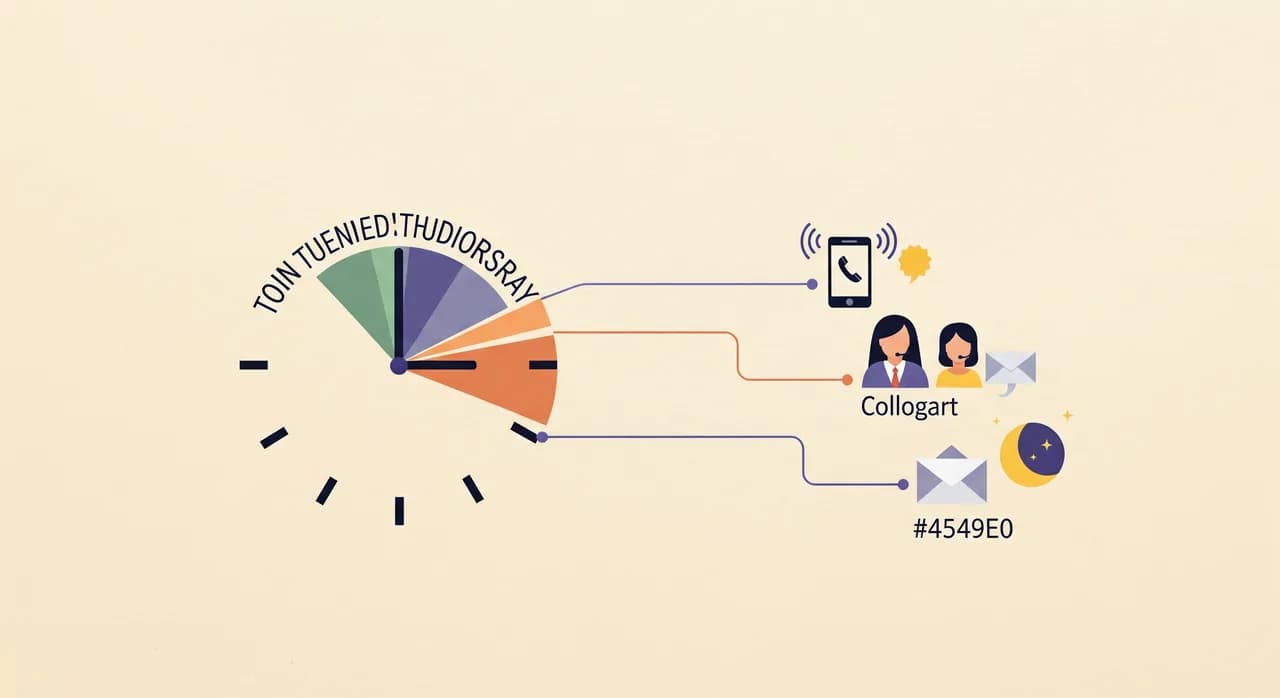
A single "transfer to owner" number is fine until the day it isn't. The same escalation should reach a different person at 10am than at 10pm. This is where a little upfront thought saves you a lot of missed calls, and it's usually the difference between an AI receptionist that feels reliable and one that feels random.
Map out your week honestly. Most small businesses have three or four states: open and staffed, open but hands-full, closed but reachable (evenings, someone on call), and closed and unreachable (overnight, holidays). Each state deserves its own transfer behaviour.
| Time window | Urgent call goes to | "Speak to a human" goes to | If nobody answers |
|---|---|---|---|
| Business hours, staffed | Front desk / office phone | Front desk | Take message, notify owner |
| Business hours, on a job | Owner's mobile | Offer callback within the hour | Capture details, SMS owner |
| Evening / on-call | On-call mobile | Offer callback next morning | Capture details, email + SMS |
| Overnight / closed | Emergency line only (or nobody) | Callback next business day | Capture details, email summary |
The overnight row is where honesty matters most. If you genuinely have no one to take a 3am call, don't pretend you do. Configure the AI to be clear and kind — "We're closed right now, but I'll take all your details and we'll call you first thing" — and to escalate only true emergencies to whatever emergency contact you actually have. A caller told the truth respects you more than one transferred into a void.
Put bluntly: an escalation rule that transfers to a phone nobody will answer isn't a safety net — it's a trapdoor with a caller falling through it. Every target you configure has to be a target that will genuinely be picked up, or covered by a fallback that catches the caller when it isn't.
The fallback nobody configures — and always needs
Here's the scenario that separates a robust setup from a fragile one. The AI correctly identifies an urgent call. It dials your mobile exactly as configured. And you're in a tunnel, or in the dentist's chair yourself, or you just didn't hear it. The transfer rings out. What happens now?
If the answer is "the call just drops", you've built a system that fails precisely when it matters most — on the urgent calls it was designed to catch. Every escalation rule needs a fallback, and the fallback should almost always be the same: don't lose the caller; capture everything and make sure a human sees it fast.
- 1Ring the primary target with a sensible timeoutGive it long enough to answer — but not so long the caller gives up. Around 20–25 seconds of ringing is usually right.
- 2Try a secondary target if you have oneA business partner, a colleague, a second on-call number. Optional, but valuable for anything you truly can't miss.
- 3Return to the AI, don't dead-endIf no human answers, the assistant comes back on the line rather than dropping: "I couldn't reach them right now — let me take your details so they can call you straight back."
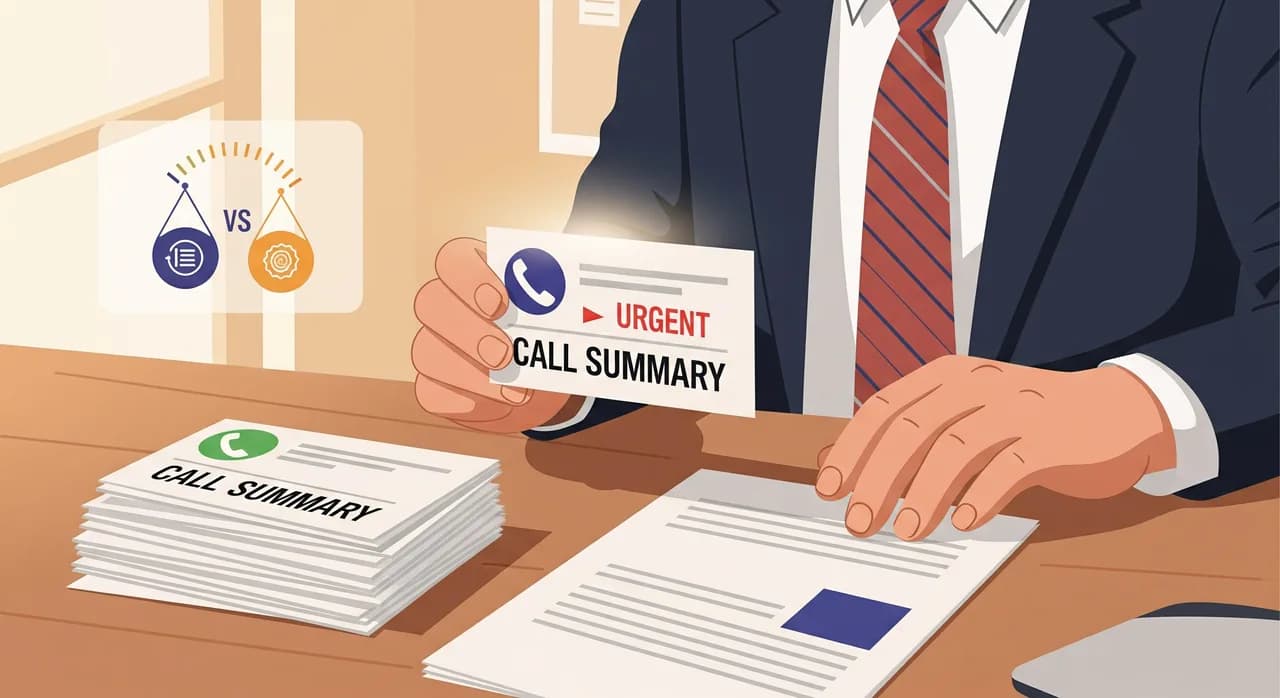
- 4Capture, then push the summary immediatelyName, number, and reason go into a call summary and transcript that lands in your inbox and phone at once — flagged urgent, not buried in a daily digest.
Avoiding the two ways escalation goes wrong
Almost every misconfigured setup fails in one of two directions, and they pull against each other. Knowing both keeps you from over-correcting.
Over-escalation: the phone that never stops
You set the triggers too broadly — "transfer when unsure", "transfer anything about pricing", "transfer if the caller sounds annoyed" — and now the AI interrupts you for calls it should have handled. The value of automating your phone evaporates. The fix is discipline: keep the trigger list to genuine emergencies, explicit human requests, and truly high-value or off-script calls. Everything else gets an answer or a captured message, not a transfer.
Under-escalation: the call that should have rung through
The opposite failure is quieter and more dangerous, because you don't notice it — you just never get the call. An emergency phrased in words your trigger list didn't cover. A high-value caller who hung up on a voicemail. The defence here is reviewing transcripts. Read a week of calls, find any where you think "I'd have wanted to take that one", and widen your rules to catch that shape of call next time.
“Escalation rules aren't set-and-forget. They're set, then tuned by reading what actually came through the door.”
Setting escalation rules up in practice
You don't need a project for this. In Vunoon, the escalation logic is part of the same short setup you already do when describing your business, and you can adjust it any time as you learn what your callers actually need. The sequence below is the order that tends to produce a setup you don't have to keep fixing.
- 1List your urgent phrasesWrite down the words and situations that mean "this can't wait" for your specific trade. Feed those into the assistant so it recognises them as escalation triggers.
- 2Set who takes human calls, and whenGive a primary transfer number for business hours and a different one — or a callback promise — for evenings and overnight.
- 3Decide the caller-request behaviourChoose whether "speak to a human" means a live transfer or a promised callback, based on how reliably you can actually pick up.
- 4Configure the fallbackMake sure a failed or unanswered transfer captures details and sends you a summary immediately — never just drops.
- 5Test it by being the callerRing your own assistant. Try an emergency phrase. Ask for a human. Ask something off-script. Watch where each call goes and adjust before you forward your real number.
That last step is the one people skip and the one that catches every mistake. Talking to your own assistant for five minutes tells you more than an hour of reading settings. You'll immediately hear if it transfers too eagerly, or if your "urgent" phrasing sails right past it, and you can fix it before a single real caller is affected.
For the first fortnight after going live, skim your call summaries daily. You're looking for two things: transfers that shouldn't have happened, and calls you wish had been transferred. A handful of small tweaks in week one buys you months of a setup that just works — this is the cheapest tuning you'll ever do.
When the honest answer is "don't transfer"
It's worth saying plainly: sometimes the best escalation rule is no live transfer at all. If you're a solo operator who cannot reliably answer during the day, forcing every complex call to ring your unanswerable phone just adds a failed step. In that reality, a confident AI that answers what it can and takes a detailed message for everything else — with an urgent flag on the ones that matter — serves callers better than a transfer that rings out.
This is where an AI receptionist earns its keep even without a human on the other end: it turns the call you would have missed entirely into a written summary you can act on the moment you're free. For businesses drowning in overflow, that's often the whole win — and you can layer live transfers back in later, once you know which calls truly need them. If overflow is your core problem, the shape of this is worth thinking through on its own.
Can an AI receptionist actually transfer a call to a human?
When should the AI transfer instead of handling the call itself?
What happens if I don't answer the transferred call?
Can transfers go to different people depending on the time?
Will the AI pretend to be human if a caller asks?
How do I know if my escalation rules are set right?
Set up your escalation rules in minutes
Describe your business, tell Vunoon which calls should reach a human, and test it by talking to it before you forward a single call.
See how the setup works
Vunoon builds an AI phone assistant that answers your business calls 24/7 — it books appointments, answers common questions and sends you a summary of every conversation.