AI Phone Agent for Restaurants: Reservations During Service
The phone rings hardest at 7:15 on a Friday, exactly when no one on the floor can pick it up. Here is a working playbook for an AI phone agent for restaurants — reservations during peak service, menu and hours questions, group inquiries, and holiday call storms.
 Vunoon17 min read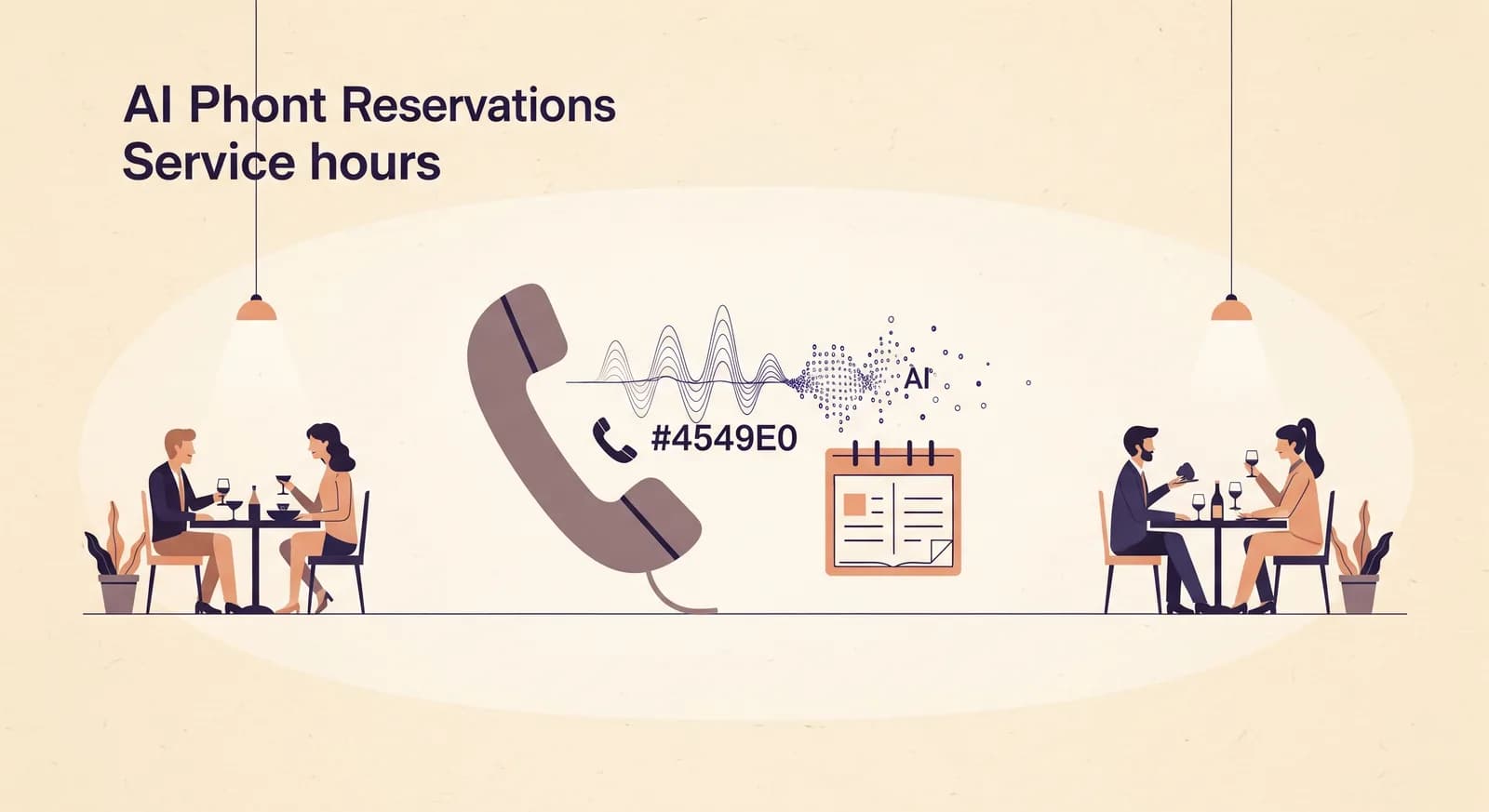
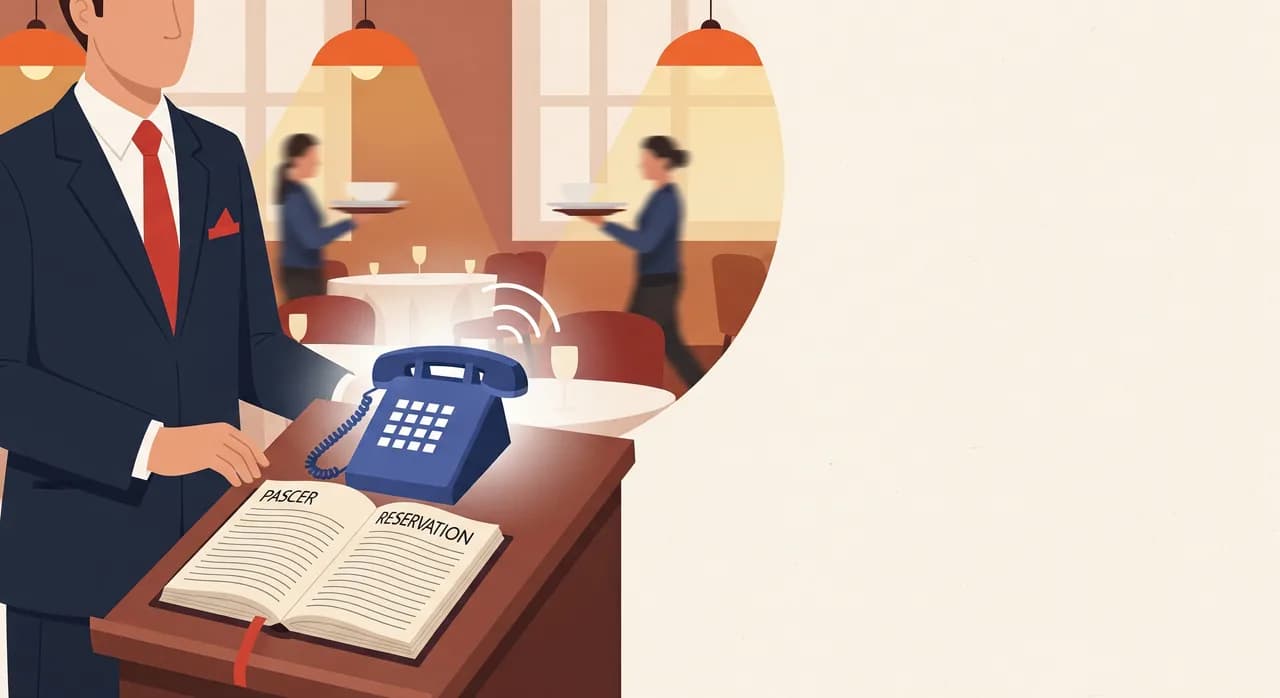
It is 7:15 on a Friday. Every table in the dining room is turning, the pass is stacked, two servers are down a runner, and the phone at the host stand has rung three times in the last four minutes. Nobody can touch it. One of those calls was a party of six trying to book for tomorrow night. They let it ring, hung up, and called the place across the street. That call — the one you can hear but cannot reach, at the exact moment you are busiest — is the whole reason to think about an AI phone agent for your restaurant.
This is a playbook, not a pitch. If you run a restaurant — a fifteen-seat bistro or a two-hundred-cover brasserie — you already know the phone is a strange beast. It brings you money and it interrupts you, usually at the same second. The calls that matter most (reservations, big tables, private events) arrive during the exact hours when the humans who could answer them are physically holding plates. So the question is not really should a machine answer my phone. It is what should happen to the calls I am already missing. Right now the honest answer, for most kitchens, is: nothing. They just vanish.
Below is how an AI phone agent actually fits a restaurant's day — where it earns its keep, where it should politely step back and hand the call to a manager, and the setup decisions that separate a tool that saves your Friday from one that annoys your regulars. No magic, no promises that it replaces your host. Just the flows.
The problem is timing, not volume
Restaurants do not miss calls because they get too many. They miss them because the calls bunch up in the worst possible windows. Think about when your phone actually rings: late morning as people plan tonight, the pre-dinner cluster from 5:30 to 7:30, and the ragged after-9 tail of "are you still seating?" On a normal weeknight your host can juggle it. On a Friday in service, or a Saturday in December, they cannot — and those are the nights every unanswered ring is a table you could have sold.
Do the arithmetic and it stops being abstract. Say you miss ten calls across a busy Friday and Saturday. If even three of them were people trying to book, and an average booking is a party of three spending a modest amount each, you have quietly turned away a full table's worth of revenue — every single weekend. Nobody wrote it down. It never appeared on a report. It is the most invisible line item in the business, and it is almost always bigger than owners think.
The other reason those calls vanish: staff quite reasonably prioritise the guest in front of them over the phone in their ear. That is the right call for hospitality and the wrong call for the phone. An AI agent breaks the trade-off. The host keeps their attention on the room; the phone still gets a warm, immediate answer. Nobody has to choose.
What a reservation call actually needs
Most restaurant reservation calls are shorter and simpler than owners fear. Strip away the pleasantries and a booking is really five facts: date, time, party size, name, and a phone number. Add two optional ones — a preference (window, quiet corner, high chair) and any allergy note — and you have covered the overwhelming majority of calls. An AI agent is genuinely good at exactly this: gathering a short, structured set of details, reading them back, and confirming.
The trick is that the agent needs to know your rules, not just your name. It has to answer the questions a booking naturally raises: How far ahead can people book? Is the last seating at 9:30 or 10:00? Do you hold tables for fifteen minutes? Are dogs allowed on the terrace but not inside? None of that is exotic — it is the same knowledge you'd give a new host on their first shift. You put it into the business profile once, and the agent works from it on every call.
- 1It answers on the first or second ringNo queue, no hold music, no voicemail. The caller hears a warm greeting in your restaurant's name while your host is still carrying plates.
- 2It gathers the bookingDate, time, party size, name, number — and any preference or allergy note. It reads the details back so the caller can catch a mistake before they hang up.
- 3It checks against your rulesLast seating times, how far ahead you take bookings, terrace-only pets, minimum party sizes for certain nights — whatever you configured in your profile.
- 4It confirms and logs the callThe caller gets a clear confirmation. You get a summary and a full transcript of the conversation, so the booking lands in your hands cleanly.
One honest caveat worth stating up front: an AI phone agent is not a live table-management system with a real-time floor plan. It captures the reservation and hands it to you or your booking tool; it is not deciding, on its own, that table 12 is free at 8pm. Treat it as an always-available host who takes the details perfectly and passes them on — not as the person seating the room. We come back to this in the limits section, because pretending otherwise is how tools lose trust.
“The agent's job is not to seat the room. It is to make sure the person trying to book a table never hears a busy tone during service.”
Hours, menu, and the questions you answer forty times a week
Not every call is a booking. A huge share of a restaurant's phone traffic is the same handful of questions, asked over and over: Are you open on Monday? What time do you close tonight? Do you do a kids' menu? Is there parking? Do you take walk-ins? Have you got vegan options? Where exactly are you? Individually trivial. Collectively they eat a real slice of your host's evening, and they interrupt the room every time.
This is the least glamorous and most reliable win. These answers do not change from call to call, they are already in your head, and they are exactly what an AI agent handles cleanly — because you configure them once. Opening hours by day, holiday closures, whether the kitchen closes before the bar, dietary options, parking, the nearest cross street. The agent reads them back in a normal sentence, not a robotic list.
A word on the menu specifically. The agent should be able to describe the shape of your menu — that you have a set lunch, that there are vegetarian and vegan mains, that most dishes can be made gluten-free — and it can quote prices you've configured. What it should not do is improvise about allergens on a specific dish. "Is the risotto safe for a severe nut allergy?" is not a question any phone agent should answer with confidence. The right behaviour there is to say a member of the team will confirm, take a message, and flag it. Getting this boundary right is not a limitation to hide — it is the professional answer.
Groups and events: know when to fetch a human
A party of two for Tuesday is a booking. A party of eighteen for a birthday, a private room hire, a set menu for a corporate dinner, a wedding rehearsal — those are conversations, and they usually involve money, deposits, and judgement calls only a manager should make. The skill an AI agent needs here is not to handle the event. It is to recognise the event and route it well.
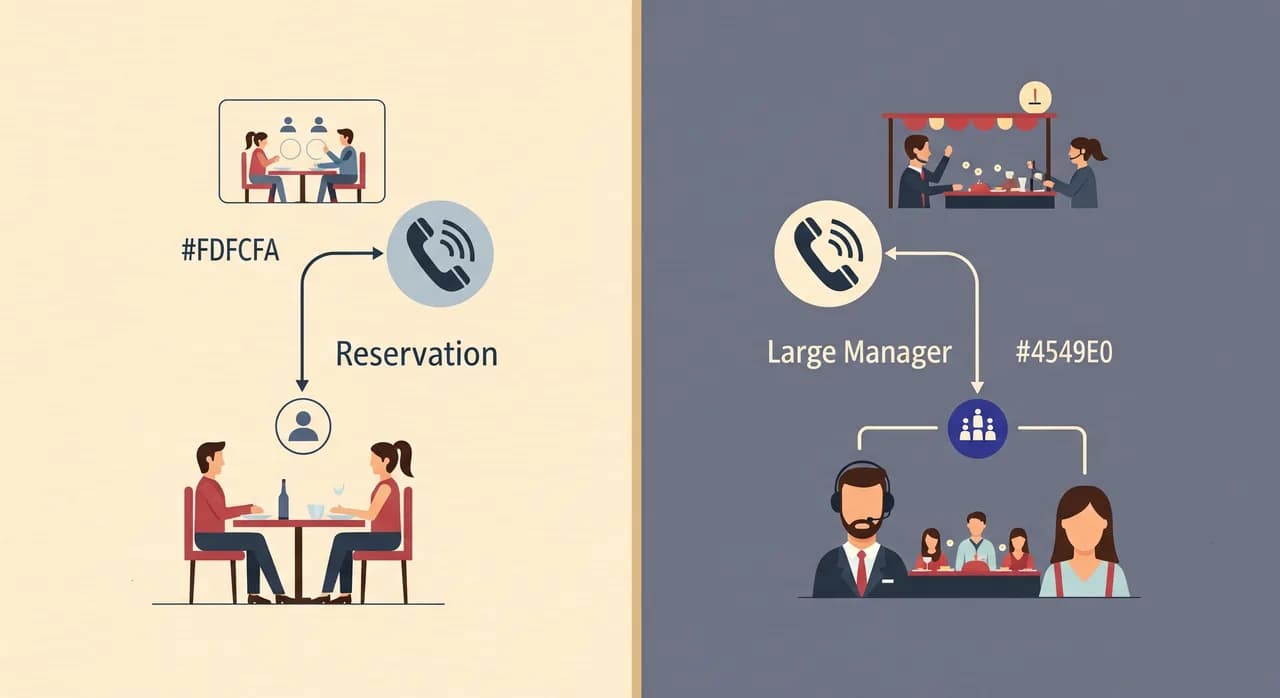
Set a threshold that matches your room — say, any party above eight, or any mention of a private event, deposit, or set menu. When the caller crosses it, the agent's job changes. Instead of trying to lock in a booking it cannot really own, it takes the essentials — name, number, date, rough size, the nature of the event — and tells the caller a manager will call them back to sort the details. Then it sends you that lead immediately, with the transcript, so you can ring back while the caller is still excited rather than three days later when they've booked elsewhere.
- Large parties — anything above your comfortable walk-in size gets captured and passed to a manager, not confirmed blind.
- Private hire and events — birthdays, corporate dinners, anything mentioning a deposit or exclusive use.
- Set menus and special requests — custom courses, dietary catering for a group, cake or décor requests.
- Press, suppliers, and job seekers — not diners at all; the agent takes a message and points them to the right person.
Notice what this does to your night. The high-value, high-complexity calls — the ones actually worth a manager's time — no longer compete with "what time do you close?" for that manager's attention. They arrive as clean, pre-qualified leads with a name and a number attached. You call back the eighteen-top and let the machine keep telling people you close at eleven.
Surviving the holiday call storm
Every restaurant has its impossible weeks. December is the classic — office parties, family dinners, the twenty-fourth, the thirty-first — but every restaurant has its own peak: Mother's Day, Valentine's, a local festival, the week the town's big event fills every hotel. In those windows call volume can double or triple, and it lands on a floor that is already at maximum. This is precisely when the most bookings are being lost, and precisely when your staff has the least capacity to catch them.
An AI phone agent does not get flustered by volume. It answers the fortieth caller as calmly as the first, in parallel — it is not stuck on one line while three others ring out. During a holiday storm this is the difference between a fully booked New Year's Eve and a night where half your inquiries hit a busy tone and gave up. The agent handles the flood of "are you doing a set menu on the 31st?" questions, captures the bookings, and escalates the big ones — all without a single call rolling to voicemail.
There's a subtler benefit too. Overflow is not only a December problem — it happens on any night a table of regulars keeps your host talking for five minutes while four other calls stack up. An AI agent as your call overflow catch means the ring never goes unanswered, whether the surge lasts a week or ninety seconds. The busy Friday and the mad December are the same problem at different scale, and the same tool solves both.
“A machine that answers the fortieth caller as warmly as the first is worth a great deal on the one night of the year you cannot afford a busy tone.”
What your callers actually experience
The fear every owner has, reasonably, is that guests will feel fobbed off by a robot and it will cheapen the welcome. Hospitality is a feelings business. So this matters more here than in almost any other industry. The honest position is this: a warm, fast, competent answer beats a phone ringing out ten times, and it beats a curt human who is clearly distracted and holding three plates. A good AI agent clears both those bars easily.
What a caller hears is a natural greeting in your restaurant's name, a normal conversation that takes their booking without a script-reading stiffness, and a clear read-back so they know it was heard correctly. It speaks the caller's language — useful in any city with a mix of locals and visitors — and it does not pretend to be a human being. If someone asks "am I talking to a person?", the honest answer is given. Guests respect that far more than a machine caught bluffing.
And crucially, the agent knows its lane. When a caller wants something it should not decide — a complaint about last night's meal, a delicate dietary emergency, a negotiation over a big event — it does not fumble. It takes a message or offers a callback and gets a human involved. The experience you want is not "the robot handled everything". It is "the phone always got answered, and the right person always got the message."
The honest limits — where it should step back
A playbook that only lists wins is a sales page. Here is where an AI phone agent for a restaurant should not be the answer, stated plainly, because knowing this is how you set it up to be trusted rather than resented.
- Live table availability. It captures reservations; it is not, by itself, a real-time floor plan deciding which table is free at 8:15. Connect it to how you actually manage the book, and treat it as intake, not seating.
- Specific allergen guarantees. "Is this dish safe for a severe allergy?" is a human's call. The agent should promise a callback, not a confident yes.
- Complaints and refunds. An upset guest deserves a person. The agent should recognise the tone, apologise briefly, and route to a manager fast.
- Complex negotiations. Deposits, custom event pricing, and exceptions are manager territory — capture the lead, don't improvise the deal.
- Nuance and local knowledge it wasn't told. It only knows what's in your profile. Leave it out and it will honestly say it'll check, rather than invent an answer.
Read that list and you'll notice the pattern: the limits are all about judgement and safety, and in every case the correct behaviour is the same — hand it to a human, cleanly and fast. An AI agent set up this way doesn't overreach. It answers the ninety percent of calls that are routine, and it makes sure the other ten percent reach the right person with a name, a number, and a transcript attached. That is a tool an owner can trust with the front door of the business.
Setting it up for your restaurant
The good news is that setup is a job for a slow afternoon, not an IT project. With Vunoon it is self-serve: you sign up, describe your restaurant in a short wizard, test the agent by actually talking to it, and then forward your number when you're happy. The whole thing takes minutes, and you can hear exactly how it will greet your guests before a single real call touches it.
- 1Describe the restaurantName, hours by day, kitchen close time, holiday exceptions, dietary options, parking, location. Write it like you're briefing a new host.
- 2Set your booking rulesHow far ahead you take reservations, last seating, hold policy, and the party-size threshold above which calls go to a manager.
- 3Draw the escalation linesDecide what always reaches a human: large groups, events, complaints, allergy questions. This is the most important step for trust.
- 4Test it by talking to itCall the agent yourself. Try a normal booking, a menu question, a party of twenty, an awkward request. Tweak the profile until it sounds like your place.
- 5Forward your numberPoint overflow or all calls to the agent. Start with just the hours you can't answer — during service — and widen it once you trust it.
A sensible way to start: don't hand it every call on day one. Forward only the calls you're already missing — the ones that ring out during service, after you close, or when the line's busy. That way the agent can only improve on the current outcome, which is silence. Once you've read a week of transcripts and trust how it handles your regulars, you widen its remit. Nothing about this is all-or-nothing.
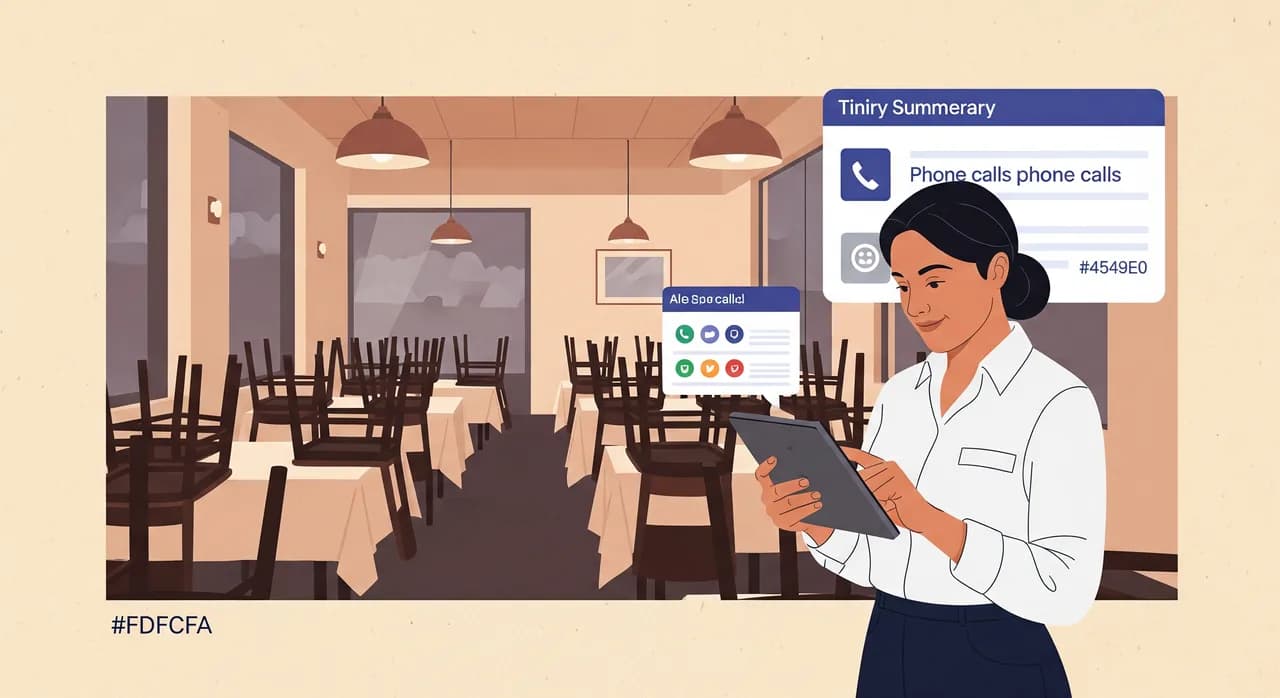
After service, you get the payoff: a clean list of the night's calls, each with a summary and full transcript. You can see the bookings it took, the questions it fielded, and the leads it flagged for you. For the first time, the phone becomes something you can actually read at the end of the night instead of a black hole of missed rings. If you want to weigh the plans, the details live on the pricing page; there is a free trial, so you can test it on your own real calls before deciding.
Can an AI phone agent take restaurant reservations during peak service?
Will guests be able to tell they're talking to a machine?
How does it handle big groups and private events?
Can it answer questions about allergens and the menu?
What happens to the calls after service ends?
How long does it take to set up?
Stop losing the 7:15 Friday reservation
Set up a phone agent that takes bookings while your floor is slammed, answers the hours-and-menu questions, and flags the big events for you. Test it on your own calls with a free trial.
See how it works for restaurants
Vunoon builds an AI phone assistant that answers your business calls 24/7 — it books appointments, answers common questions and sends you a summary of every conversation.