AI Receptionist for Beauty Salons, Nails and Cosmetics: A Practical Playbook
Beauty and nail studios run on short, back-to-back treatments and a phone that never stops. Here is how an AI receptionist actually fits that rhythm, and where it doesn't.
 Vunoon15 min read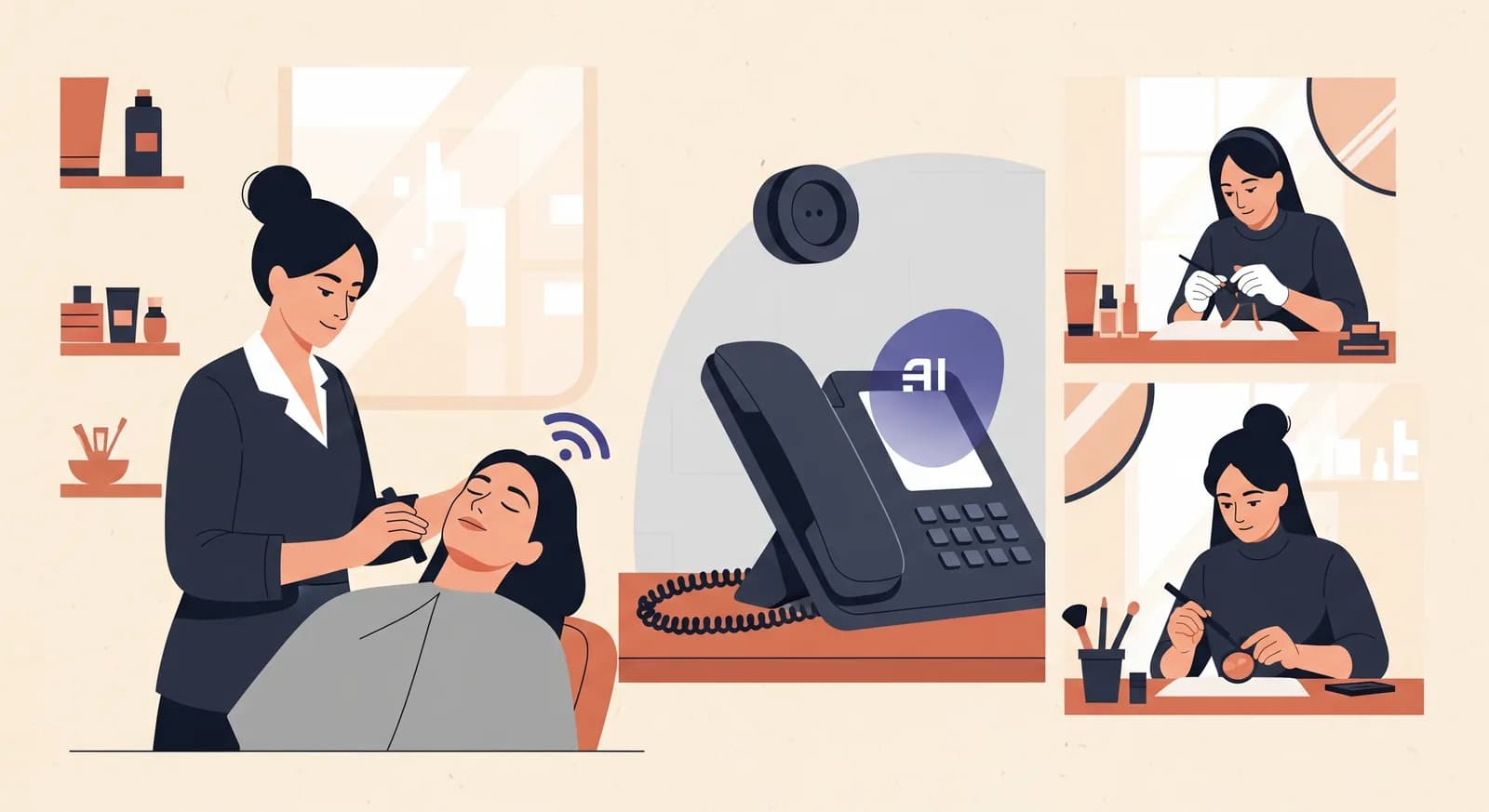
A hair salon books a client for two hours and the phone can ring itself out. A nail bar books thirty-minute gel fills, back to back, all day — and every one of those clients called someone to get on the list. That difference is the whole story for a beauty or nail studio thinking about an AI receptionist.
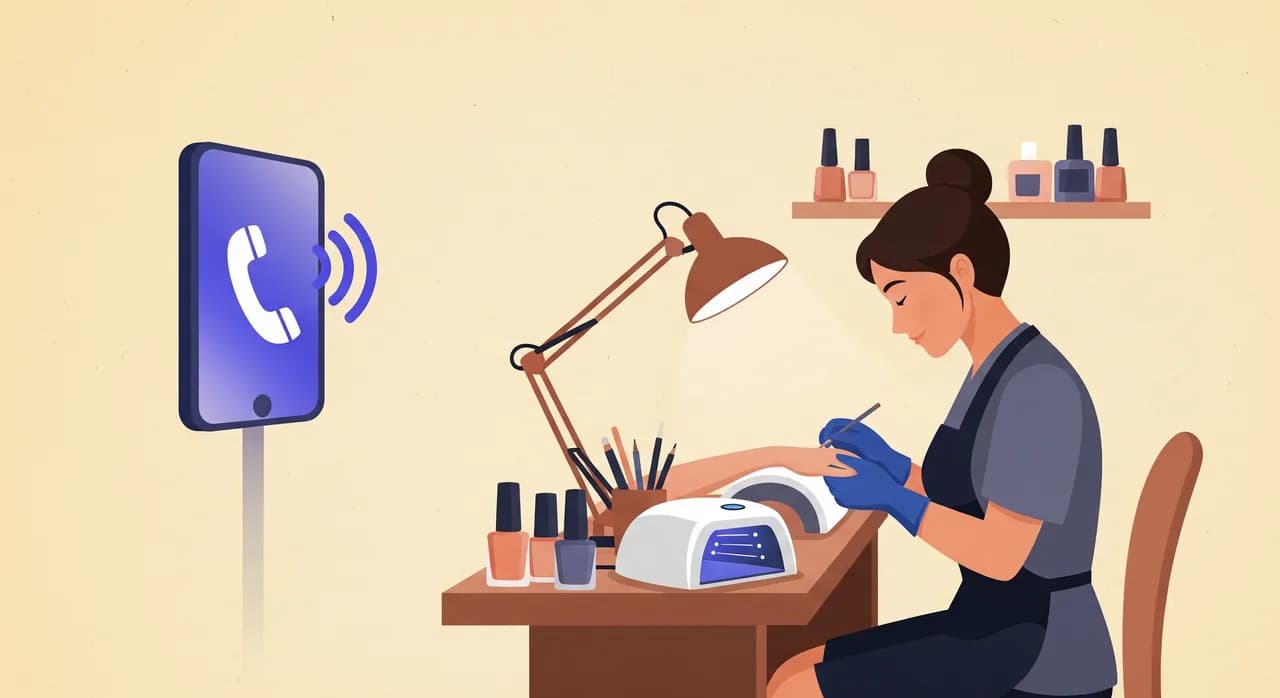
If you run a beauty salon, nail studio or cosmetics practice, you already know the feeling: a set of gels half-finished on the table, the acetone timer going, and the landline lighting up for the fourth time in an hour. You can pick it up with wet hands and half a mind on the client in front of you, or you can let it ring and hope they leave a voicemail. Neither is good. An AI receptionist for a beauty salon is a third option — a voice that answers on the first ring, knows your service menu, and books the appointment while you keep your eyes on the cuticle you're shaping.
This is a playbook written specifically for the beauty end of the trade — nails, lashes, brows, waxing, facials, cosmetics — not for hairdressing, and definitely not for a call centre. The economics and the call patterns are different enough that generic advice will steer you wrong. Let's get into the specifics.
Why a beauty studio's phone is a different animal
Think about a two-chair barber versus a busy nail bar. The barber does a handful of long-ish cuts. The nail bar might turn over twenty appointments in a day: a manicure here, a pedicure there, a full set of acrylics, a soak-off, a quick repair on a chipped nail. Short treatments mean high booking frequency — more slots to fill, more calls per hour, more people rebooking every three weeks like clockwork.
That rhythm changes what a receptionist — human or AI — actually does all day. It's less about long, careful conversations and more about volume: catching the call, matching a service to a slot, and getting off the phone politely so the next caller isn't sent to voicemail. It also means the cost of a missed call compounds. Miss ten calls on a Saturday and you haven't lost one long appointment — you've lost ten short ones, plus the rebookings each of those clients would have made over the next year.
What your callers actually ask (and how the AI handles it)
Before you decide whether an AI receptionist earns its place, look at the calls you get. In a beauty or nail studio they cluster into a handful of predictable shapes. An AI answering assistant like Vunoon reads answers from the profile you set up — your services, hours and the prices you chose to publish — so most of these it can handle without you lifting a finger.
- "Do you have anything today?" — the impulse booker who chipped a nail at lunch. Speed wins these; a voicemail loses them.
- "How much for a full set of gels / lash lift / Brazilian?" — a price question the AI answers from your published menu, then offers to book.
- "Can I do my nails and a pedicure in one go?" — the combo appointment, where two services need to be stitched into one longer slot.
- "How long does a soak-off take?" — a duration question that decides whether they can fit it in on their lunch break.
- "My gels lifted after two days — what do I do?" — an aftercare question, which needs a careful, non-committal answer and often a callback.
- "I need to move my Thursday appointment" — a reschedule, which is really a save: handled well, they stay; ignored, they drift.
None of these need a human on the first pass. What they need is someone who picks up, sounds like they belong to your salon, and either closes the booking or takes a clean message. That's the job, and it's a job that a phone assistant does well precisely because it's repetitive and time-sensitive.
Combo appointments: the part generic booking tools get wrong
Here's where beauty studios differ from almost every other small business. A client rarely wants just one thing. They want a manicure and a pedicure. A lash lift and a brow tint. A full set plus a paraffin treatment. Each of those is a separate service with its own duration, and together they need a single, longer block in your book — sometimes with a specific order, because the pedicure soak has to start before the manicure so the timings overlap sensibly.
A dumb booking widget treats every service as an isolated 30-minute box and cheerfully double-books you. A good AI receptionist should instead understand the caller's intent — "gels and a pedi" — and translate it into the right length of appointment based on the durations you defined. When you set up your profile, spell out how long each treatment takes and which ones commonly pair together. The clearer your menu, the better the assistant stitches combos into one slot.
Deposits and no-shows: say the policy out loud, on the call
No-shows are the tax that beauty studios pay for being popular. A two-hour lash appointment that ghosts is a two-hour hole you can't refill on short notice. Many studios respond with a deposit or a cancellation policy — sensible, but only if the client actually hears about it before they book, not after they miss.
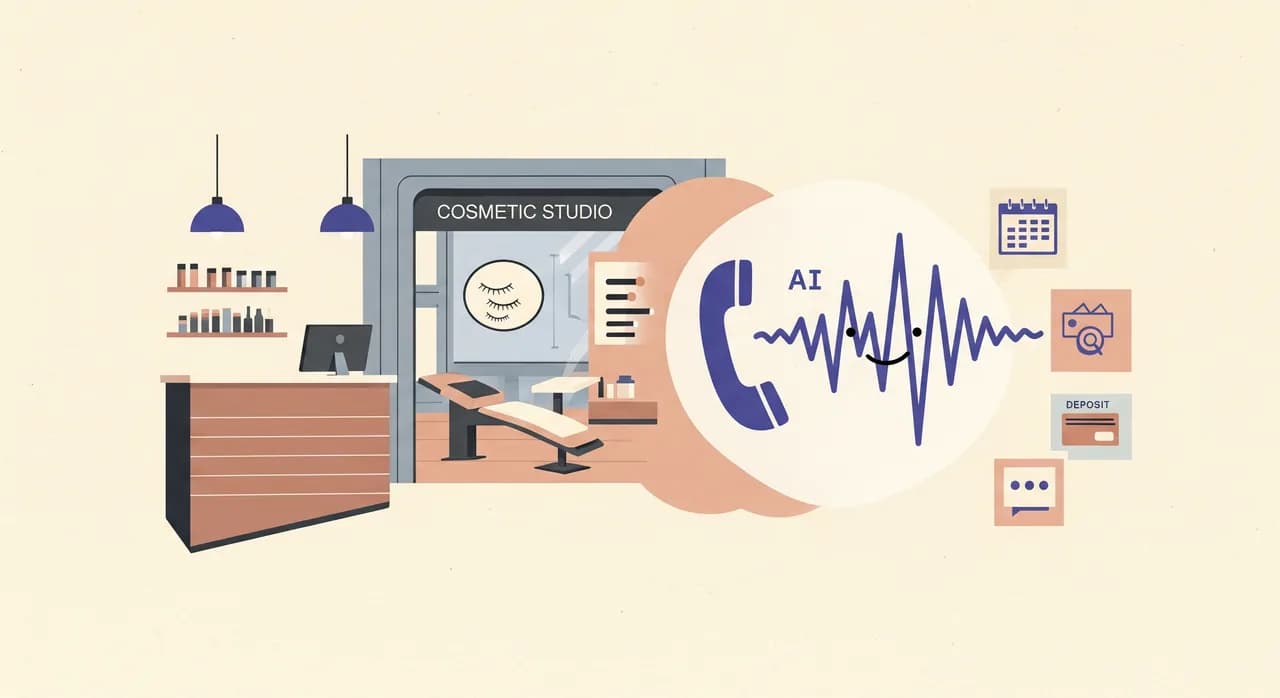
This is a quiet strength of having the policy communicated on the call. When a caller books through your AI receptionist, you can have it state the terms plainly: that a deposit secures the slot, or that cancellations under 24 hours are charged, or that a card is held on file. Said upfront, in a friendly voice, it sets expectations without a confrontation. A booking made knowing the rules is far more likely to be honoured than one made in a rushed voicemail exchange.
Be honest with yourself about what the assistant does and doesn't do here. Vunoon can tell the caller your deposit or cancellation policy and take the booking or message. It is not a payment terminal — it won't charge a card mid-call. The pattern that works is: the assistant states the policy and captures the booking, and your existing payment or deposit link goes out in the confirmation, or you take the deposit when they arrive. The value is that nobody can claim they didn't know.
“A no-show is rarely a bad person. It's usually a booking made without ever hearing the rules. Say the policy on the call and half the problem disappears.”
Aftercare questions: helpful, but stay in your lane
Beauty work doesn't end when the client leaves. Gels lift. Lashes shed. Skin reacts. So a chunk of your calls are aftercare: "is it normal for my acrylics to feel tight?", "can I get my nails wet after a fill?", "my brows are red, is that okay?". These are the calls most likely to interrupt you mid-treatment, and they're the ones where an AI receptionist has to be careful.
For the routine stuff — drying times, when it's safe to swim, how to book a repair — the assistant can answer straight from your profile if you've written those FAQs in. That alone clears a lot of noise. But anything that edges toward a skin reaction, an allergy, or something that looks like a health question is not the assistant's job to diagnose, and you shouldn't want it to be. The right move is a graceful hand-off: take a message, flag it as urgent, and have you or your therapist call back.
Written this way, aftercare calls stop being interruptions. The simple ones get answered without you; the sensitive ones get triaged to you with the details already captured, so when you call back you're not starting from scratch.
Saturdays, lunch rushes and 2am impulse bookings
Beauty demand is spiky. Saturday morning before an event. The lunchtime dash for a lash top-up. The Sunday night scroll where someone decides they need their nails done before Friday and calls on the off-chance you're open. Your busiest booking moments are often the moments you're least able to answer, because you're deep in a treatment.
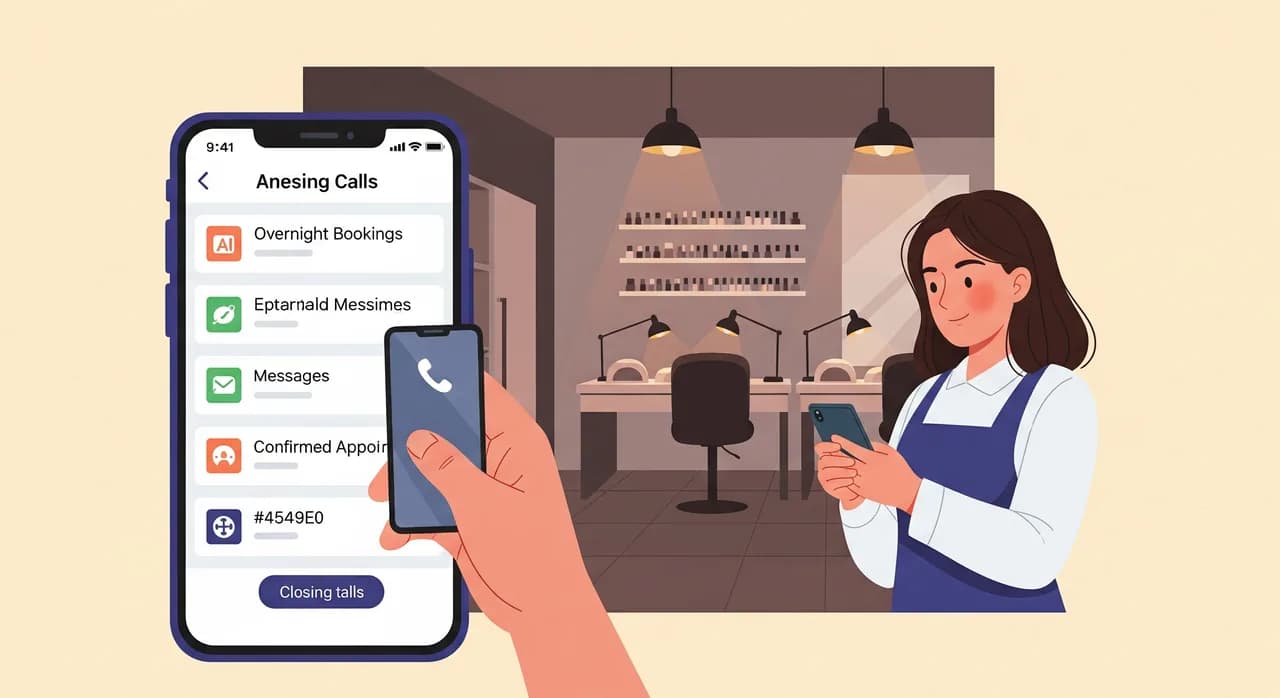
This is the plainest case for a 24/7 AI receptionist. It answers the Saturday overflow while every chair is full. It catches the lunchtime caller who would otherwise try the next salon on their list. And it books the 2am impulse client while you're asleep, so the appointment is confirmed before they've had second thoughts by morning. You wake up to a summary of overnight bookings instead of a row of missed calls.
- 1Peak-hour overflowWhen you're mid-appointment and the phone rings, the assistant answers instead of the client hitting voicemail. It handles the booking or takes a message you'll see the moment you're free.
- 2After-hours captureEvenings and Sundays are prime browsing time for beauty clients. The assistant books them while you're closed, so the demand isn't lost by the time you reopen.
- 3The morning summaryYou start the day with a tidy list of what came in overnight — bookings made, messages to return, deposits to chase — instead of piecing it together from a voicemail box.
The quiet win: protecting your rebooking cycle
The real money in a nail or lash studio isn't the first appointment — it's the standing one. Gels every three weeks. Lash infills every two. Brows every four. That cadence is your most valuable asset, and it's fragile: it survives on the client being able to reach you the moment they think about their next slot.
When a regular calls to move their Thursday appointment and gets voicemail, you're one silence away from losing the whole cycle to a competitor who happened to pick up. An AI receptionist that answers every reschedule and every rebook is, in effect, a retention tool. It's not glamorous. It's just that the client who can always get through is the client who never leaves. Over a year, protecting a dozen standing appointments dwarfs the value of any single walk-in.
“The client who can always get through is the client who never leaves. Answering the reschedule is quietly the most profitable thing your phone does.”
Where an AI receptionist falls short — honestly
It would be a poor playbook that only sold you the upside. There are things an AI receptionist won't do, and you should size it up knowing them.
- It doesn't judge a design brief. If a client wants to describe an intricate ombré chrome set with charms, the assistant can note the request and book the time — but it can't tell you whether the design is realistic in the slot. That conversation still lands with you.
- It won't upsell like your best therapist. A skilled human reads a client and suggests the paraffin add-on. The assistant sticks to what you've told it to offer. You can prompt it to mention popular add-ons, but it's a nudge, not artistry.
- It isn't a payment terminal. It states your deposit policy and books — taking the actual payment stays with your existing tools.
- It won't diagnose skin or nail conditions, and you don't want it to. Sensitive aftercare goes to a human, every time.
- It's only as good as your setup. A vague service menu produces vague bookings. The half hour you spend describing your treatments clearly is the half hour that makes it useful.
None of these are dealbreakers for a beauty studio — they're the boundary of the tool. The assistant handles the high-volume, time-sensitive, repetitive calls so you can focus on the ones that genuinely need a human touch. Used that way, it's a lever, not a replacement.
Setting it up for a beauty studio in an afternoon
Getting started doesn't require an IT person or a new phone system. With Vunoon the flow is short and you can test everything before a single real caller reaches it.
- 1Describe your studioSign up and run through the wizard: your services with durations (gel manicure, acrylic full set, soak-off, lash lift, waxing), the prices you're happy to publish, your hours, and your deposit or cancellation policy in plain words.
- 2Add your common combos and FAQsList the pairings you book often and the aftercare questions you answer daily — drying times, when it's safe to get nails wet, how to book a repair. This is what lets the assistant handle combos and routine aftercare without you.
- 3Talk to it yourselfCall your own assistant and role-play a chip repair, a combo booking and an aftercare question. Tweak the wording until it sounds like your salon and books the way you'd book.
- 4Forward your numberPoint your salon line to the assistant — always, or only when you don't pick up in a few rings. From then on, every call is answered and you get a summary and transcript of each one.
A day in the life, illustrated
Imagine a small two-technician nail and brow studio on a Saturday. Both chairs are full from nine. Here's how the phone behaves with an AI receptionist quietly working the front desk.
At 10:15 a first-timer calls asking the price of a BIAB overlay and whether there's anything that afternoon. The assistant quotes from the menu, finds a 3pm gap, and books her — she'd have hung up on a voicemail. At 11:40 a regular calls to move her lash infill from Thursday to Monday; the assistant reschedules and she stays a regular. At 1:05, over the lunch rush, three calls stack up while both technicians are mid-treatment; all three are answered, two booked, one message taken about a chipped nail repair. At 6:50, ten minutes after closing, someone books a full acrylic set for a wedding — captured while the lights are already off.
At the end of the day the owner reads a single summary: bookings made, one deposit to confirm, one aftercare message to return in the morning. None of it required her to put down a brush. That's the shape of the win — not dramatic, just a phone that stopped leaking clients.
Can an AI receptionist handle combo bookings like a manicure and pedicure together?
Will it tell clients about my deposit and no-show policy?
What happens when a client asks an aftercare question, like a reaction to lashes or gels?
Does it work outside my opening hours?
Do I need to replace my phone system to use it?
Give your salon phone a receptionist that never puts down the polish
Set up your studio profile, add your treatments and combos, and test the assistant yourself before a single client calls. It takes an afternoon, and there's a free trial to see the bookings it saves.
See it for beauty salons
Vunoon builds an AI phone assistant that answers your business calls 24/7 — it books appointments, answers common questions and sends you a summary of every conversation.