Do AI Voices Sound Natural Now? An Honest Assessment of AI Receptionist Voice Quality
Synthetic voices have quietly crossed a line most people haven't noticed. Here's where AI receptionist voice quality genuinely stands in 2026 — the parts that work, the tells that remain, and why you should trust a live demo call over any marketing claim, ours included.
 Vunoon14 min read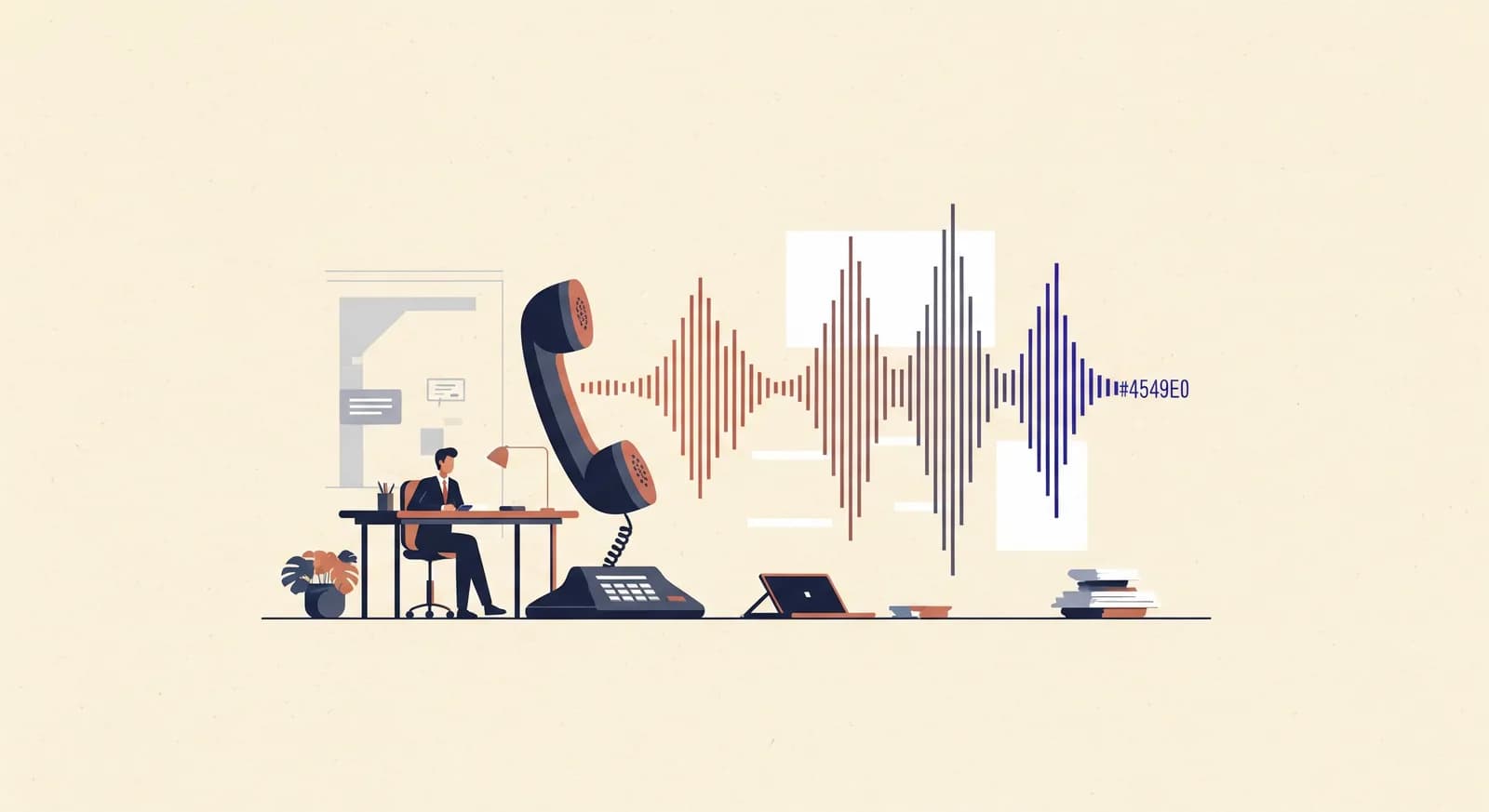
Two years ago, an AI answering your phone gave itself away in the first three words. Today, most callers finish the conversation without a second thought — and a few insist they spoke to a person. So which is it? Here's an honest walk through AI receptionist voice quality: what genuinely sounds natural now, where the seams still show, and why you should trust your own ears over any brochure.
If you run a business and you're weighing whether to let software answer your calls, the voice is the whole ballgame. A missed call is a lost booking, but a call answered by something that sounds like a 2005 GPS unit is arguably worse — it tells the caller you didn't care enough to pick up and couldn't be bothered to sound human about it. So the fair question isn't "is AI voice impressive?" It's "would my customer notice, and would they mind?"
This piece answers that as plainly as we can. We build an AI phone assistant, so we have skin in the game — which is exactly why we'll point you at the one test that doesn't lie: call it yourself and listen. No amount of prose settles this. But before you do, it helps to know what to listen for.
The honest headline: better than you think, not perfect
Let's put the conclusion up front and spend the rest of the article earning it. Modern text-to-speech has crossed the threshold where, in a short, focused phone conversation, most callers can't reliably tell it's synthetic. The robotic monotone is gone. Breaths, small hesitations, natural rises and falls in pitch — the things your brain uses to decide "this is a person" — are largely there.
But "most callers, most of the time, in short calls" is doing real work in that sentence. Stretch a conversation, throw a genuinely weird request at it, or listen closely for the seams, and tells appear. The technology is very good and imperfect at the same time, and anyone selling you "indistinguishable from human, guaranteed" is selling. The truthful version is more useful: it's good enough that the voice is no longer the reason to say no.
“The robotic monotone is gone. What's left is a voice good enough that it's no longer the reason to say no — and honest enough to admit what it isn't.”
Why voices suddenly got good
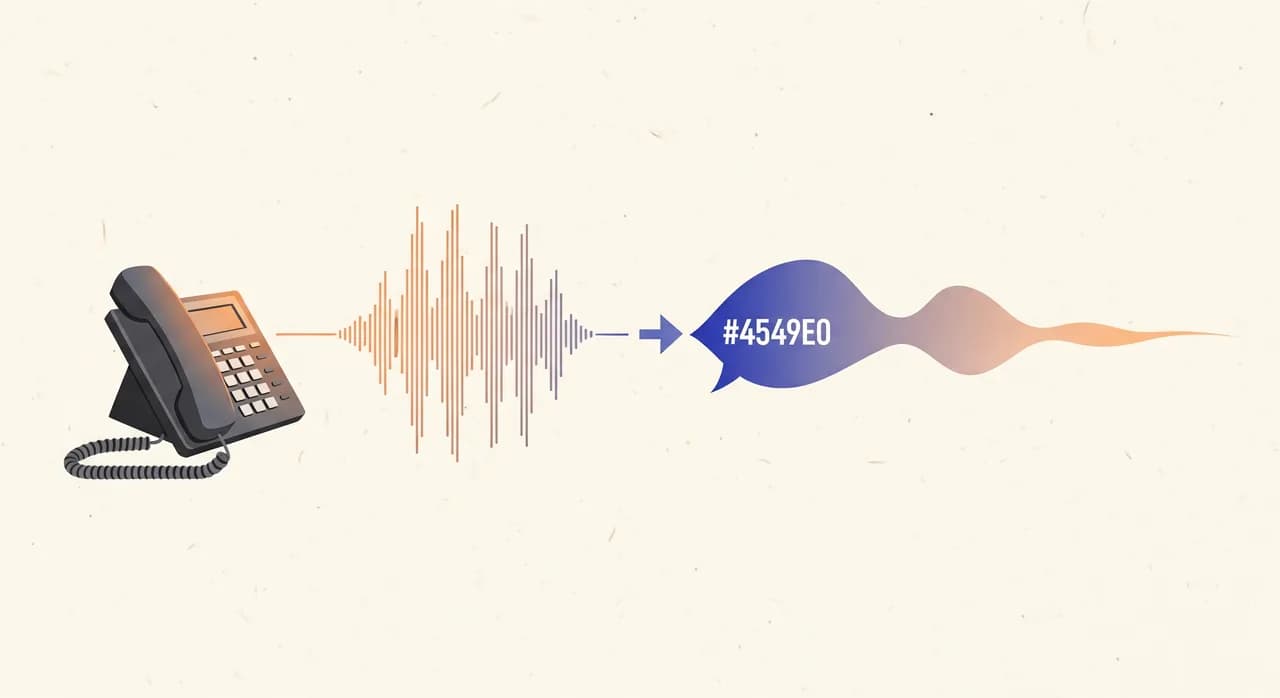
For most of the last decade, computer speech was assembled — chopped-up recordings of a voice actor stitched together, or an older engine predicting one sound unit at a time. It worked, in the sense that a caption reads. It never flowed, because human speech isn't a string of independent sounds; the way you say a word depends on the word before it, the sentence's shape, and whether you're asking or telling.
The shift came when models learned to generate a whole utterance as one continuous piece of audio, shaped by the meaning and punctuation of what's being said. That's why a modern voice knows to lift at the end of a question, slow down on a phone number, and let a clause trail off the way people actually do. It isn't reading — it's performing a line. That single change is responsible for most of the jump you've heard.
What "natural" actually means on a phone call
"Natural" is a vague word, so let's break it into the things you can actually hear. A phone conversation is natural when four things hold up at once. Miss any one of them and the whole call feels off, even if the others are flawless.
- Timbre — the raw sound of the voice: does it have the warmth, breath and texture of a real person, or the flat sheen of a machine?
- Prosody — the melody and rhythm: stresses on the right words, questions that rise, sentences that don't all land on the same beat.
- Pacing and turn-taking — replying at conversational speed, and knowing when you've finished a sentence versus paused mid-thought.
- Recovery — what happens when a caller interrupts, mumbles, changes their mind, or asks something out of left field.
Here's the key insight for evaluating any AI receptionist: timbre and prosody are basically solved; pacing and recovery are where the real differences live. Two products can use a voice that sounds equally human in isolation, then feel worlds apart on a live call because one handles the messy human moments gracefully and the other stumbles. When you test, spend your attention on the last two, not the first two.
The tells that still give it away
Honesty section. If you know what to listen for, you can still catch a synthetic voice more often than the marketing would suggest. None of these are dealbreakers for a business phone line, but pretending they don't exist would insult your intelligence.
Interruptions and overlap
People talk over each other constantly, and gracefully. We start a sentence, hear the other person begin, and yield without missing a beat. AI is getting good at stopping when interrupted — a feature called barge-in — but the recovery afterward is where it can wobble. Cut it off mid-sentence and a weaker system may restart its whole sentence, lose the thread, or pause a touch too long before regrouping. A good one absorbs the interruption and moves on. This is the single most revealing test you can run.
Emotional range under pressure
For a neutral, friendly booking call, current voices are convincingly warm. Push into strong emotion — a genuinely upset caller, sarcasm, someone joking — and the voice stays even-keeled in a way a person wouldn't. It won't sound cold, exactly, but it won't match the caller's energy the way a sharp human receptionist does. For most businesses this is fine; a calm, steady voice is a perfectly good default. But it's a tell, and it's an honest reason not to route your most delicate, emotional calls through automation.
The truly unusual request
Timbre holds up. What breaks is content, and the voice follows the content down. Ask something far outside the business's world and a well-built assistant will say, plainly, that it can't help with that and offer to take a message. That's the right answer — but the moment often has a slightly different cadence from the smooth booking flow, and an attentive caller might clock the shift. The tell here isn't the sound; it's the seam between "handles this beautifully" and "reaches its limit."
Accents, dialects and languages
Two separate questions hide inside "can it handle accents?" One is whether the assistant can understand a caller with a strong regional accent or a non-native speaker. The other is whether the assistant's own voice sounds native and natural in a given language. They don't rise and fall together, and it's worth knowing which one you're testing.
On the output side, major languages sound excellent — a native speaker often can't tell. Smaller languages and specific regional dialects can sound slightly "textbook": correct, clear, but with the polish of a language-course narrator rather than someone from down the road. On the input side, understanding a heavy accent or a caller in a noisy car is harder than producing clean speech, and it's where you'll see the clearest quality gap between a serious product and a cheap one.
This matters if a slice of your customers don't speak the local language natively — the point of a multilingual line is that they feel understood, not just that the assistant sounds nice to you. It's a real capability worth pressure-testing, not a checkbox to trust on faith.
Does it even need to fool anyone?
There's an assumption baked into this whole conversation that deserves a challenge: that the goal is to pass as human. For a business phone line, it usually isn't — and chasing it can backfire.
What a caller actually wants is fast: a warm greeting, an answer to their question, a booking made, a message that reaches you. Whether the warmth came from a person or a well-built model matters far less to them than getting on with their day. Callers forgive "this is an assistant" easily. What they don't forgive is being stuck in a loop, misheard, or made to feel small. Naturalness earns you a few seconds of goodwill at the start of the call; competence is what actually satisfies them.
“Naturalness buys a few seconds of goodwill at the start of the call. Competence is what actually satisfies the caller.”
There's also a line worth holding on principle: an assistant shouldn't pretend to be human when a caller directly asks. "Am I talking to a real person?" deserves a straight answer. A voice good enough to be mistaken for human is exactly the voice that should be honest when asked. Sounding natural and being deceptive are different things, and only the first is something to aim for.
How to judge voice quality yourself — a 10-minute test
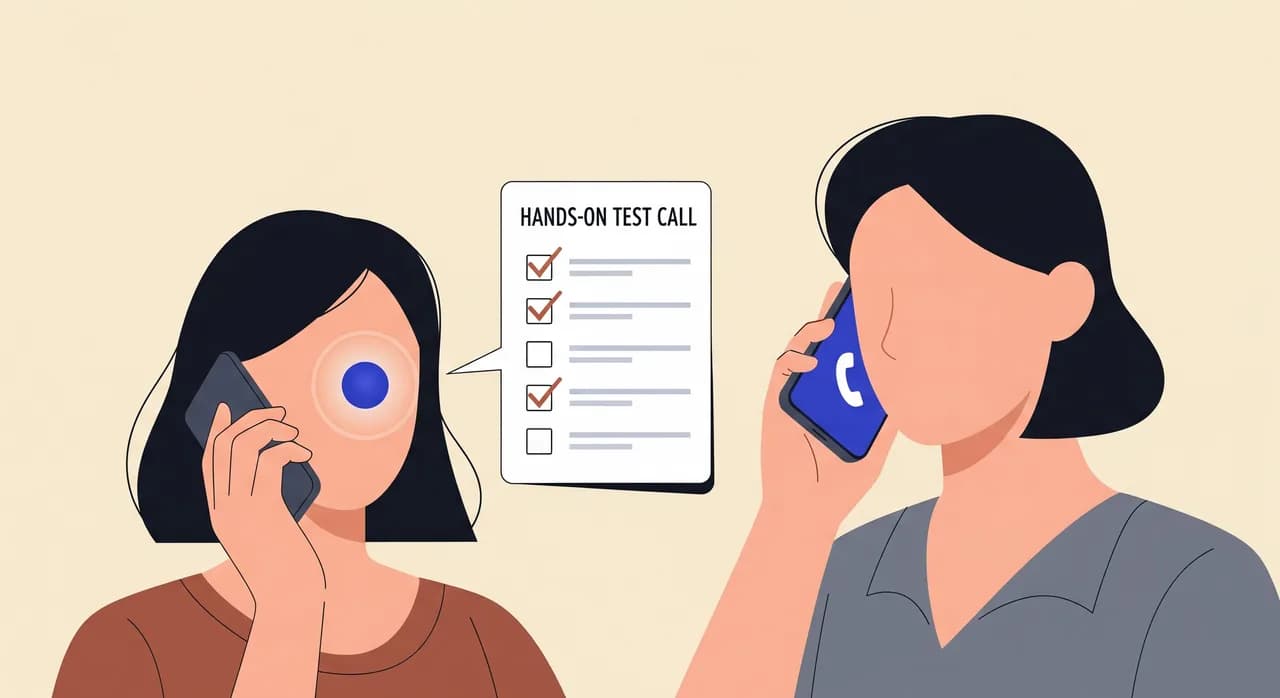
You've read enough opinions, including ours. Here's how to replace all of it with evidence. Any AI phone assistant worth considering will let you talk to it before you commit. Call it and run this deliberately — most people just say "hi, what are your hours?" and come away with no real information.
- 1Interrupt it mid-sentenceWait until it's a few words into an answer, then cut in with a new question. Does it stop cleanly and follow you, or restart, freeze, or lose the plot? This one test tells you more than the next four combined.
- 2Ask something slightly off-scriptNot gibberish — a real but awkward question a customer might actually ask. Watch how it handles reaching its limit. A good one admits it and offers to take a message; a bad one bluffs or loops.
- 3Change your mind out loudBook something, then say "actually, can we do Thursday instead?" Real conversations are full of course corrections. See whether it keeps up or gets confused by the reversal.
- 4Listen to the pauses, not the wordsClose your eyes and notice the rhythm. Are replies coming at conversational speed? Are the gaps the length a person would leave, or a beat too long, a beat too dead?
- 5Give it a phone number or an odd nameSay a number quickly, or a name that isn't obvious. Numbers, spellings and unusual names are where speech recognition and read-back either shine or fall apart. Ask it to repeat the details back.
Score all five and you'll know more about that product's real voice quality than any comparison table could tell you — and you'll know it about your use case, in your language, with the quirks your actual callers bring.
Where our own voice stands — and how we'd have you check
We'd be poor examples of our own advice if we told you to test everyone else and then asked you to take our word for it. So: Vunoon uses current-generation voices that, in a normal booking or enquiry call, most people won't identify as synthetic. It greets callers, answers from the profile you set up, takes bookings and messages, and emails you a summary and transcript of every call. It's built to reply fast enough that the conversation keeps its rhythm, and to hand off gracefully — take a message, have you call back — rather than bluff when it hits its limit. When a caller asks whether they're talking to a person, it doesn't pretend otherwise.
We're also not going to claim it matches a brilliant human receptionist on a heated, emotional call, because it doesn't, and no honest vendor's does. What it does reliably is make sure the call gets answered warmly at 8pm on a Sunday instead of ringing out — and for most businesses, the real comparison isn't "AI versus a great receptionist," it's "AI versus voicemail." On that comparison the voice question all but answers itself.
So don't believe this paragraph. Run the five-step test on us. Set it up in a few minutes, describe your business, and call your own assistant to hear exactly how it sounds handling the calls you actually get. If it doesn't clear your bar, you've lost ten minutes and learned something. If it does, you've heard the proof yourself — which is the only proof that ever mattered.
Do AI voices sound natural enough for a business phone line in 2026?
Can callers tell it's an AI receptionist?
What's the best way to judge AI receptionist voice quality?
How well do AI voices handle accents and other languages?
Should an AI assistant try to sound exactly like a human?
Don't take our word for it — call and listen
Set up your assistant in a few minutes, describe your business, then phone it and run the five-step test on the calls you actually get. The only proof of voice quality is the one you hear yourself.
See how the demo call works
Vunoon builds an AI phone assistant that answers your business calls 24/7 — it books appointments, answers common questions and sends you a summary of every conversation.