Never Miss a Call: What 100% Pickup Actually Takes
"Never miss a call" is an easy slogan and a hard promise. Here's what full phone coverage really requires — the four ways calls slip away, how forwarding rules interlock, and what changes in your first week.
 Vunoon15 min read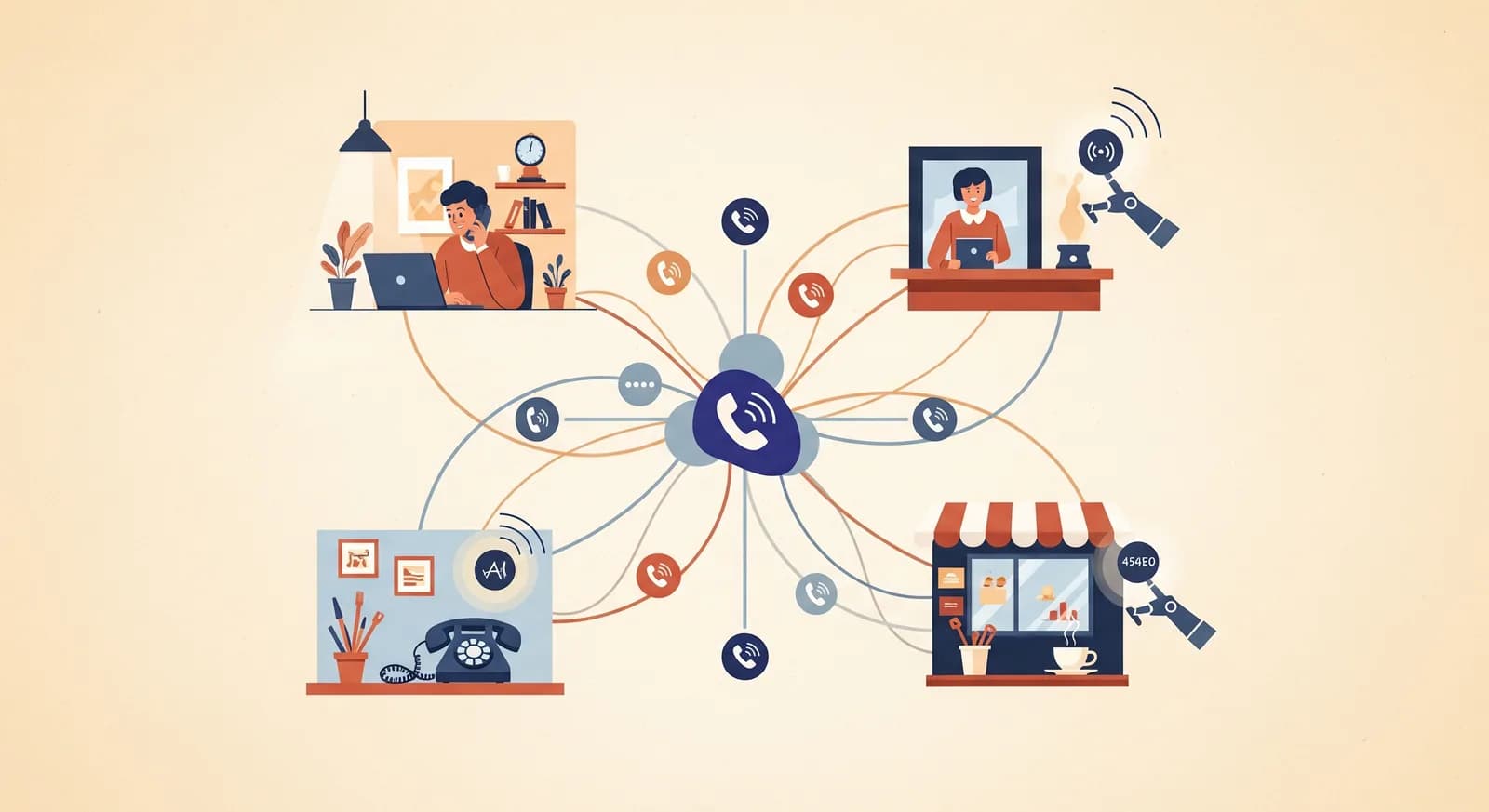
Every small business already owns a device that quietly loses money: the phone that rings while you're mid-haircut, elbow-deep in an engine bay, or asleep. "Never miss a call" gets printed on a lot of homepages. Actually delivering it is a different job — and it's more mechanical than magical. This is a deep dive into what 100% pickup really requires, and where an AI receptionist fits.
Most owners think they miss calls occasionally. They miss them constantly — they just don't see it, because a missed call leaves no evidence. There's no bounced email in your inbox, no red badge, no receipt. The caller taps back, sees no answer, and moves to the next name on the search results. You never find out they existed.
So before we talk about tools, it's worth being precise about the problem. "I missed a call" isn't one thing. It's at least four different failures, each with its own cause and its own fix. Solve one and you've plugged a leak. Solve all four and you've earned the phrase never miss a call.
The four ways a call actually vanishes
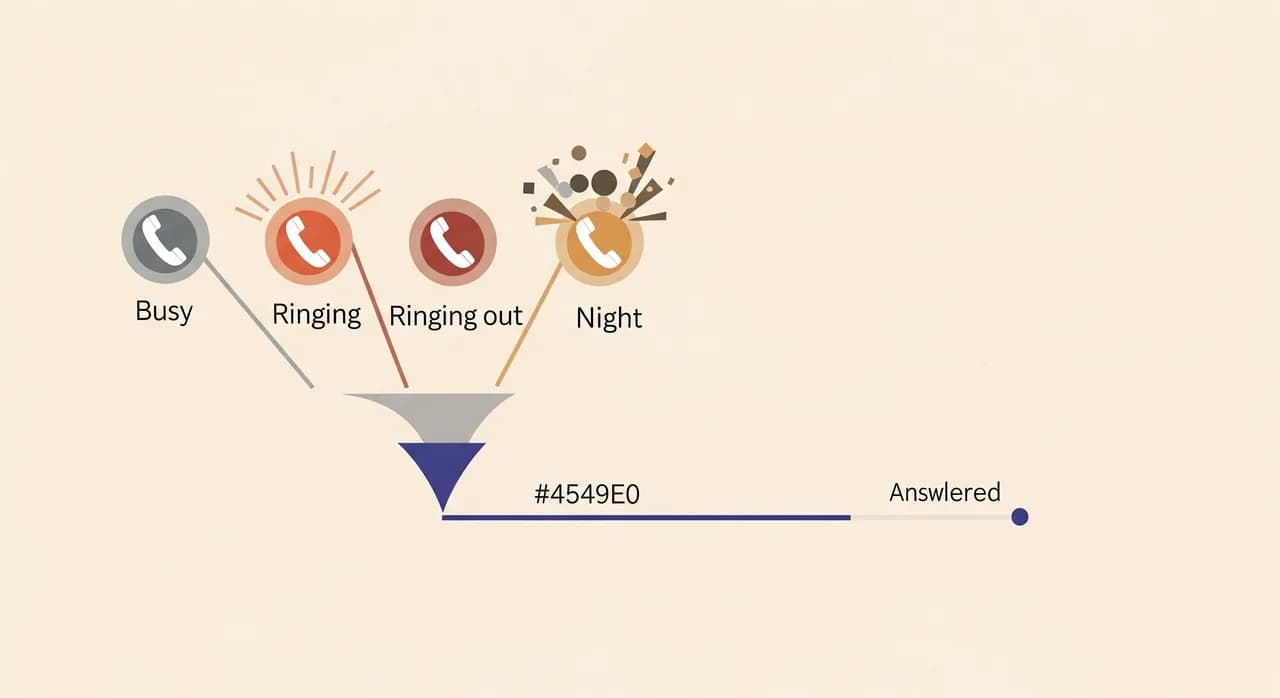
If you audit a week of your own phone log honestly, every lost call falls into one of these buckets. They feel the same to you — a name you never spoke to — but the moment of failure is different in each, and that matters, because a fix that catches one won't catch the others.
- Busy. You're already on another call. The second caller gets a busy tone or rolls straight to voicemail. During your two or three busiest hours, this is probably your single biggest leak.
- No answer. The phone rings, but your hands are full — you're with a client, driving, or the phone is in the other room. It rings out. Statistically this is the quiet majority of missed calls.
- After-hours. The call comes in at 7pm, on a Sunday, or during the two weeks you're away. Nobody's there. For a lot of trades, more than a third of inbound calls arrive when the door is locked.
- Overflow. A rush hits — a promotion, a local event, a competitor closing down — and calls arrive faster than anyone can pick them up. One person, one line, three simultaneous callers: two of them lose.
Notice that voicemail only addresses one of these badly, and the rest not at all. Voicemail catches no answer and after-hours in the technical sense — the caller can leave a message — but callers increasingly won't. They hang up on the greeting and dial the next business. A voicemail box is a graveyard for leads who had somewhere else to be.
“A missed call leaves no evidence. That's exactly why owners underestimate how many they lose.”
Why "100%" is a different animal from "most"
Picking up 80% of your calls is easy and almost worthless as a promise. Anyone can answer when they're free. The value is entirely in the calls you can't currently answer — the busy-hour overflow, the 9pm booking, the ring you didn't hear over a drill. Those are, by definition, the ones a human you can't afford to hire would have caught.
This is why "never miss a call" is a coverage problem, not an effort problem. You cannot try harder your way to it. You're a single point of failure with two hands and a sleep schedule. The only route to genuine 100% pickup is a second answerer that has none of your constraints: it's never on another call, never asleep, never annoyed, and can hold three conversations at once without any of them noticing.
That's the honest case for an AI receptionist. Not that it's cleverer than you — it isn't, and it shouldn't try to be. It's that it's always available, which is the one thing you structurally cannot be. The intelligence just has to be good enough to be genuinely useful in the gap.
How forwarding rules interlock to close every gap
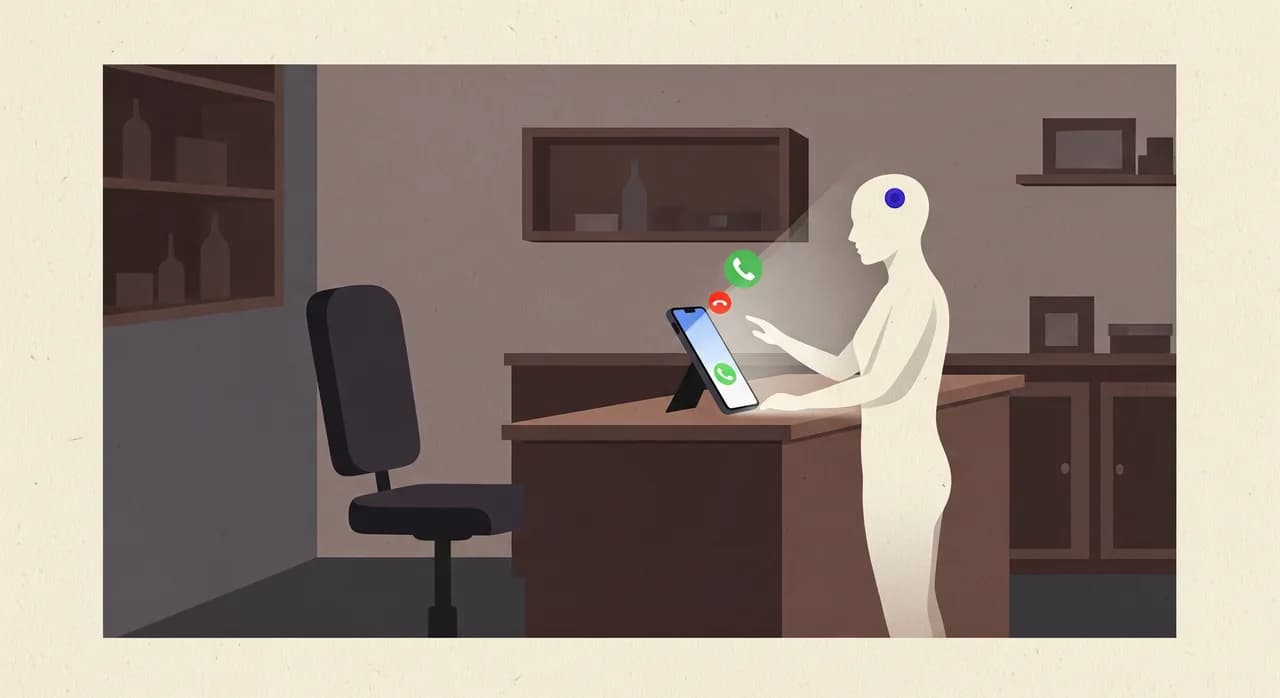
Here's the part most articles skip, because it's unglamorous: the mechanism is your phone's own call-forwarding settings. You don't replace your number, you don't buy hardware, and you don't ask customers to dial something new. You tell your carrier where to send a call when a specific condition is met. Every mobile network and most business lines support this, and it's usually four separate rules.
- Forward when busy — the call goes to the assistant the moment your line is engaged. This closes the busy leak.
- Forward on no answer — after a set number of rings (you choose; often 15–20 seconds), an unanswered call rolls to the assistant. This closes the no answer leak.
- Forward when unreachable — no signal, phone off, roaming: the call still lands somewhere useful.
- Forward all calls — a single switch you flip when you're away, closed, or in a stretch where you simply can't answer. This closes after-hours on demand.
The clever bit is how these stack. With conditional forwarding on (busy, no-answer, unreachable), your phone behaves exactly as it does today when you're free — you answer, nothing changes. The assistant only steps in at the precise instant a call would otherwise have been lost. You keep every call you want to take, and catch every one you'd have dropped. That's the interlock.
The overflow case is handled a little differently, because it's really a busy-plus-busy problem: three calls, one you. The trick is that the assistant isn't a single line. When two callers reach it at once, it holds two conversations simultaneously — no queue, no hold music, no "your call is important to us". The fourth failure mode, the one that's hardest for a human to fix, is the one an AI answerer handles most naturally.
What a genuinely good answer sounds like
Coverage without competence is just a longer way to lose the call. If the assistant answers and then flounders, the caller hangs up anyway — now more annoyed. So the second requirement is that when it picks up, it actually helps. For a small business, "helps" is a short list, and it's very achievable:
- 1Greet as your businessIt answers with your name, not a generic "hello". The caller knows they reached the right place, not a wrong number or a call centre.
- 2Answer the routine questionsOpening hours, where you are, whether you're open on Saturday, what a service roughly involves, whether you take walk-ins — the things you'd answer in one breath, pulled from the profile you set up.
- 3Take the booking or the messageIt captures who called, their number, what they wanted, and when — a booking request, a callback, a quote enquiry — and structures it so you can act without playing phone tag.
- 4Hand off honestlyFor anything outside its remit, it says so plainly, takes a message, and tells the caller you'll ring back. It doesn't guess, and it doesn't pretend to be a person if asked.
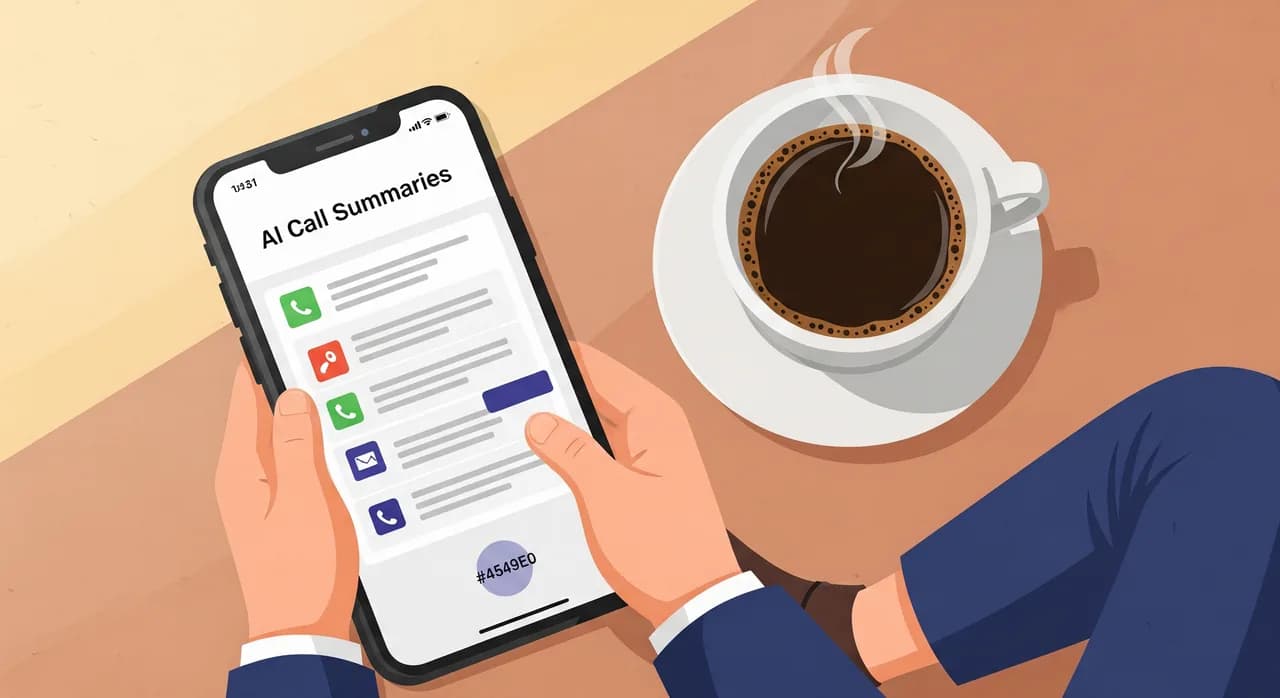
- 5Tell you what happenedWithin moments you get a written summary and full transcript of the call. You wake up, glance at your phone, and know exactly what came in overnight.
That's it. It's not trying to be a switchboard for a Fortune 500. It's trying to do what a good part-time receptionist would do on the calls you currently drop — and the bar for "better than a missed call" is not high. Even a caller who realises they're speaking to an assistant leaves having booked, asked, or been promised a callback. That caller was going to be lost entirely. Now they're a lead.
The only maths that matters
You don't need a spreadsheet full of invented percentages. You need to look at one number for your own business: what a booked customer is worth to you. Then the rest is arithmetic you can do in your head.
Imagine a two-chair hair salon that misses, say, ten calls a week it currently has no way to catch — busy during the rush, a few after-hours bookings, the odd ring during a colour. Suppose just three of those ten would have booked. If an average visit is worth a modest amount and a happy client comes back several times a year, three recovered bookings a week is not a rounding error. It's the difference between a slow month and a full one.
Run the same sum for a plumber, where one job can be worth a great deal, and the logic gets blunt: catching a single emergency call you'd otherwise have lost — the one that went to the next name in the search results — can pay for the assistant for a long time. You don't need it to catch many. You need it to catch the ones you're losing invisibly right now.
| Failure mode | When it happens | What catches it today | What actually closes it |
|---|---|---|---|
| Busy | You're on another call | Busy tone / voicemail | Forward-when-busy to the assistant |
| No answer | Hands full, ringing out | Voicemail (usually ignored) | Forward-on-no-answer after N rings |
| After-hours | Evenings, weekends, holidays | Nothing | Forward-all when closed |
| Overflow | A rush, several at once | Nothing (one line, one you) | Assistant holds parallel calls |
What actually changes in week one
Setup is genuinely a job you finish before lunch, and the useful thing is what you notice afterwards. Here's the realistic arc of the first seven days, without the marketing gloss.
- 1Day one — you set it up and it's a bit unnervingYou describe your business in a short wizard — services, hours, the questions you get most — then you phone it yourself and have a conversation. The first time it answers as your business and knows your Saturday hours, it's mildly uncanny. You'll test it more times than you need to. That's normal; that's how trust starts.
- 2Day two — you turn on busy and no-answer forwardingTwo carrier settings, a couple of minutes. You still answer every call you'd normally answer. Nothing about your day feels different — the assistant is invisible until a call would have dropped.
- 3Day three or four — the first summary lands that surprises youA booking, or a question, from a call you know you'd have missed — you were with a client at the time. That's the moment it stops being a gadget. Someone reached you when you couldn't have picked up.
- 4Mid-week — you add after-hoursConfident now, you flip all-call forwarding on outside opening hours. Monday morning you find two or three overnight messages waiting instead of an empty voicemail box. You start your day already ahead.
- 5End of week — you check the log and recalibrateYou look at everything it handled and see, for the first time, how many calls used to evaporate. That count is the whole point. Most owners are quietly annoyed at what they were losing before — which is the correct reaction.
“You can't feel a missed call. You can absolutely feel a summary of one you'd otherwise never have known about.”
The objections worth taking seriously
There are real reasons to hesitate, and pretending otherwise wouldn't help you. Here are the ones owners actually raise, answered straight.
"My customers will hate talking to a robot"
Some will prefer a human — of course. But the customers who reach the assistant are, by design, the ones who would otherwise have reached nothing: a busy tone, a ringing phone, a dead voicemail box at 9pm. The comparison isn't "assistant vs. you". It's "assistant vs. silence". Against silence, a competent answer that books their appointment wins nearly every time. And it never pretends to be human when a caller asks.
"What if it gets something wrong?"
This is the right worry, and the design answer is restraint. A good assistant is built to not improvise on things it doesn't know. It answers from your profile, and for anything outside it, it takes a message and promises a callback rather than inventing an answer. It won't quote a price you didn't set or promise a slot it can't confirm. The failure mode is "I'll have them call you back", which is exactly what you'd want a stand-in to say.
"I'll still have to call everyone back — so what have I gained?"
Sometimes, yes. But there's a world of difference between a voicemail that says "call me" and a structured summary that tells you the caller's name, number, what they wanted, and when. You call back knowing the context, at a time that suits you, to a lead who's already been acknowledged and hasn't yet dialled your competitor. And for straightforward bookings, there's often nothing to call back — it's already handled.
When you honestly don't need this
Trust runs both ways, so here's the counter-case. If you have a receptionist who covers every open hour, if your calls almost never overlap, and if you genuinely close the phone at 5pm and lose nothing after — then you may not need round-the-clock coverage, and you shouldn't buy it out of anxiety. The tool earns its place only where you're actually losing calls.
But most small businesses aren't in that position, and the way to know is embarrassingly simple: turn on busy-and-no-answer forwarding for one week and read the summaries. If the log is empty, you were right, and it cost you nothing to check. If it isn't — and it usually isn't — you've just found the money that was walking out the door. That's the whole experiment.
Putting the whole thing together
"Never miss a call" isn't a slogan you buy; it's a set of gaps you close. There are four of them — busy, no answer, after-hours, overflow — and each has a specific, boring, reliable fix. Conditional forwarding hands the busy and unanswered calls to an assistant that's always free. An all-call switch covers you when you're closed. Parallel handling absorbs the rush. And a good answer plus a written summary turns each caught call from a lost lead into a booking or a callback.
None of it changes your number, your customers' habits, or the calls you already handle well. It only touches the calls you're currently losing — which are, conveniently, the only ones worth fixing. Set it up, forward the overflow, read the log for a week, and let the evidence decide.
How does an AI receptionist help me never miss a call without changing my number?
What happens if two people call at exactly the same time?
Will the assistant pretend to be a real person?
What do I actually receive after a call I couldn't take?
How do I set the forwarding so it doesn't grab calls I'd have answered?
How long does setup take before it's answering calls?
See what you're currently missing
Set up your assistant in minutes, forward the overflow, and read a week of call summaries. If the log's empty, you lost nothing checking. If it isn't, you just found it.
Set up your AI receptionist
Vunoon builds an AI phone assistant that answers your business calls 24/7 — it books appointments, answers common questions and sends you a summary of every conversation.